





Home > Destinations > Places of Interest San Pedro
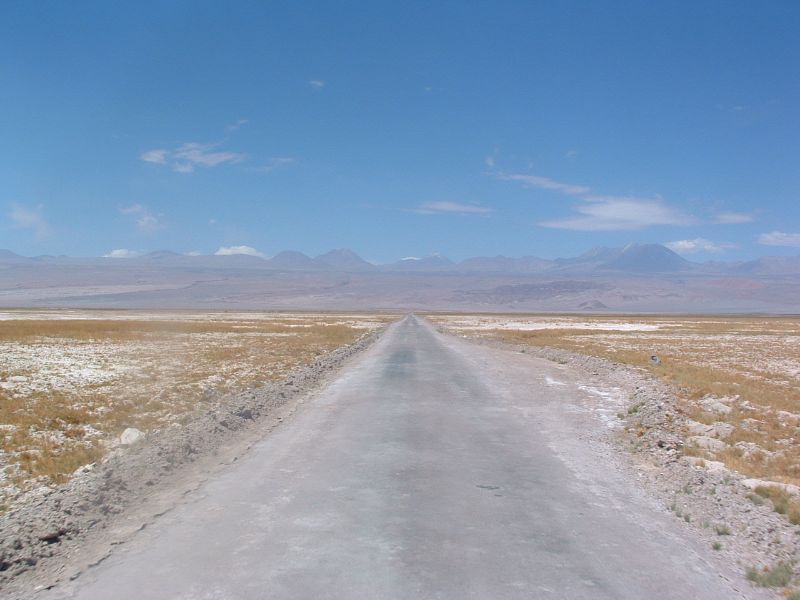
Most of the places of interest are in various, spread-out locations around San Pedro de Atacama. Many are at high altitude, and some are tens of kms from the village. We will briefly cover most known places below, however, there are many other interesting locations too. Should you ask us to include one of the top-end hotels in your itinerary you will have a great opportunity to know many of the other interesting places that most people do not get to see.
Within the excursion options available from the top-end hotels are trekking, visiting remnants of ancient Atacama culture, floating in a Salt Lake, horse riding, seeing local fauna and flora, visiting the natural geysers at El Tatio and other amazing natural, geographic sites as well as cycling, bird watching, sighting local flora and fauna, and star gazing through telescopes.
San Pedro de Atacama is located at altitude (2,438m). Most excursions out from San Pedro de Atacama are at higher altitudes, some reaching over 4,000m. You should NOT participate in any high-altitude excursions if you are not fit, are in bad health (ie have a less-than-healthy heart condition) and without first adjusting to the altitude in San Pedro de Atacama, which may require at least a full day, or even two, prior to going to higher altitudes. You should also drink plenty of non-alcoholic fluids and get a good amount of sleep.
In order to acclimatise and enjoy fully your stay in San Pedro de Atacama, consider a minimum stay of 4 nights, and use your first day to relax and acclimatise.
Calama: 2,460m approx (8,000ft)
San Pedro de Atacama: 2,438m approx. (8,000ft)
Some places of interest near to the village you can walk to or cycle, however, those further outside you will need 4-wheel transport, usually provided by the local tour provider or the hotel we have arranged for you.
There are also numerous trekking places, but to get to the start points requires transport by car or van although we can arrange for you to have your own rental car, we do not advise this.
The hotels that we work with that provide all-inclusive programs will offer trekking excursions and take you to where these trails are located.
Below this list of places are brief descriptions.
San Pedro Church
Cultural Centre Archaeological Tours and Museum
Pukara de Quitor
Star Gazing (Night-time, Clear Sky Required)
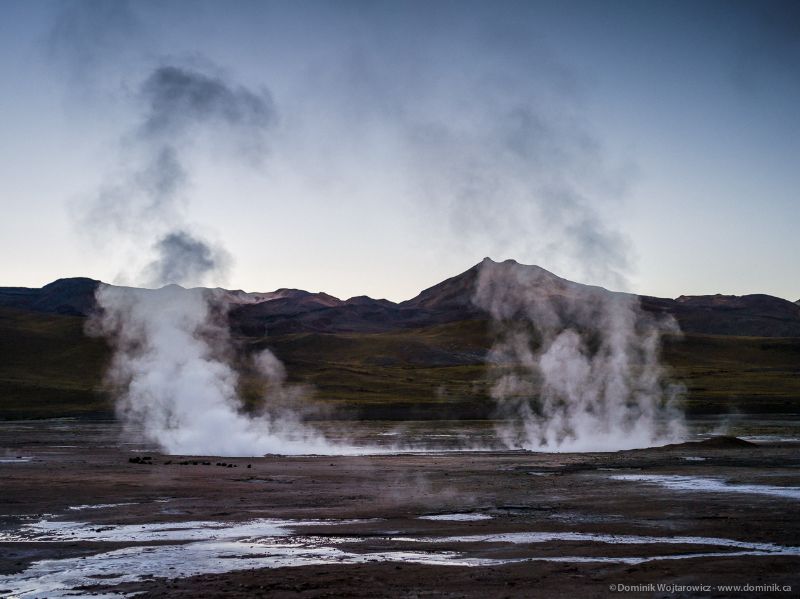
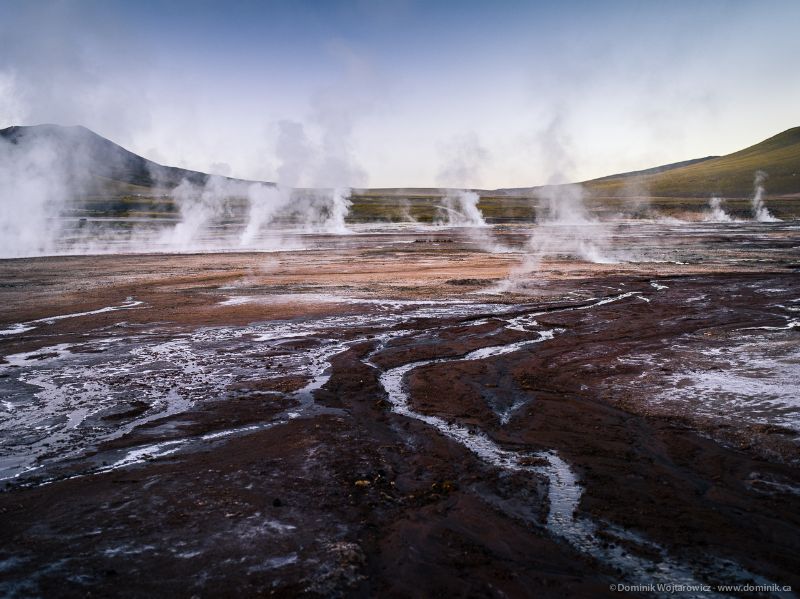
El Tatio Geysers (Altitude 4,321m (approx.12,000ft))
Miscanti and Miñique Lagoons (Altitude 4,200m (approx. 12,000ft))
Tocanao Village
The Salar de Atacama
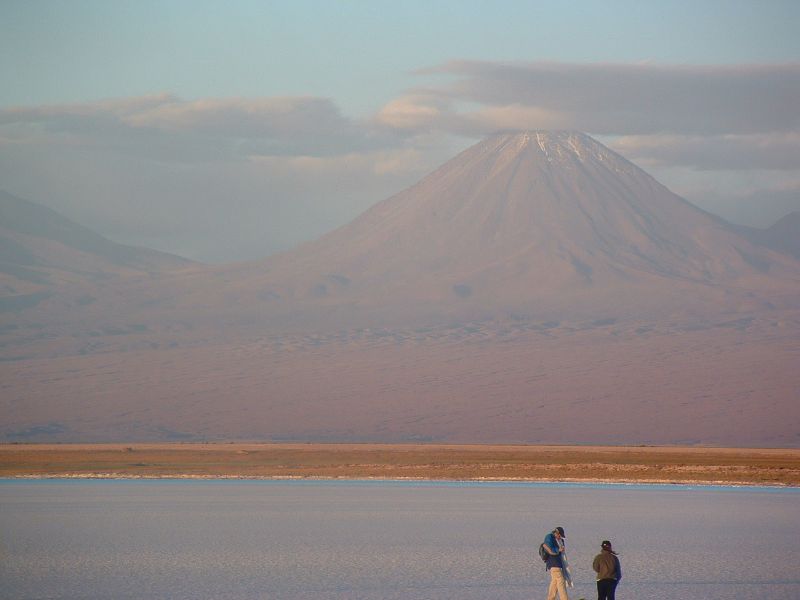
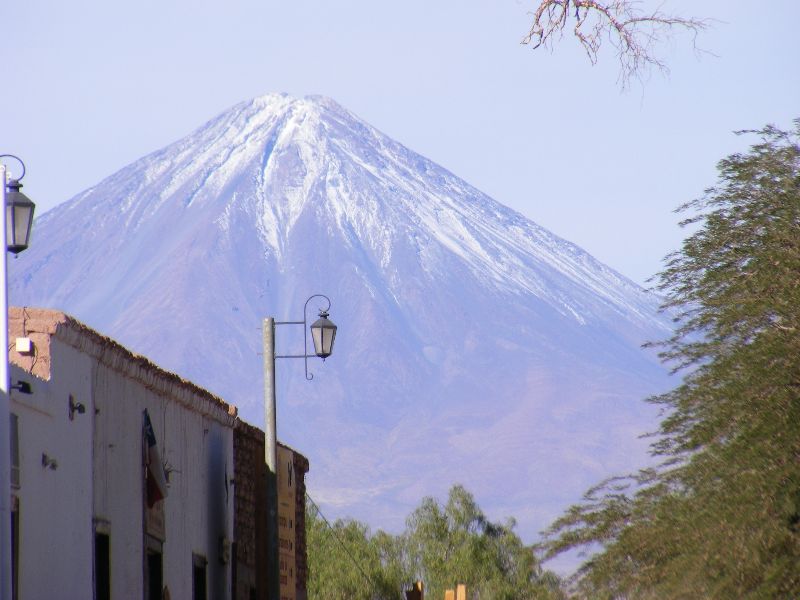
Licancabur Volcano
The Salara de Tara
Puritama Hot Springs
The Cejas Lagoon
Casbana
Other Places and Altitudes
Centinelas de la Pakana: (Altitude 4,500m (approx.12,000ft))
Laguna Verde: (Altitude 5,900m (approx.18,000ft))
Lagunas Altiplánicas: (Altitude 4,200m (approx.12,000ft))
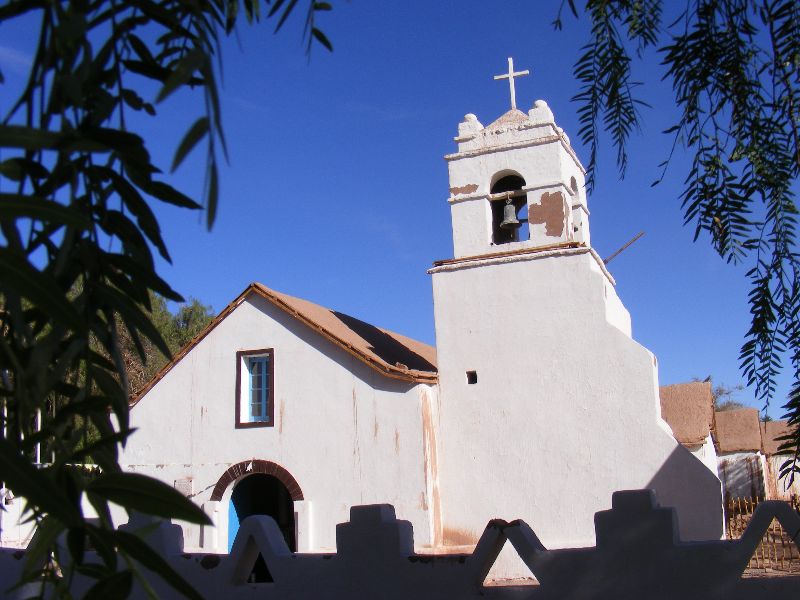
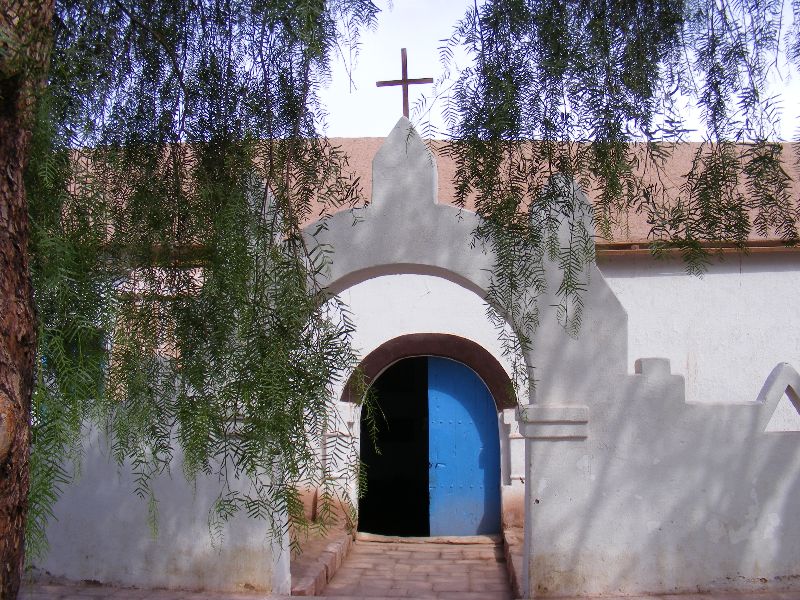
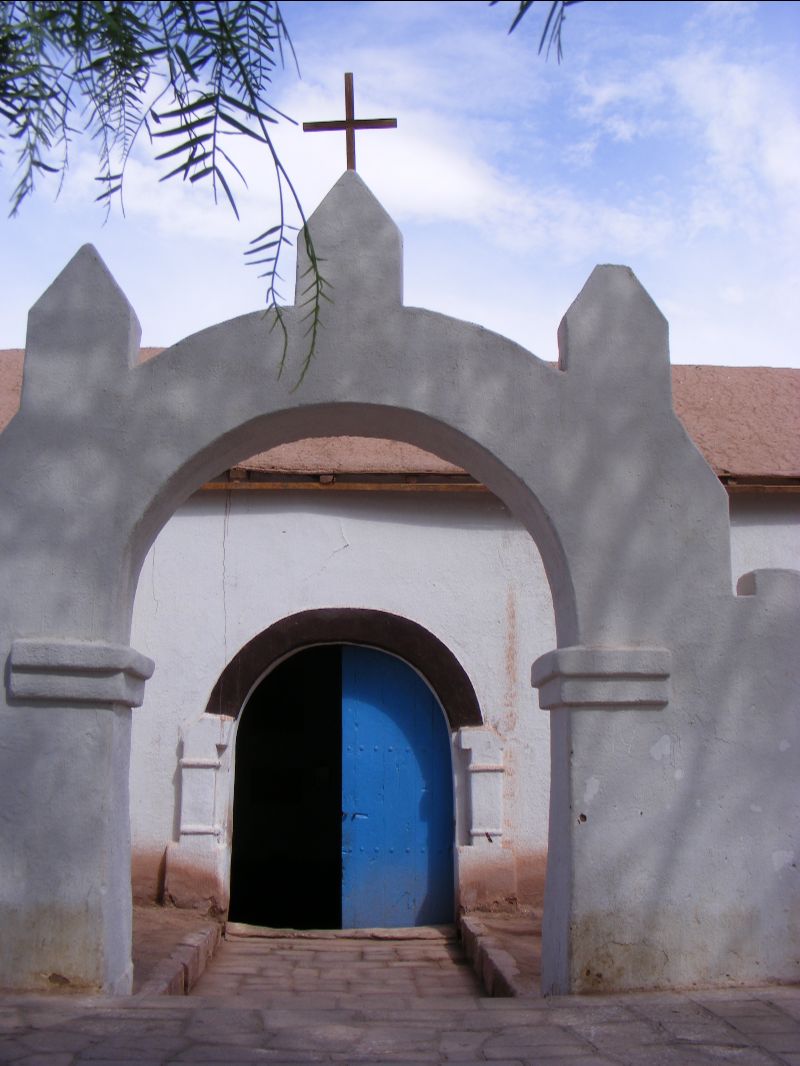
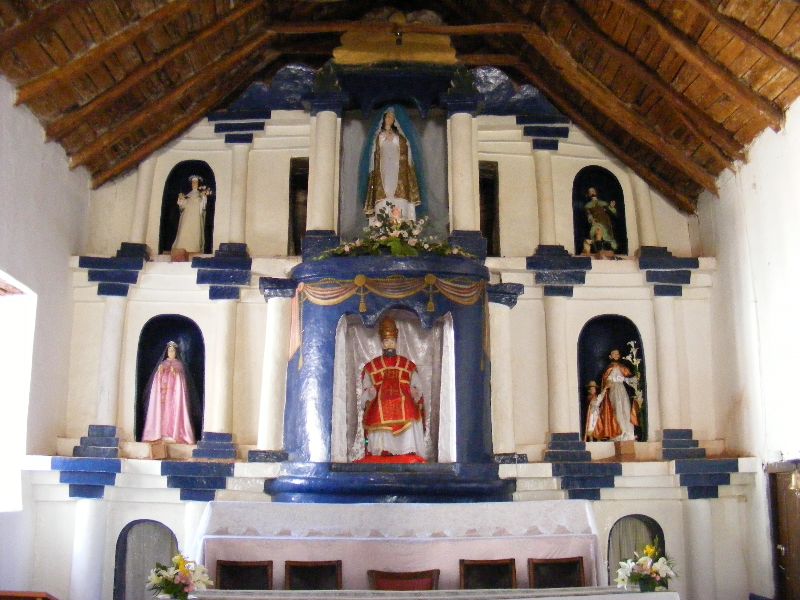
San Pedro de Atacama Church
Declared a National Monument in 1951, the church is built from adobe walls and its ceiling is made from wood of the Cañar and locust tree, mixed with clay then covered over with cactus-wood. It served as a parish in 1641.
Archaeological Tours and Museum
San Pedro is home to a fine archaeological museum named after its founder Gustavo Le Paige – a Belgian Jesuit Priest who came to San Pedro de Atacama in 1955 to run the Parish. Amazed by the plentiful supply of historical artefacts found in the area Gustavo le Paige set about creating a collection of these finely-preserved archaeological pieces for documentation. In 1958 the North Catholic University lent its support and is still administering the museum today. The Museum illustrates the historical evolution of the Atacamanean peoples and the influence that the Tiawanaku, Inca and Spanish cultures brought about. Archaeological specimens in the Museum include ceramics, clothing, engravings, textiles and mummified bodies dating back thousands of years, as well as a relief model of the geography of the zone.
Valley of the Moon
Valle de la Muerte
“Death Valley” – a dry and hot valley with high dune sides and large rocks.
Pukara de Quitor
A 12th century fort built by the “Atacameño” tribe, restored in 1981 and declared a National Monument in 1982, located on the outskirts of the village. There are around 200 ruins of dwellings.
El Tatio Geysers
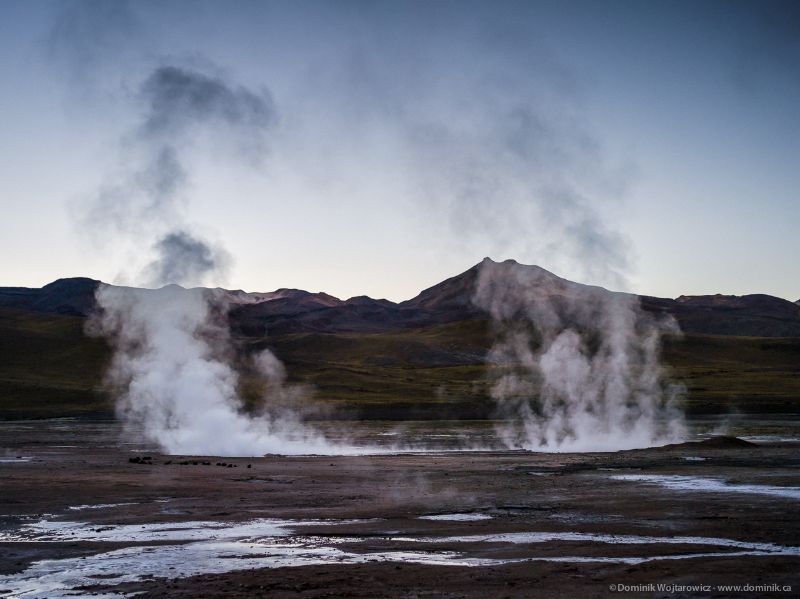
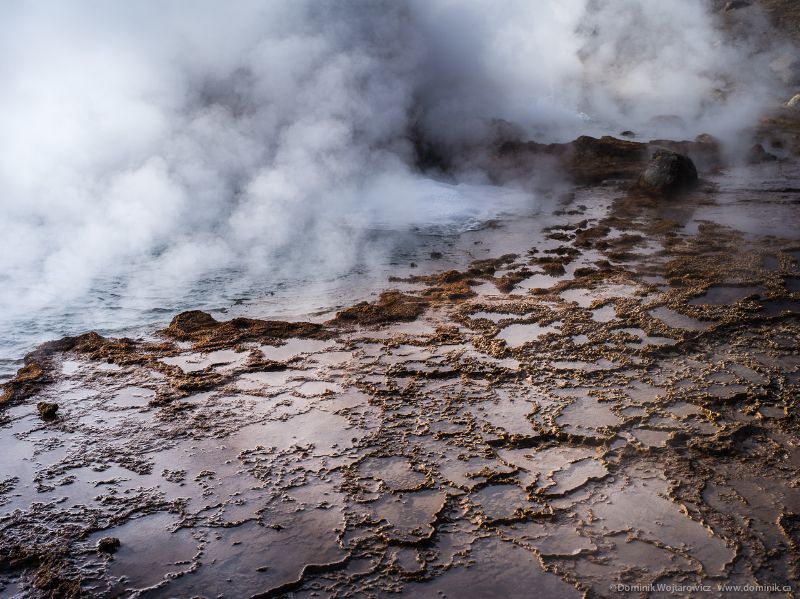
El Tatio is a volcanic geyser field with over 90 active geyser-water pools, located at 4,321m above sea level, in the heart of the Andes Mountains 210km from San Pedro, high in the Altiplanico.
The drive from San Pedro takes about three hours because the route is along narrow, unpaved, steep roads at high altitude and for this reason departure from San Pedro is usually at 04:00 hrs in order to arrive for the dawn spectacle of the geysers bubbling into the air.
The incredibly clear night sky, the natural phenomena of hot water from the ground that can boil an egg, and the opportunity to bathe in natural thermal springs is what coming to the geysers is all about.
WARNING: people have fallen through the hard crust that surrounds the geysers and consequently been scalded to death. Although most people wander all over the site, you would be well advised to not get too close to even the smallest pools of water.
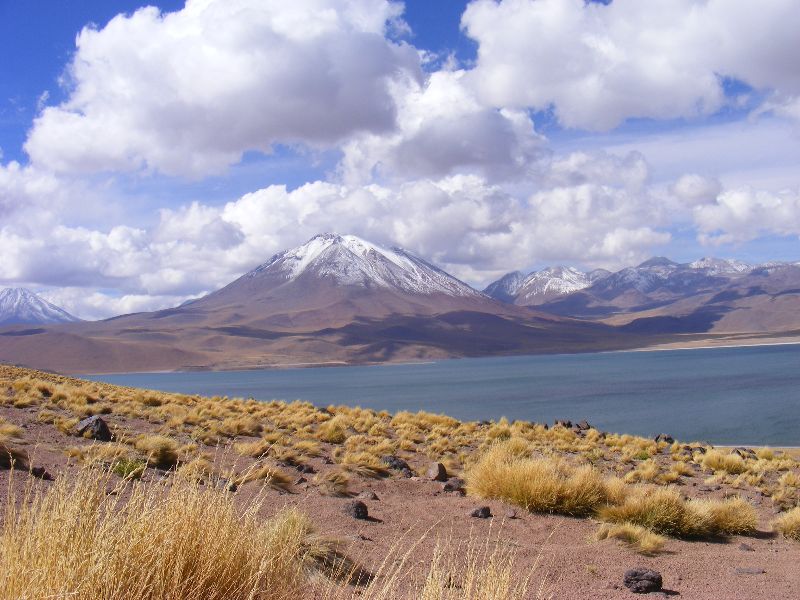
Located approximately 140km from San Pedro de Atacama, at 4,000m above sea level in the heart of the Andes Mountains are two adjacent lagoons that radiate a vivid blue colour. Dwarfed by two volcano cones at each side, the lagoons offer a haven for birds. On the return journey there is a spectacular view back over the massive Salar de Atacama.
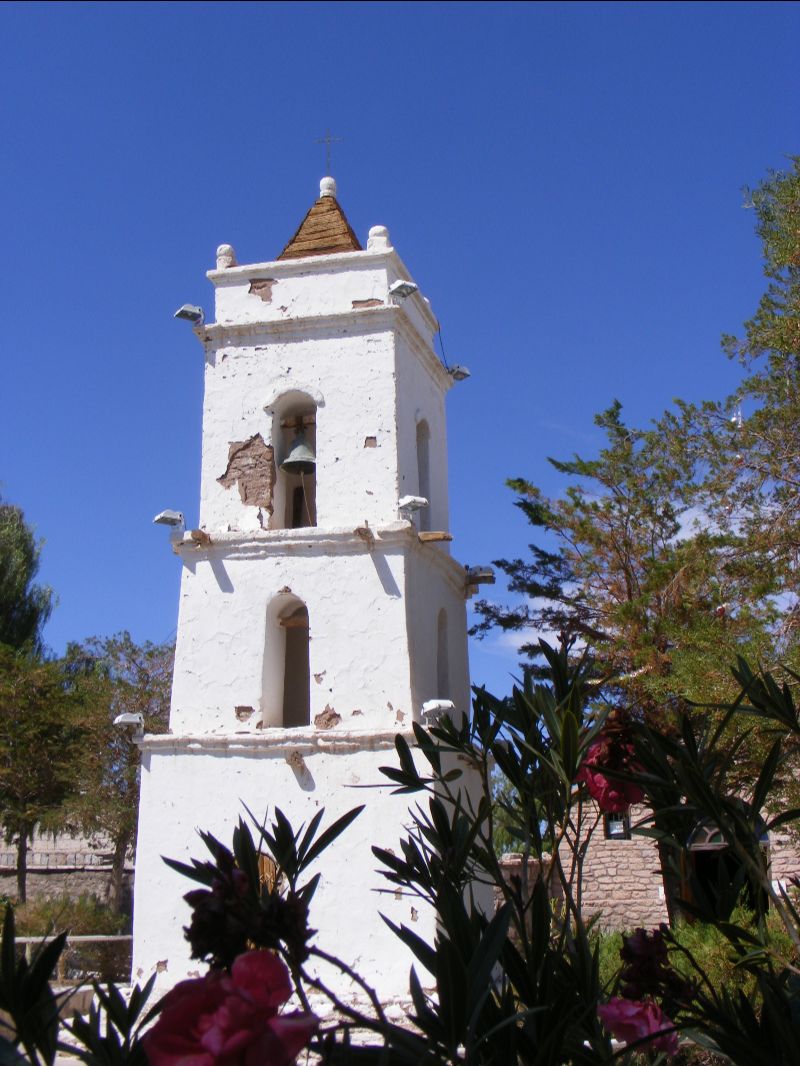
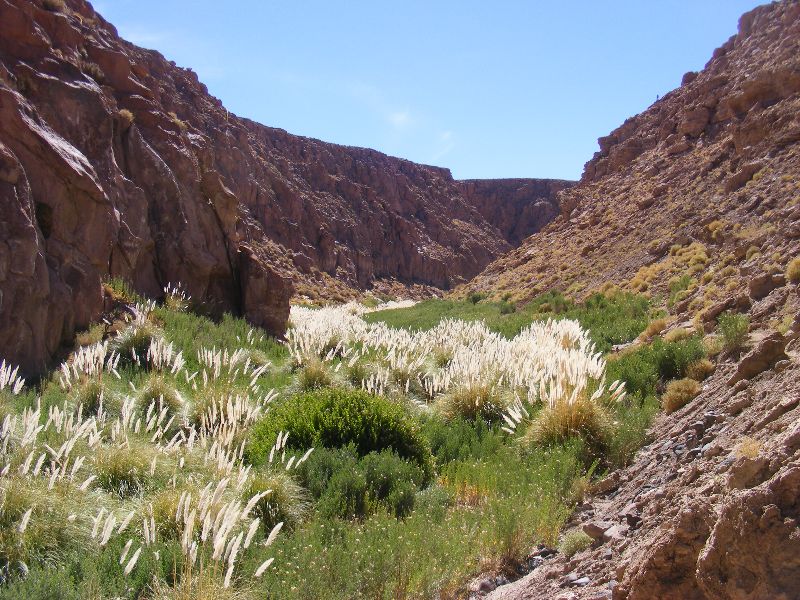
Toconao village, with a population of around 700 people, is at 2,475km above sea level and located 38km south of San Pedro de Atacama, sitting on the edge of the vast salt flat “Salar de Atacama”. The geographic landscape that surrounds the village is formidable. The village itself is an oasis, with a sweet water supply free from mineral contamination such as arsenic or acids, and ideal for the cultivation of fruit trees such as pears, plums and quince as well as vegetables. Most buildings are constructed from white, soft liparita stone, quarried locally. Areas of interest are the charming central plaza with a bell tower (built in 1750) and the canyon at the base of the quarry (2km out from the village) where the lush-green vegetation of fruit trees and vegetables, irrigated from the natural water supply, contrast starkly with the completely dry, sandy desert walls.
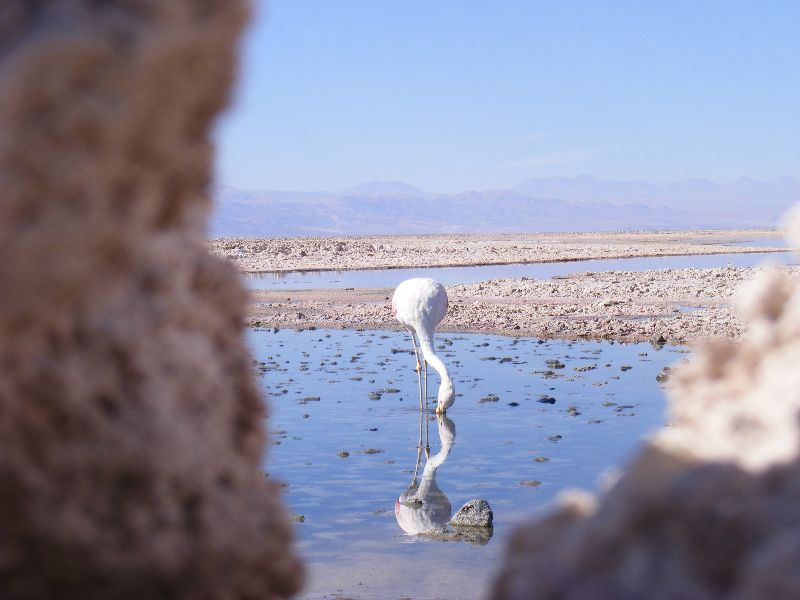
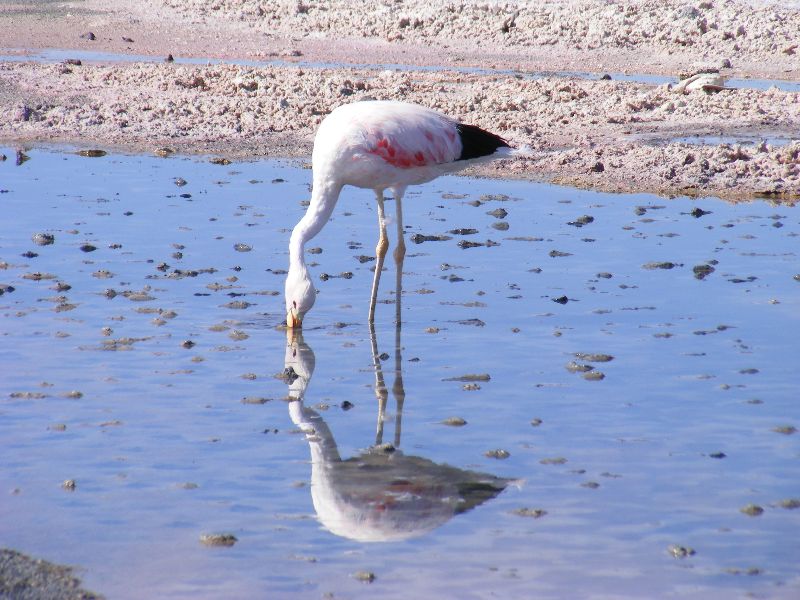
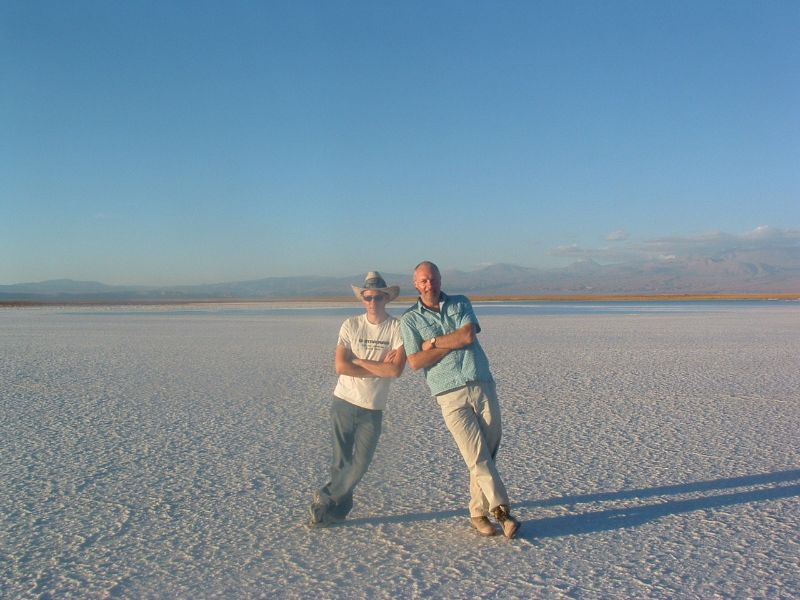
The Salar de Atacama is a vast salt plain covering around 8,000km2 in the heart of the Atacama Desert. The road entrance is located about mid-way along the eastern side of the salt plain, approximately 80km south from San Pedro de Atacama. Within this salt flat is the Chaxa Lagoon, which is within the Los Flamencos National Reserve, home to flocks of pink flamingos and other types of birds, all feeding on microscopic organisms in the shallow waters.
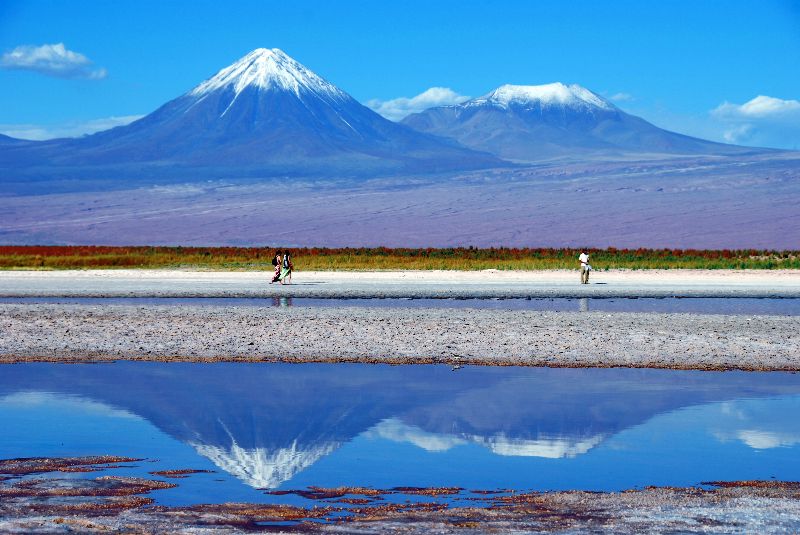
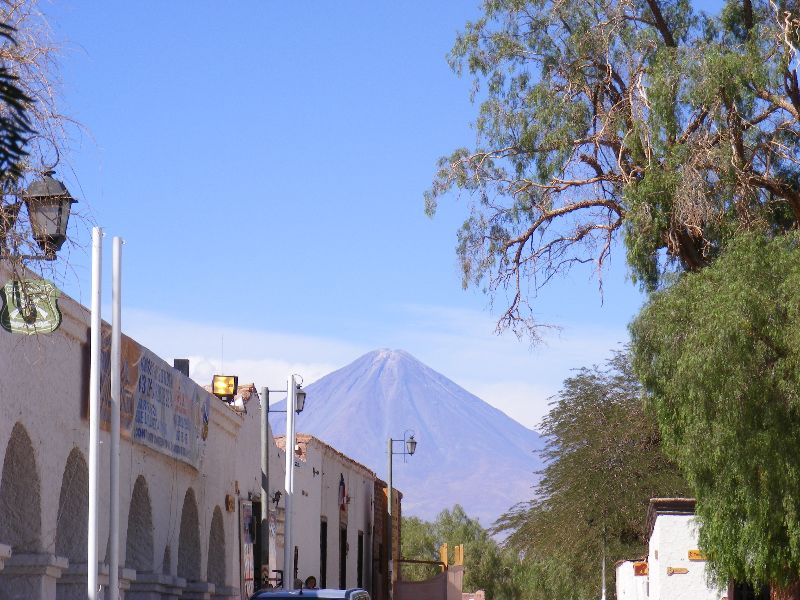
The main volcano, often snow covered, that dwarfs San Pedro village, is accessible to climbers. Can be seen quite clearly from San Pedro Village and looks especially impressive after a snow fall at high altitude.
The Salar de Tara
Located at 4,300m, and 100 km from San Pedro de Atacama, this is a high-altitude Altiplanico lake with a surface area covering 48km2.
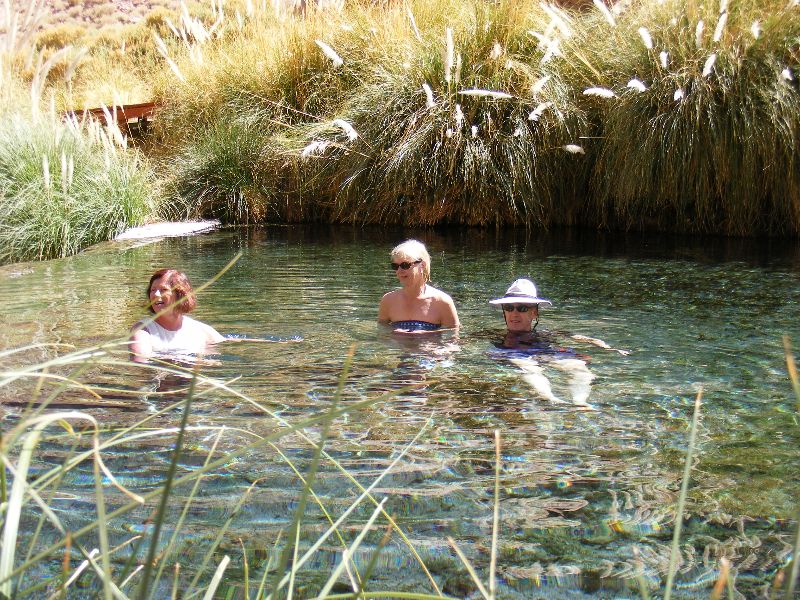
Natural hot springs (entrance fee required, unless included previously)
These are hot spring pools fed by a natural spring with water volcanically heated. Initially these were natural, rustic pools, but back in 1995 infrastructure was built to provide board walks and changing rooms as well as the construction of walls around the pools to create deeper and larger pool areas. This has been done in a good way to “blend” into the natural surroundings.
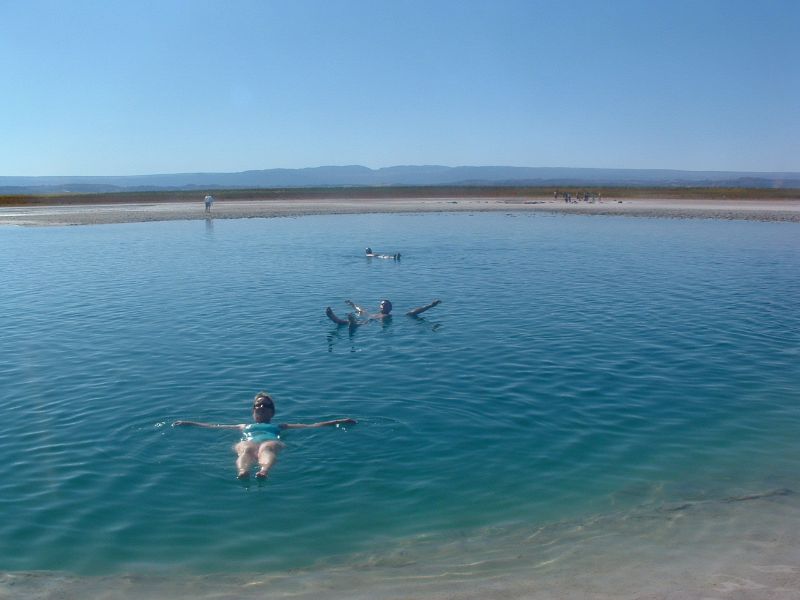
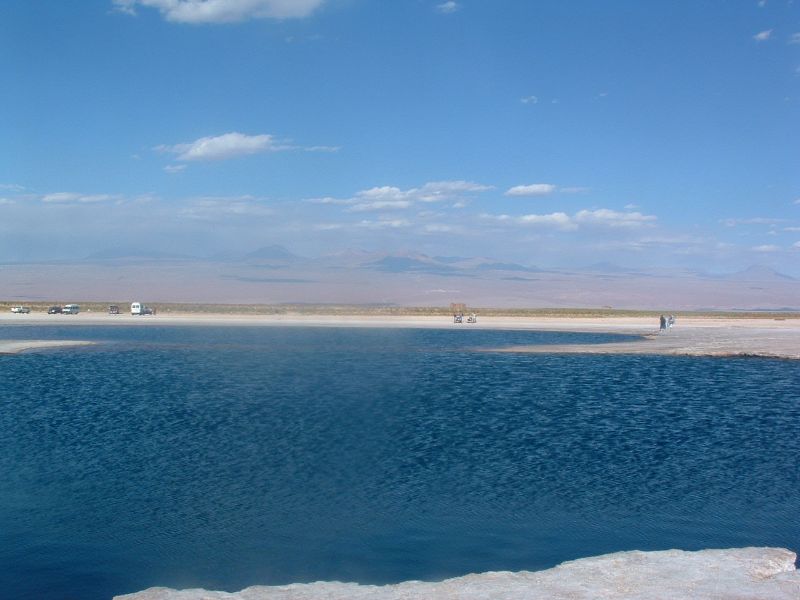
Located in the Salar de Atacama in the northern sector, closer to San Pedro de Atacama, is the Cejas Lagoon. This is a roughly circular opening in the Salar offering a very deep pool of clear, saline water that appears to be “bottomless”.
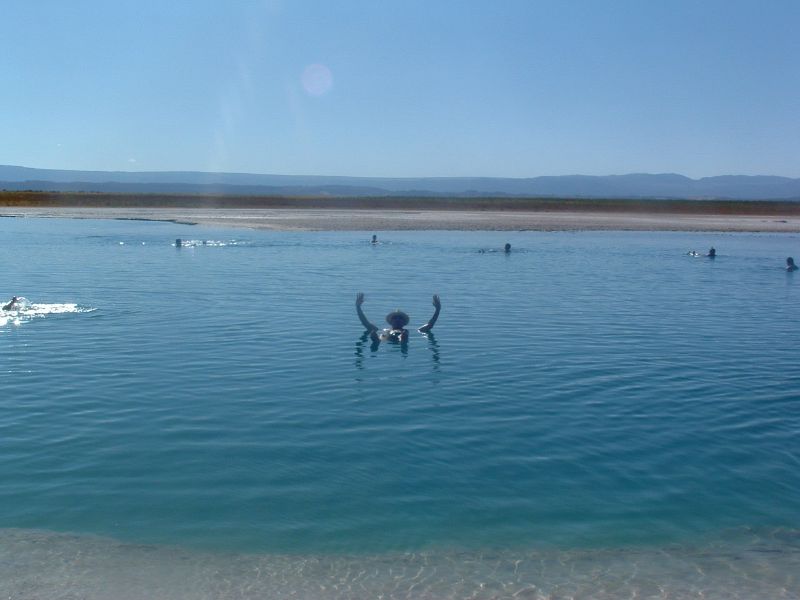
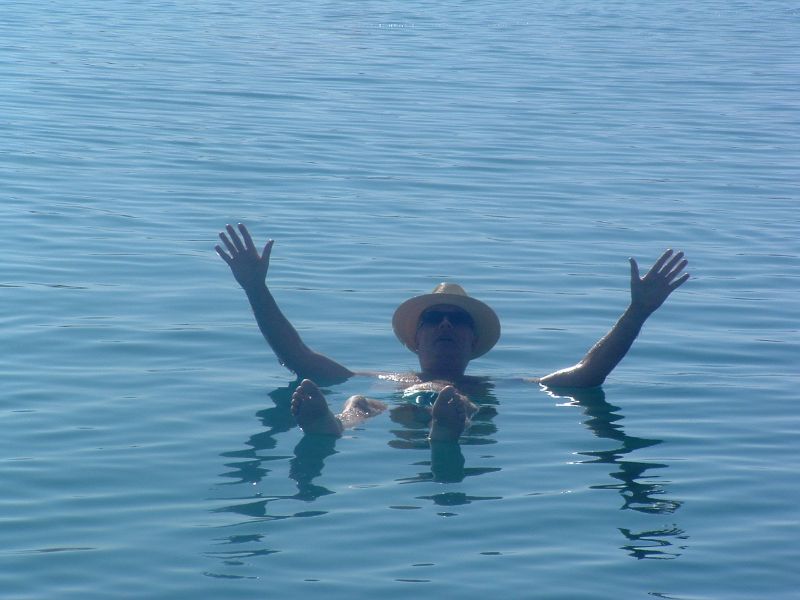
The excessively high salt content provides incredible buoyancy for bathers and is an interesting experience for those who enter. The view of the unbelievably impressive, surrounding landscape whilst bathing is a draw-dropper.
Note: The surrounding edges of the lagoon are made from salt crystals that are sharp and can cut feet, so best to wear bathing shoes. Also, after bathing the salt will be all over your body, so best to wash down with bottled mineral water, or sweet water brought from the hotel.
About 110km south, but in the hills, from San Pedro de Atacama, is the village of Socaire. This is a quiet, very small village (population cerca 400) with a very slow, agricultural-based lifestyle.
A truly remarkable Andean village, located closer to Calama than San Pedro and known for its simplicity, Inca architecture and terraced farming methods. Located in a vertical-sided, narrow canyon, the people and way of life appear to be the same as it was thousands of years ago. For some, a visit to this village feels intrusive and in many respects our view is that “Westerners” should stay away. Great care should be taken to respect the inhabitants and their way of life.
Called the Rainbow Valley (“Valle del Arcoiris”) due to the variety of different earthen colours that can be seen in the hillsides of the valley. The vivid contrast of the natural colours is unmistakably marked between the different layers of rock. Quite clearly you can see the colours of red, beige, green, white, and even yellow, one layer on top of the other and this is combined with whiteness of the salt, together with the blue of the sky creating a formidable sight. The varied colours demonstrate the richness and different concentrations of clay, salts and minerals in the soil before it hardened to become rock.
The valley is located in the Rio Grande Basin, about 90 kms from San Pedro de Atacama, close to Yerbas Buenas Petroglyphs, and is at high altitude (over 3,000m) – so not for everyone.
In order to get here you need to take the road towards Calama (from San Pedro), and then turn off right to Río Grande. From this turnoff it is about 60km to the sector.
There are tours to the Rainbow Valley that include a visit to the Yerbas Buenas petroglyphs as well. These tours depart from San Pedro de Atacama at approximately 8am, returning a little after 1 pm. If you go on your own it is important to consider that in the sector there are no shops to stock up on water or food, so it is essential that you go prepared.
There is no fee to enter the Rainbow Valley, but there is a small charge to enter the Yerbas Buenas petroglyphs.
Alternatively, if we have booked one of our all-inclusive programs for you at one of our partner hotels, this excursion will likely be one of the options offered.
There are many other places to see and things to do such as horse riding, cycling and trekking, but these are better arranged when at your hotel.
Due to the dryness of the air and the altitude, the Atacama Desert is one of, if not the best place on Earth from where to study the stars. For this reason, the professional observatories are located in this area.
However, there are also local hobbyists who also have the equipment to study the stars and they offer visitors the same opportunity.
The small, local observatories (not the professional ones), have telescopes sufficiently powerful enough to see the key parts of our solar system as well as elements in our own Milky Way galaxy. These evenings must be pre-booked. Note, however, that it is only possible to see the stars when there is no cloud cover. In the case of San Pedro this is often.
There are numerous locations around San Pedro that offer bird watchers great opportunities to spot species not often present in other places. Places such as the Nacimiento and Guatin canyons, the Atacama Salt Flat and northern Chilean Altiplano are all habitats for a wide variety of differing bird species.
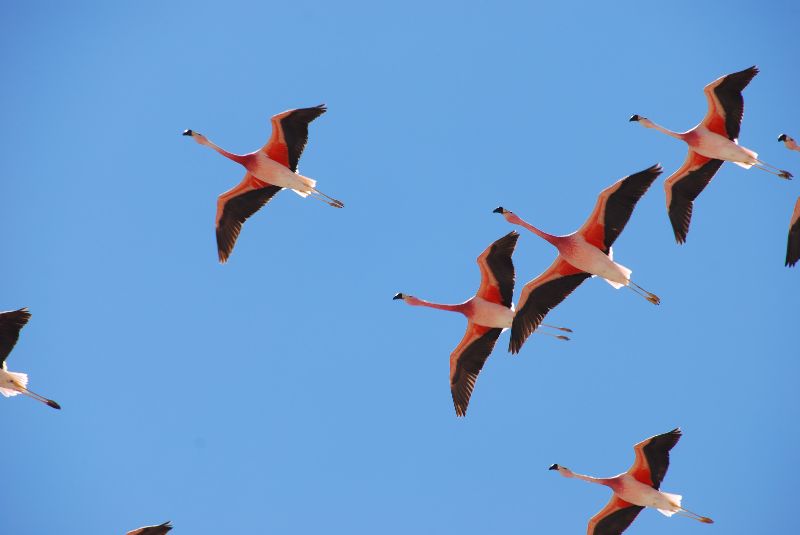
For example, the Salt Flats are home to the Chilean flamingo, Andean flamingo, Andean Avocet, and Puna Plover. The open altiplano wetlands is home to Andean geese, Rufous-bellied Seedsnipes, Golden-spotted Ground-doves and Ochre-naped Ground-tyrants amongst others.
Other species to be found in the area include the Chiguanco Thrush, Cordilleran Canastero, Scale-throated Earthcreeper, Andean Negrito and Horned Coot. However, the time of year, migratory cycles, availability of food, temperature, and altitude all influence when certain bird are around to see.
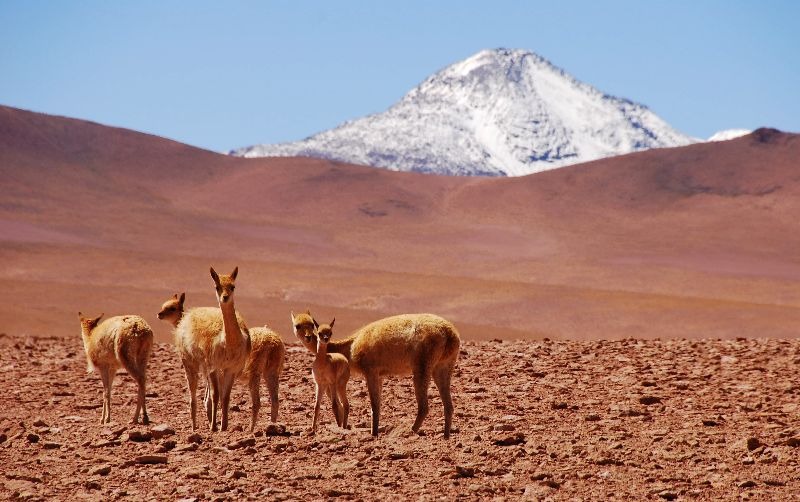
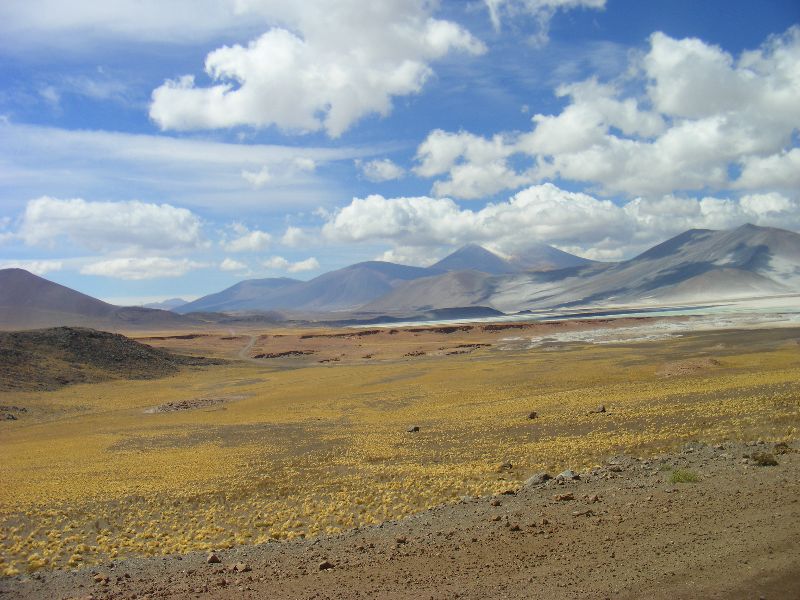
The Altiplano is a huge plateau at an altitude of 4,000m/13,200ft. It is an area of vast expanses of land cut into by deep channels and valleys, sprinkled with high salt lakes and where dark masses of lava from volcanic eruptions change the terrain. Rain is rare, temperatures fluctuate wildly and the atmosphere at this altitude is transparent and luminous. Although the conditions are harsh, many plant and vegetable species exist here and have adapted to the demands of the climate and terrain.
Located in the Salar de Atacama in the northern sector, closer to San Pedro de Atacama, is the Cejas Lagoon. This is a roughly circular opening in the Salar offering a very deep pool of clear, saline water that appears to be “bottomless”.
The excessively high salt content provides incredible buoyancy for bathers and is an interesting experience for those who enter. The view of the unbelievably impressive, surrounding landscape whilst bathing is a draw-dropper.
Note: The surrounding edges of the lagoon are made from salt crystals that are sharp and can cut feet, so best to wear bathing shoes. Also, after bathing the salt will be all over your body, so best to wash down with bottled mineral water, or sweet water brought from the hotel.

We are distinguished partners with the Australis, Skorpios and Navimag ship companies. In each case we offer accommodation on board their vessels as stand-alone reservations or as part of your wider travel itinerary. Each ship offers the opportunity to experience Patagonia from the sea and see exactly what the pioneer sailors saw when they ventured upon these parts hundreds of year ago: pristine forests, snow-covered mountains, fiords, glaciers, marine fauna and uninhabited islands.
We are distinguished partners with the Australis, Skorpios and Navimag ship companies. In each case we offer accommodation on board their vessels as stand-alone reservations or as part of your wider travel itinerary. Each ship offers the opportunity to experience Patagonia from the sea and see exactly what the pioneer sailors saw when they ventured upon these parts hundreds of year ago: pristine forests, snow-covered mountains, fiords, glaciers, marine fauna and uninhabited islands.
“All in all one of the best holidays we have ever had, if not the best, so thank you for putting together such an enjoyable itinerary for us.
With best wishes for the new year.”
Joe
“Our 60th birthday trip has been so amazing because of your fantastic help. We both turned 60 years old in 2018 so we wanted to celebrate by proving to ourselves we were still fit enough to do this kind of trip.
Your help made this easy, so THANK YOU!!!!!!”
Randy and E
“We are getting ready to leave and I just wanted to thank you for helping us along the way. We had a great time and the weather was perfect. On the “O circuit” all your arrangements went smoothly.“
Marc
Our philosophy is to offer you an experience. Not just a holiday, not just a travel plan, but a life experience. We do this by creating travel itineraries that incorporate destinations, hotels and services that are special, that we know will offer you a memorable travel memory.
Please supply us with as much information as you can about where you want to go, what you want to do, what you want to experience and how much money you want to spend (or do not want to spend!). How many people, what type of beds (matrimonial, twin, single etc.)
VIP – if you are a VIP in any of the fields such as celebrity and / or political and / or business, and you need “special attention” such as privacy and / or security for your trip, please use an alias in the enquiry, but mention that you are VIP and one of the directors will handle your request and keep your real name and details confidential.
"*" indicates required fields