Clothes to Pack & Wear when Visiting Patagonia

Clothes to Pack & Wear when Visiting Patagonia

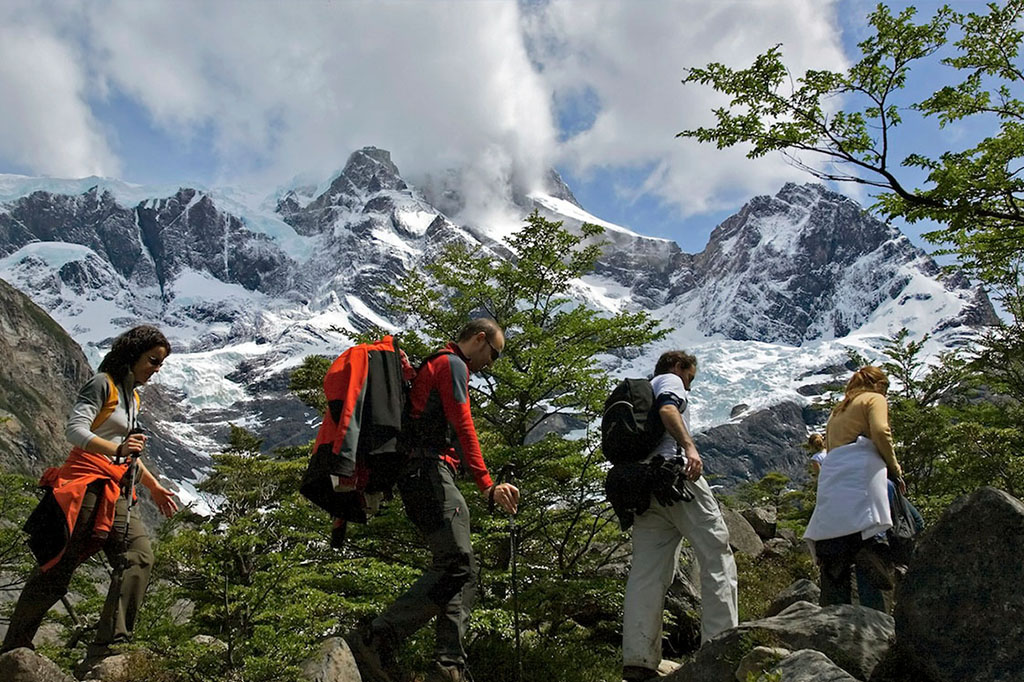
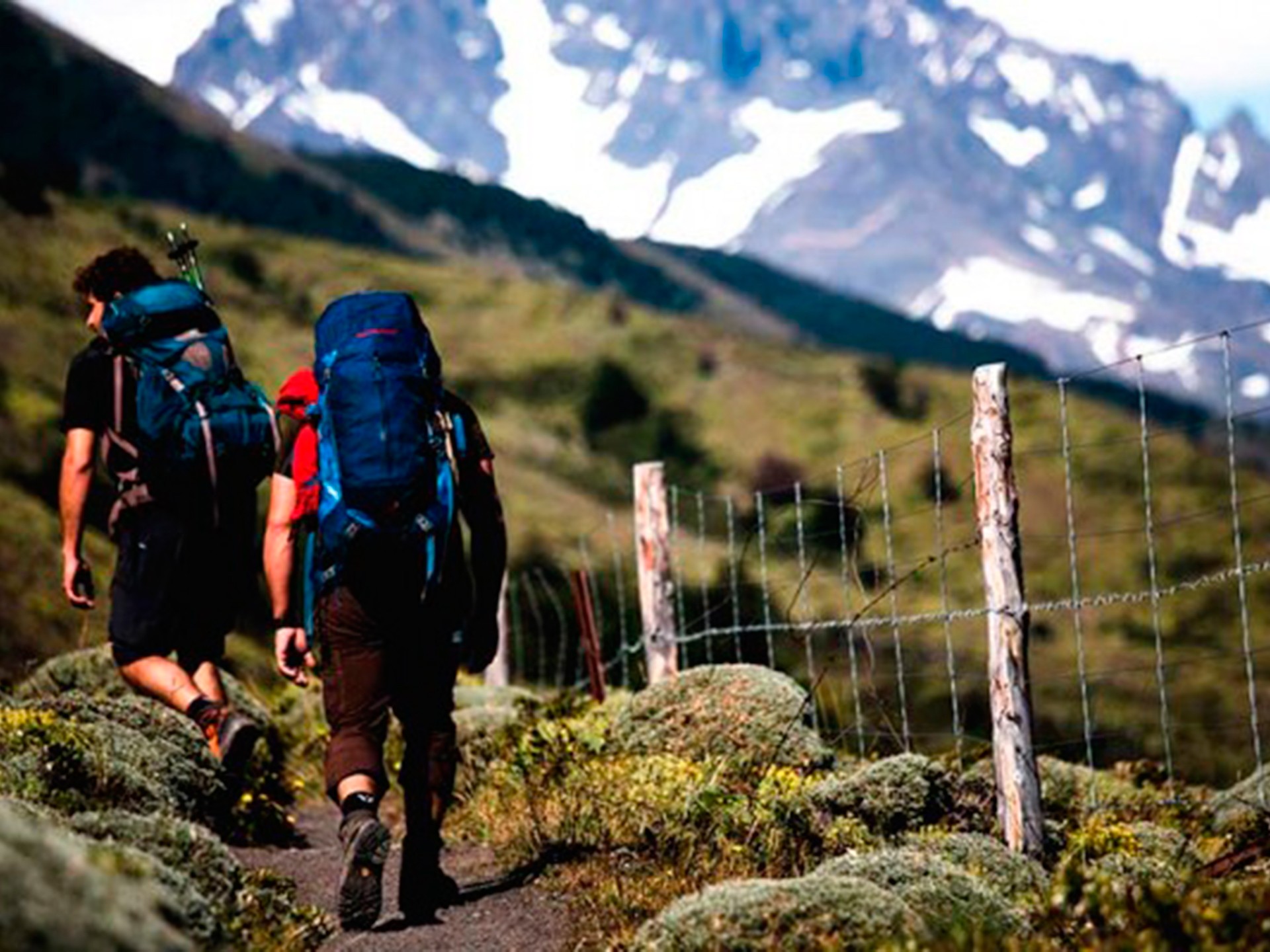
Considering how unpredictable the weather can be throughout Patagonia, visitors must bring the right clothes and be read for changeable weather situations.

Try to bring LAYERS of “breathable-fabric” clothes. What we mean by this is to have different “layers” of clothing that can be taken off, or put on easily, to adapt to any change in weather and as you heat up and cool down on a trek. For example, you can take off an outer jacket, as well as a polar (fleece) top, or put these on as required, this is what is referred to as “layers”.

Be aware that cotton undershirts are NOT recommended because when you sweat the cotton will not dry quickly. Therefore, you will end up with cold clothing stuck to your body. You will need a synthetic-fibre undervest.

What Clothes to Put on and Where

Underwear for Main Body

An under vest (long sleeved if possible) made, ideally, from synthetic fibres so it dries quickly. If very cold weather (ie early spring, winter months or autumn) then bring thermal underwear made from synthetic fibres. The reason for synthetic fibres is because when you are walking for several hours you will build up a sweat and your under garments will get wet. Consequently, you will get cold when you stop and your wet, cold undergarment will make you colder if made from cotton. Therefore, if you have an under vest made from synthetic material it will dry more quickly.

Over Your Underwear

For your body you need a breathable top such as a fleece, or polar. Most importantly, over your fleece, or polar you need a waterproof, windbreaker jacket.

Your Legs

You will need trekking pants, resistant to rain and wind, but made from a breathable material otherwise you will sweat. Above all, do not use jeans because they are NOT good as they can get wet and not dry.

Over your trekking pants you will need waterproof, shell pants to keep your legs dry in the event of heavy rain.

For your feet, use synthetic socks and waterproof trekking boots with ankle support and a none-slip sole.

Note that if your footwear is new make sure you break them in prior to using them on a trek.

Your Hands

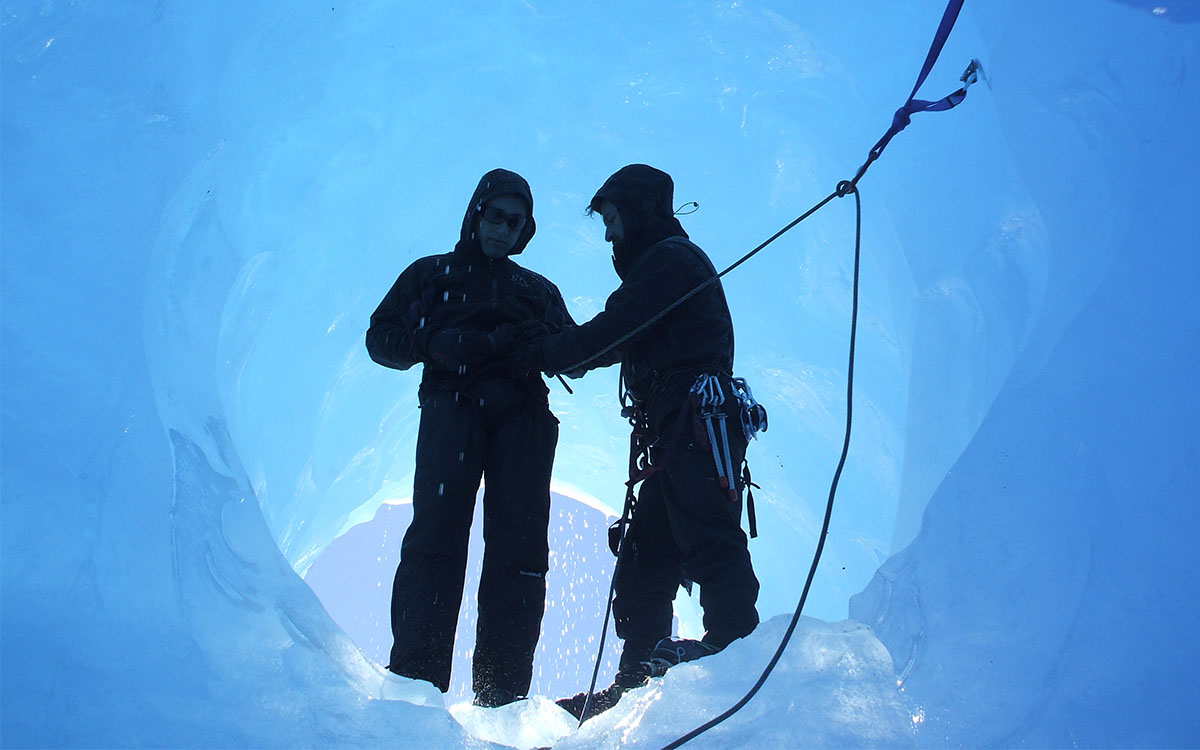
Over your hands you need gloves. For example, close to glaciers it can be very cold.
On your head please consider using a warm hat (not a jockey cap) and a headband to cover your ears, when not using a hat.

Your Eyes

Bring sunglasses. Not only for sunny days, but also when you are close to a glacier there will be a very strong glare.

Your Skin

Don’t forget to bring sun protection cream, and use lots of it.

Extras

For your personal use, bring a backpack for food, water and clothes.
For your safety: a battery-operated torch for when power is out or if you are arriving to a refugio in the dark. Above all, take with you during the trek extra water and snacks. Most importantly, prepare for all weather conditions and dress for the outdoors.

Do NOT - Go off the trail because if you have the slightest incident such as twisting an ankle, you may not be found.

Torres Del Paine   What To Wear

Climate & Weather

El Calafate Climate & Weather

EL CALAFATE WEATHER
El Calafate Min Max Temp Graph

Climate & Weather

El Chalten Climate & Weather

EL CHALTÉN WEATHER
El Chalten Min Max Temp Graph

El Chalten, Patagonia, Argentina

El Chalten, Patagonia, Argentina

Introduction

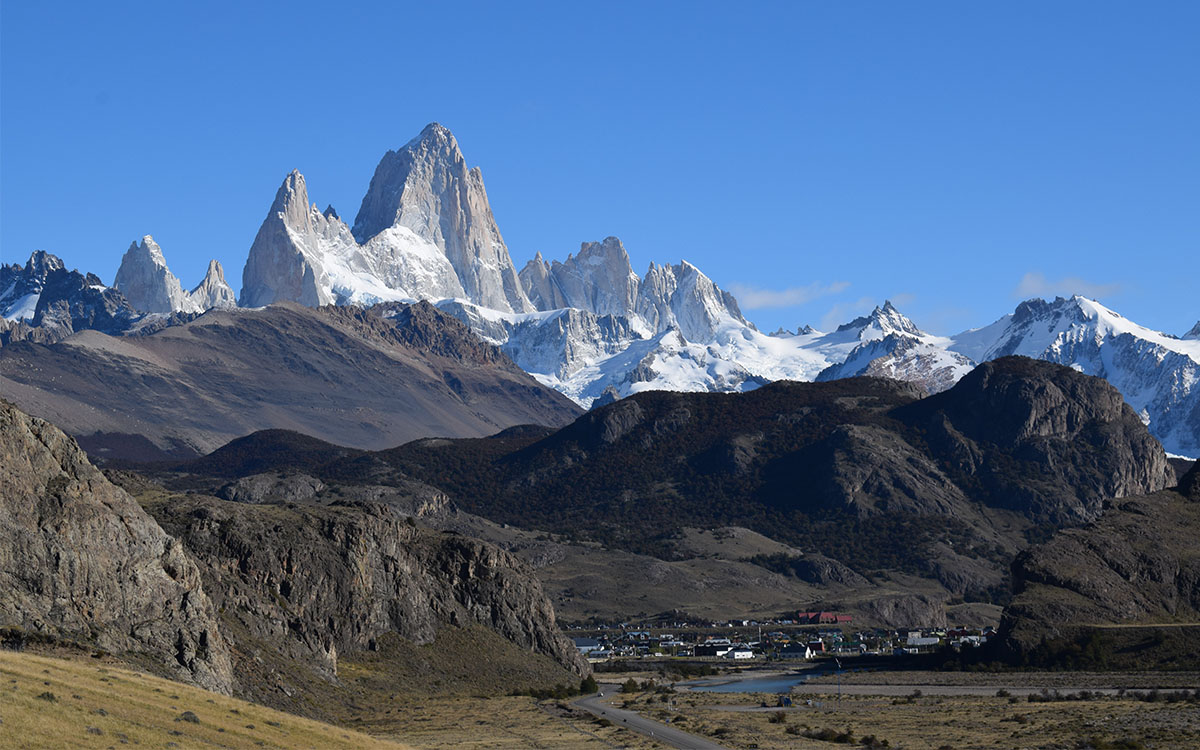
Located 3hrs from El Calafate, El Chalten village is home to the stunningly impressive Mount Fitzroy, and the vertically-sided Torre mountain peak as well as a number of great trekking trails.

El Chalten is the base from which to hike to Mirador del Torres, Cerro Torre, Campamento de Agostini, Laguna Torre, Mirador Maestri, Camp Poincenot, Mirador Glacieres, Laguna de Los Tres, Laguna Sucia and Laguna Capri.

We can include El Chalten into your Patagonian itinerary on its own, but we suggest you combine a stay here with El Calafate and Torres del Paine in Chile.

Note: ExperienceChile.Org will create a custom-made travel itinerary to your specifications. Just let us know.

Description

El Chalten is the National Capital of Trekking in Argentina. In this stunning natural scenery, you have multiple and varied options for walking, climbing, going on excursions and expeditions.

It’s a very small, touristic village located beyond the northern end of Lake Viedma and within the Los Glaciares National Park 200km north from El Calafate. Originally, the indigenous Tehuelche people named the high-jagged peak, now called Mount Fitzroy, as El Chalten, which means “smoky mountain”. Considering that for most of the year Mount Fitzroy is shrouded in mist the “smoky mountain” name is appropriate.

However, the peak was re-named Mount Fitz Roy after Captain Robert Fitzroy of Charles Darwin’s ship “The Beagle” (Charles Darwin being an important and historic scientific naturalist who came to the southern shores of Patagonia), but the name El Chalten was adopted by the settlers as the name of the village.

The main attraction – Mount Fitz Roy, dominates over the village of El Chalten, reaching a height of 3,405m. However, there are a number of dramatic-looking peaks that fill the horizon, but one in particular is awe-inspiring; it is the vertically-sided Torre. This is a jagged-formed mountain, a little like “the Shard building” in London, but natural, reaching a height of 3,102m. In the “foothills” of these towering, snow-topped mountains are lagoons, glaciers and waterfalls interconnected by several trekking trails.

Unlike Torres del Paine, which relies on refugios and hotels to accommodate visitors to the Park, El Chalten is a “working village” that sits within the Glaciares National Park. Therefore, visitors mainly sleep in the village each night and each day will walk one of the hiking trails then return to their same comfy hotel, avoiding the need to camp.

The demand from visiting trekkers has spawned a few restaurants and basic shops in the village, and some of the accommodations provide internet and phone access. The accommodation in the village comprises a few hikers’ hostels, a handful of boutique-style, small hotels, and one “higher-end” hotel. Other than that, the village is far removed from the normal flow of news and communication, even during high season (November-February), and is nearly deserted during off-season (the Southern Hemisphere winter).

El Chalten hotels

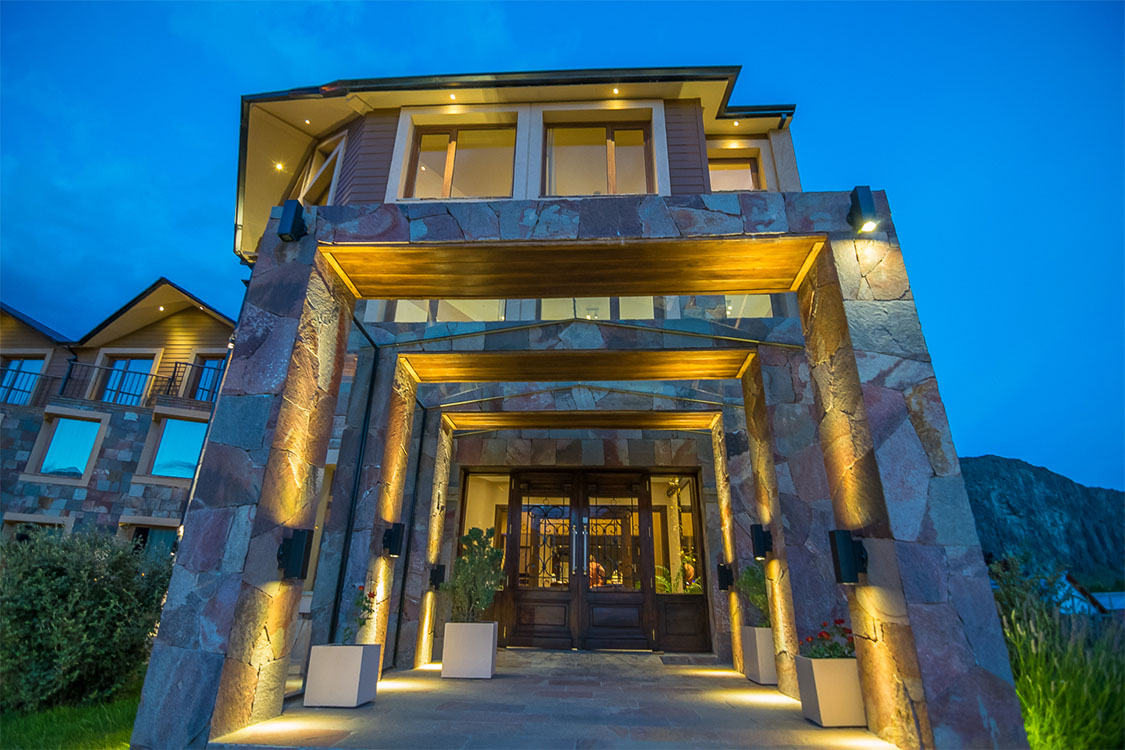
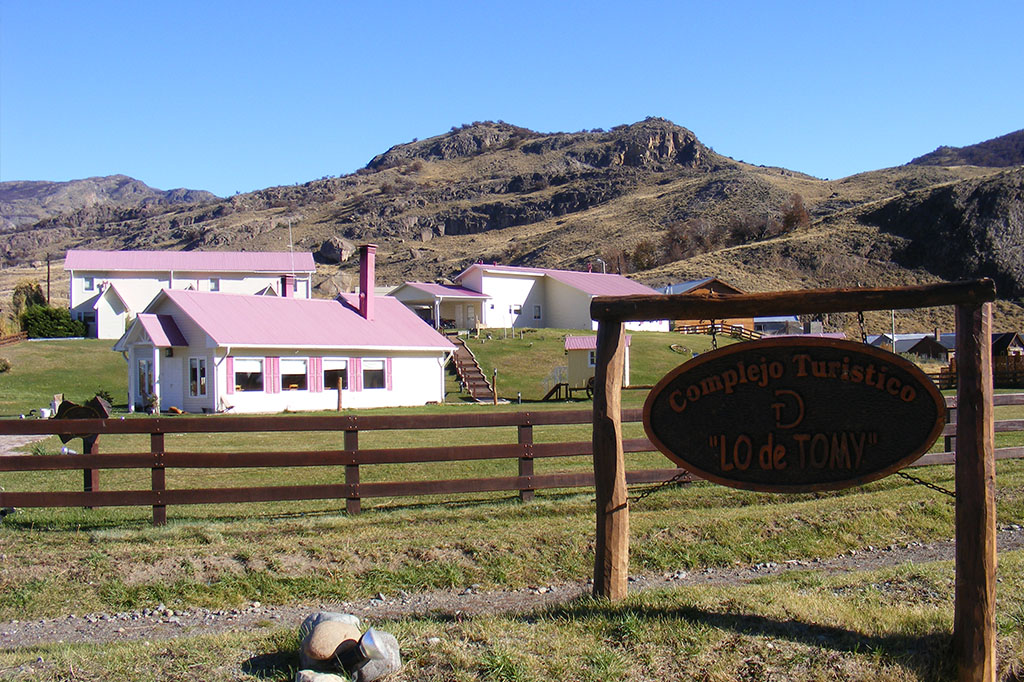
El Chalten offers various options for hotel accommodation ranging from lodges to high-end hotels.

El Chalten Visitor Information at National Park Entrance

El Chalten Village Entrance Experience Chile

The park rangers base is located at the entrance to the village and here they provide camping and national park information for visitors. All visitors must stop here and listen to a welcome from the rangers.

For details on the various hikes, both easy and “more serious” as well as our itineraries please see our left-side menu bar.

How to Get to El Chalten

How to Get to El Chalten

Getting to El Calafate

  • To get to El Chalten you will first need to get to El Calafate. To get to El Calafate you will need to either fly in from Buenos Aires, Ushuaia or Bariloche.
  • Alternatively, you can get to El Calafate by road from Torres del Paine and Puerto Natales, which will take 6hrs (including the paperwork at two border posts – and NOT what Google maps says!).

Note: ExperienceChile.Org will arrange the transport and transfer you need to get to El Calafate as long as we are handling the rest of your travel itinerary.

Getting to El Chalten from El Calafate

Unless you hire a helicopter, the road transfer will take 3hrs from El Calafate to El Chalten. There are basically three ways to cover the distance.

Regular Bus

El Chalten Bus From El Calafate Experience Chile

Each day there is a regular, scheduled bus service that departs from the bus terminal in El Calafate (tickets need to be bought in advance to be sure of a seat). On the way the bus will stop off for a short bathroom and coffee stop at the famous La Leona hotel.

There is also a return service from El Calafate each morning and evening.

Private Transfer

Although the transfer time will take the same as the regular bus, a private transfer means a door-to-door service, privacy and an overall more exclusive service that will depart when you want.

Rent a Car

Naturally, if you have a driver who is willing to drive for three hours then a rent a car will offer total independence.

However, when you are at El Chalten, the car will be somewhat wasted because there is nowhere else to drive to and if you are trekking it will parked all the time.

Here at ExperienceChile.Org we can arrange any of the above services for you as long as we are handling the rest of your itinerary.

El Chalten Trekking Information

El Chalten Trekking Information

Click on Trekking Trails Map above for larger image

Introduction

El Chalten has become established as a firm favourite for destination trekkers. Offering invigorating trails amid stunning scenery, but with hotel comfort each night, this is an ideal destination for any outdoor lover.

Treks will start from El Chalten village or from Hosteria Pilar, but Hosteria Pilar is located 17km north from the village. A few other treks start at the Laguna del Desierto, which is 37km north west from the village and from the Humuel Reserva, also outside the village.

El Chalten Explora Lodge Hiking Day
El Chalten Explora Lodge Los Tres Lagoon
Explora Lodge Patagonian Lagoon

How Long are the El Chalten Treks?

El Chalten treks vary in length with some being a short, hour or two walk, and others requiring a trek of many hours, including a few with overnight camping options.

Many of the treks also start at the same place and follow, initially, the same route until they split and lead to a different final, destination.

What is Fitz Roy at El Chalten?

Fitz Roy is the name of one of the mountain peaks at El Chalten. The Andes mountains run north to south to the west of El Chalten village and Mount Fitz Roy is in the northern sector at a height of 3,405m. Fitz Roy is also the generic name applied to the trekking trails that provide a view of the Fitz Roy mountain.

What is the Torre at El Chalten?

The Torre is Mount Torre, one of the mountain summits at El Chalten reaching a height of 3,102m. Also, in this sector is the spectacular, jagged-like peak is Poincenot reaching a height of 3,102m. This mountain is to the south-west of El Chalten village and visible from afar. Trekking trails in this sector tend to be enveloped in the category of “trekking Torre”.

El Chalten Trekking Trails

From El Chalten village you will be able to hike these following well-known trails: the Mirador del Torres, Cerro Torre, Campamento de Agostina, Laguna Torres, Mirador Maestri, Camp Poincenot, Mirador Glacieres, Laguna de Los Tres, Laguna Sucia and Laguna Capri, among other trails.

In our menu bar you will find access to all the information you need about each trail as well as information on our El Chalten trekking map.

What follows below, on this page, are only the trail names, but you can link through to the actual page with information on the trail.

El Chalten Half-Day Treks

El Chalten Full-Day Treks

Hotel Accommodation,
El Chalten, Patagonia

Click on Hotel Location Map above for larger image

Introduction

El Chalten is a small Patagonian village nestled at the foot of mount Fitzroy. It is also inside the Glaciares National Park and grows each year as a trekking destination.

We view hotel selection as being critical to the contribution of the overall experience and enjoyment of your holiday. Some hotels can have nice pictures and maybe very positive reviews – often fake and, of course, they never publish the negative ones!. Often, the realities of if they happen to be close to a noisy road, or night club or sports facility are often not mentioned. Likewise, maybe the rooms are very small, not that clean and so on. There are also some hotels that are literally “a bed for the night” and others that offer an incredible experience in their own right.

We work with all hotels in El Chalten from mid-level upwards. Therefore, should you want a particular hotel included in your itinerary just mention this in the enquiry process.

El Chalten hotels

El Chalten offers various options for hotel accommodation ranging from lodges to high-end hotels.

Premium Hotels

What is a Premium Hotel or Lodge?

The reason we have included the properties below in our premium category is quite simply because they excel in all that they offer. These hotels enjoy a unique location, offer spectacular views from many parts of the hotels’ interior and bedrooms.

The level of accommodation is extremely high in terms of comfort, furnishings and interior decoration.

All El Chalten Premium Hotels

Top Level Hotels

The hotels that are the best at the destination in terms of comfort, decoration, service and the overall package we have put into the "top level" category. This does not mean that a hotel in this category is at the same level as another hotel in another destination in our "top level" category. It just means that these hotels are the "better hotels" at this destination out of all options.

All El Chalten Top Level Hotels

Mid Level Hotels

The hotels we have put into the "mid level" category are those hotels that do not merit being in the "top level", but are not at the lowest level either, hence "mid level". Usually, these hotels are perfectly good for a couple of nights and offer "practical" accommodation and facilities. If you are looking for only a "place to stay" and nothing more then a mid-level hotel will suffice.

All El Chalten Mid Level Hotels

Boutique Hotels

Our definition of a "boutique hotel" is one that offers a particular, "personal charm". These hotels are usually small in terms of the number of rooms and also "cosy", even "homely". However, there are also more modern "design" hotels that also come into the category of "boutique". These hotels also small regarding room numbers, but rather than offer the "cosy" feeling they offer the "clean, minimalist" feeling.

All El Chalten Boutique Hotels

Good Level Private Home

In some places in South America people with large private homes have started to offer them as small hotels.

We have come up with the category "Good Level Private Homes" purely as a way to group these properties together. In our view such private homes are usually at a good level. They offer decent room accommodation, nice living room areas, often with good views along with a personal environment. Because each private home is different there is no standard measure.

Some are so outrageously "top end" that they can resemble something out of a James Bond film, whilst others are more modest, perhaps rustic.

All El Chalten Good Level Private Homes

Rustic Lodges

In our view a lodge is a building constructed from natural wood, or at least has natural wood on its exterior as well as natural wood in the interior. Often, both the exterior and interior will have some sections of natural stone to accompany the overall organic appearance of the building.

As with hotels and private homes the types and levels of lodges can vary considerably. Some are at the luxurious level and others are very simple and rustic end of the spectrum.

When we say "rustic" we refer to the overall impression as being a simple place, with no particular high-end interior decoration and / or furnishings. Such places can be nice places to stay at, especially if you are looking to save on cost as well as enjoy a "no frills" environment. Often such places are very homely.

All El Chalten Rustic Lodges

Self Catering Apartments

In some of the destinations we offer there are accommodation options that come with a small kitchen.

Such facilities are for those travellers who prefer to cook their own meals, either because they like to, or to keep costs down. Therefore, a self-catering apartment is just that, it is an accommodation option that comes with a small kitchen for self catering purposes.

Of course, if you stay in such a place you are not obliged to use the kitchen, but you may enjoy the extra space that comes with such places.

All El Chalten Self Catering Apartments

Approved Hotels

During our inspections we ask the hotel owners if we can stay overnight at the hotel. We ask this because staying overnight is vastly different to just popping in with a quick visit. We like to know what the noise pollution is, what the breakfasts are like, how comfy the beds are, what the staff are like.

Therefore, if you see “inspected & approved” we are saying that we feel the hotel is perfectly good. If it does not have “approved” it means we have not stayed overnight or we feel it is not up to the level that our clients will require.

Approved By Experience Chile

Inspected Hotels

The reason we have a selected number of hotels that we choose to work with is because we regularly visit the hotels in Puerto Natales in order to know what they are really like. We cannot rely on the hundreds of often “suspect” reviews published in the internet. Therefore, we try to promote the better hotels that we know will make your trip more enjoyable. However, if you see that we have “inspected” a particular hotel, this does NOT mean that we recommend it necessarily. The ones we recommend are “approved”.

Inspected By Experience Chile

Other Hotels

We also include in the accommodation section information on hotels that are not, perhaps, that great, and in some cases maybe they are a little “tired”, but clients will often ask for such hotels because the cost is lower or because they are under the mistaken belief that they are better than they are. We have not said derogatory things about these hotels, but if you see a lack of enthusiasm in the description you can derive that that particular hotel is “average”.

Activities from Punta Arenas, Patagonia

Punta Arenas (meaning Sandy Point) is the southernmost city on Chile's continental territory. Sat beside the historic Straits of Magellan, a sea channel connecting the Atlantic Ocean with the Pacific Ocean. Consequently, there are a number of activities to participate in if you are staying here.

Activities from Punta Arenas, Patagonia

Note: Experience Chile can include any of the activity options above in your itinerary, as long as we are handling the rest of your itinerary. However, we do not offer any of these options as standalone reservations.

Punta Arenas Places of Interest

The area around the main plaza has some historic, architectural interest as some of the buildings have a similar look and style found in some eastern European countries.

The city tour will usually include a visit to the Bulnes Fort because it is the “birth place” of Punta Arenas, although it is a quite a basic to look at. It is the location of the first settlement until the population moved to where the city is now.

Punta Arenas, Patagonia

Punta Arenas, Patagonia

Welcome to Punta Arenas

Punta Arenas (meaning Sandy Point) is the southernmost city on Chile's continental territory - a 4hr flight from Santiago. Sat beside the historic Straits of Magellan, a sea channel connecting the Atlantic Ocean with the Pacific Ocean. The city centre resembles the architecture found in northern and eastern Europe, which of course is in line with the early European settlers from the Croatia, Serbia and Scotland. The airport here is the main entry point into Chile´s stunning Patagonia, also to Antarctica, and the seaport is the embarkation point for cruises to Ushuaia in Argentina. The city is a relatively clean, modern city with an unusual history based on maritime trade, sheep ranching, coal mining and more recently petroleum extraction.

What we Offer

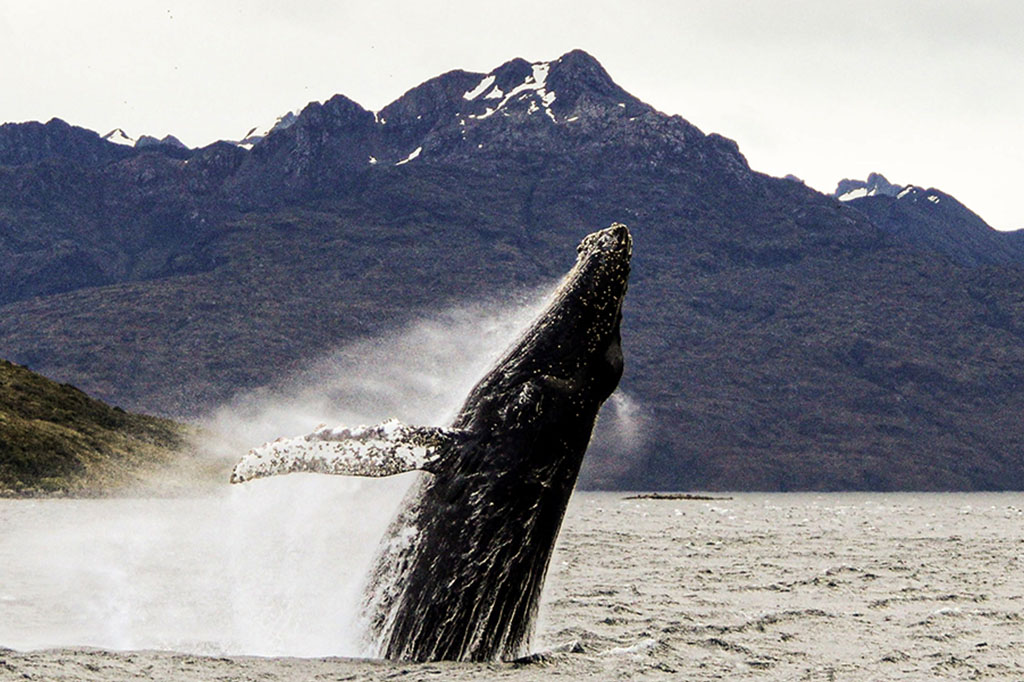
We can arrange itineraries that include a logistical rest night in Punta Arenas only, or to be able to enjoy some of the activities that originate from here such as seeing the penguins on Santa Magdalena Island (half day), King Rey penguins on Tierra del Fuego (long full day), whale watching as either a long full day, or a night on an island in the middle of the marine park.

Typically, you will need two nights in Punta Arenas to be able to do most of these activities and we would build Punta Arenas into your itinerary pre or post Torres del Paine.

We also offer fabulous Patagonia cruises to Ushuaia and Fly-Cruise combination to Antarctica from Punta Arenas.

How to Get to Punta Arenas

Arrivals to Punta Arenas are usually from Santiago on a flight that takes about 4hrs if direct and 4.5hrs if there has been a stop off at Puerto Montt.

The other ways to get here are by way of the Australis Cruise ship from Ushuaia in Argentina, by a 12hr bus trip from Ushuaia also or a flight from Puerto Williams (Chilean territory opposite Tierra del Fuego and the other side of the Beagle Channel to Ushuaia) or even a long ferry boat trip also from Puerto Williams.

History

Punta Arenas was officially founded in 1848 when the previous, earlier-established settlement, was relocated to its current position. It is the Southernmost city on the American continent. Prior to the opening of the Panama Canal in 1914 Punta Arenas was a vital and major seaport for shipping coming from Europe to the western side of the Americas via the Strait of Magellan (a natural sea passage between the Atlantic and Pacific Oceans avoiding the need to circumnavigate the longer and more arduous journey around Cape Horn), although the Clipper class ships still used the Drake Passage around Cape Horn in order to have enough space for navigational position manoeuvres.

Today, in terms of its maritime importance it is a key stop over for large cruise ships and also the departure point for maritime cruises to Tierra del Fuego and Ushuaia.

The city of Punta Arenas also remains an important fishing port and Chilean Naval base. Punta Arenas is also still a highly important centre for the local wool and lamb trade with the principal exporters operating from here and sending their produce all over the World.

Punta Arenas offers an ideal rest point to break the journey between Santiago and Torres del Paine and is also a place from which to visit penguin colonies in the area. More recently it has also become the base from which to go on a whale-watching experience.

Punta Arenas hotels

Punta Arenas Activities and Places of Interest

The area around the main plaza has some historic, architectural interest as some of the buildings have a similar look and style found in some eastern European countries.

The city tour will usually include a visit to the Bulnes Fort because it is the “birth place” of Punta Arenas, although it is a quite a basic to look at. It is the location of the first settlement until the population moved to where the city is now.

Punta Arenas Activities

Clothes to Bring

Try to bring LAYERS of breathable clothes that can be taken off or put on easily to adapt to any change in weather and as you heat up and cool down on a trek. Cotton undershirts are NOT recommended – see below.

Ideally clothes such as:
  • Over your body skin: an under vest (long sleeved if possible) made, ideally, from synthetic fibres so it dries quickly. If very cold weather (ie early spring, winter months or autumn) then thermal underwear made from synthetic fibres. The reason for synthetic fibres is because when you are walking several hours you will build up a sweat and your under garments will get wet, this then gets cold when you stop and will make you cold unless the wet material dries quickly. Cotton does not dry quickly, whereas synthetic material will dry more quickly.
  • Over your under vest: a breathable top such as a fleece.
  • Over your fleece: a waterproof windbreaker over jacket.
  • For your legs: trekking pants, resistant to rain and wind, but made from a breathable material otherwise you will sweat. Jeans are NOT good as they can get wet and not dry.
  • Over your trekking pants: waterproof shell pants to go over your trekking pants in the event of heavy rain.
  • For your feet: wool or synthetic socks. Waterproof trekking boots with ankle support and none-slip sole. If new make sure you break them in prior to using them on a trek.
  • For your hands: gloves. Close to glaciers it can be very cold.
  • For your head: a warm hat (not a jockey cap), sunglasses and sun-protection cream and a headband to keep your ears warm when not using the hat.
  • For your personal use: a back pack for food, water and clothes.
  • For your safety: a battery-operated torch for when power is out or if you are arriving to a refugio in the dark. Take with you during the trek extra water and snacks. Prepare for all weather conditions and dress for the outdoors. Do NOT go off the trail because if you have the slightest incident such as twisting an ankle, you may not be found.
Places of Interest in and around Punta Arenas, Patagonia

Places of Interest in and around Punta Arenas, Patagonia

Introduction

Apart from the exiting activities that you can participate in when staying in Punta Arenas, there are also some museums that will show the historical importance of the city, both on the World stage and locally.

These we detail below.

Main places of interest

The Regional Braun-Menendez Museum

Introduction

The Magallanes Historical Museum, inaugurated in February 1983, in the magnificent setting of the Braun-Menéndez Palace in Punta Arenas, brings together an important collection of objects that are testimony to the passage of man during his historical journey through the region.

Today, its magnificent palaces are two of the most representative places of the city's architecture and past.

The Family

Mauricio Braun Menéndez's palace was the residence that housed the union of the Braun family - from Russia - and the Menéndez family, wealthy Chileans, and important merchants from Patagonia. The residence was built between 1903 and 1906 under the charge of the French architect Antoine Beaulier, who also designed other important buildings in the city.

The Maggiorino Borgatello Museum

Introduction

This is a museum that illustrates the history of when various indigenous people lived in the region.

The Salesian order, which landed in Punta Arenas in 1887, initiated the task of collecting evidence of the various indigenous cultures who previously lived in the area with the aim of creating a museum. It would serve as a legacy for future generations to learn about the expressions and ways of life of native peoples, their environment, and the colonization process. Therefore, the museum was created in 1893.

Faithful to a meticulous work, the various rooms in the museum reflect the cultures of the Onas, Tehuelches, Yámanas and Alacalufes, peoples as well as the suffering they endured upon the arrival of the Spanish colonizers and then the European pioneers.

In turn, the museum has areas dedicated to pioneers, including the time of the gold rush that marked the region at the end of the 19th century.

On the other hand, there is a careful collection of personal objects of Father Alberto De Agostini, a great explorer of the region, and the instruments of the first meteorological observatory in Punta Arenas.

The Nao Victoria Ship

Introduction

This was the first ship to circumnavigate the world!

The Nao Victoria Museum is, effectively a dry dock, located on the outskirts of the city in the direction towards the airport. However, despite being a bit off the beaten track, the Museum is easily accessible.

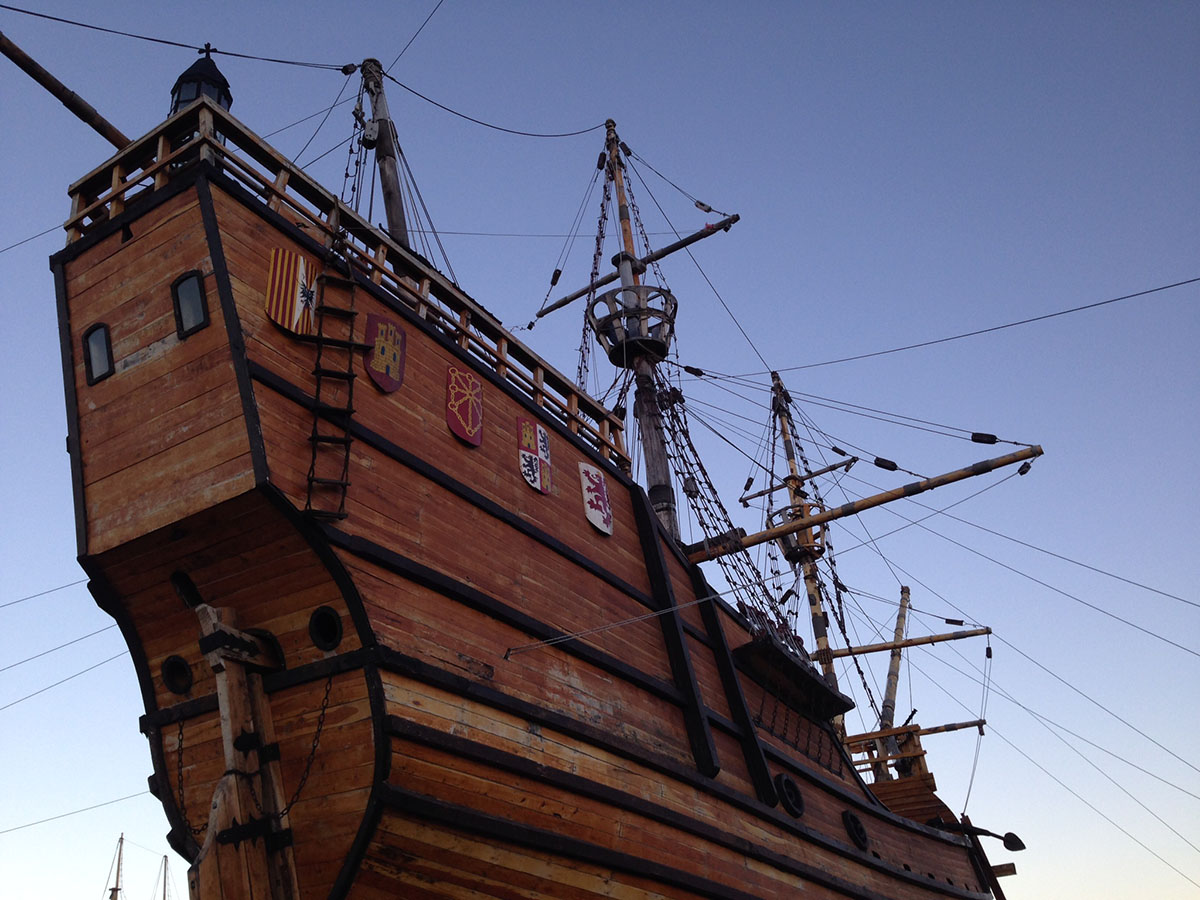
This is a nautical museum with replica ships sat in dry dock (as in on the ground and not in the water), that played a significant part in the history of Punta Arenas and southern Patagonia. One ship, the Nao Victoria, is a replica of the one commanded by Hernando de Magallanes, who, in 1520, participated in the expedition that discovered the Strait that was named after him “Magallanes Strait”.

The Nao Victoria is a full-scale replica of Hernando de Magallanes' ship. A cultural tourist attraction, unique in Magallanes, that can be visited by the public and allows the experience of life board to be lived through environmental sounds, replicas of everyday objects, navigation instruments and artillery covering the period 500 years ago.

You can also visit the replica of the Schooner Ancud and the spectacular HMS Beagle, the ship that was used by Charles Darwin on his trip to Patagonia.

Fort Bulnes (Fuerte Bulnes)

Introduction

Fort Bulnes an historic fort, created by the Spanish colonizers in 1843 in order to protect their settlement from any unwelcome visitors.

It is a small place with cannon mounts and some old cannons in place.

The location has undeniable advantages from a strategic, defence, point of view, but it did not allow for a full settlement of the area because the nearby land was completely unsuitable for agriculture. This reality motivated the foundation, in 1848, of Punta Arenas, 60km north, where the entire colony of the Fort was transferred.

Details

How to get there:
  • To get to Fort Bulnes from Punta Arenas, you must drive 60km south.
Open:
  • Every day from 9.00 to 18.00 hrs.
Entrance fee:
  • Ch$12.000 per person (2021)

The Sara Braun Municipal Cemetery

Introduction

Cemetery’s are not a usual “place of interest”, however, in South America they draw in visitors because of the ornate mausoleums and, often, the historical names that can be found on the tombs.

The Punta Arenas (Sara Braun Cemetery) is no exception and here there are numerous, European names that played an integral part in the development of Punta Arenas and other settlements throughout Patagonia. The cemetery silently recounts the history of the city.

The construction of the Cemetery is part of the historical context of European migration to the Magallanes Region and Chilean Antarctica at the end of the 19th century. The desire to come to this land, so far away from everywhere else was motivated by the discovery of gold in Tierra del Fuego. This was followed by the introduction of the sheep farming.

The Chilean government also enticed adventurers, by way of free land, to come here for the purposes of settlement and development of economic activities as a way for Chile to claim this as its territory.

In this place the remains of these pioneers, settlers, and merchant’s rest, leaving behind an historical record of the various nationalities of immigrants who came to the region and that make up the Magellan culture today.

Details

Opening hours:
  • Monday to Thursday from 08:00hrs to 13:00hrs & from 14:00hrs to 18:00hrs
  • Friday from 08:00hrs to 17:00hrs
  • Saturday and Sunday from 09:00hrs to 17:00hrs
Entrance:
  • Free
Location:
  • Avenida Bulnes s/ número (with no number)

Note: Experience Chile can arrange the above activities as part of the rest of your itinerary that we will have arranged. However, we do not arrange these services as standalones.

How to get to Punta Arenas,
Arrivals and Transfers

Arrivals, Transfers & Transport

Introduction

Punta Arenas is situated beside the Magallanes Strait, several thousand kilometres south from Santiago. It is not connected by road through Chile – one has to go via Argentina if driving.

Consequently, the only way to get to Punta Arenas is by flying from Santiago; by ship from Argentina; by road from El Calafate and Puerto Natales; by flight or ferry from Puerto Williams.

Here, below, we list the options:

Flight and Transfer

El Calafate Flights
From Santiago

Flight 4hrs (or 4.5hrs if via Puerto Montt)

Regular flights are operated by a number of airlines from Santiago, international airport.

From Puerto Natales

Puerto Natales Bus From Punta Arenas Experience Chile
Bus, private transfer or rent a car

Either way the journey will take 3hrs.

From Puerto Williams

Puerto Williams Ferry Yaghan Experience Chile
Flight

Flight with Dap airlines 40mins

Ferry

Ferry Yaghan will take 32hrs, therefore overnight in reclining seats.

From Antarctica

Punta Arenas Antarctica 21 Experience Chile

Antarctica 21 (as part of an Antarctica expedition trip)

From El Calafate

Puerto Natales Bus From Punta Arenas Experience Chile
  • Bus to Puerto Natales 6hrs
  • Bus to Punta Arenas 3hrs

From Ushuaia

Punta Arenas Australis Cruise Experience Chile
Ship

Australis Cruise Ship

Bus

Bus, 12hrs

Note: Experience Chile can arrange any of the above transport options as long as we are also arranging the rest of your itinerary. We do not arrange any of the above services as standalone reservations.

Hotel Accommodation, Punta Arenas, Patagonia

Introduction

Punta Arenas city is set beside the Magallanes Stretch, facing the fabled island called “Tierra del Fuego”. There are only a few hotels that offer, what we would describe as “decent” accommodation.

Out of these few hotels we have selected, even fewer whom we work with and these are as follows:

Punta Arenas hotels

Top Level Hotels

The hotels that are the best at the destination in terms of comfort, decoration, service and the overall package we have put into the "top level" category. This does not mean that a hotel in this category is at the same level as another hotel in another destination in our "top level" category. It just means that these hotels are the "better hotels" at this destination out of all options.

All Punta Arenas Top Level Hotels

Mid Level Hotels

The hotels we have put into the "mid level" category are those hotels that do not merit being in the "top level", but are not at the lowest level either, hence "mid level". Usually, these hotels are perfectly good for a couple of nights and offer "practical" accommodation and facilities. If you are looking for only a "place to stay" and nothing more then a mid-level hotel will suffice.

All Punta Arenas Mid Level Hotels

Approved Hotels

During our inspections we ask the hotel owners if we can stay overnight at the hotel. We ask this because staying overnight is vastly different to just popping in with a quick visit. We like to know what the noise pollution is, what the breakfasts are like, how comfy the beds are, what the staff are like.

Therefore, if you see “inspected & approved” we are saying that we feel the hotel is perfectly good. If it does not have “approved” it means we have not stayed overnight or we feel it is not up to the level that our clients will require.

Approved By Experience Chile

Inspected Hotels

The reason we have a selected number of hotels that we choose to work with is because we regularly visit the hotels in Puerto Natales in order to know what they are really like. We cannot rely on the hundreds of often “suspect” reviews published in the internet. Therefore, we try to promote the better hotels that we know will make your trip more enjoyable. However, if you see that we have “inspected” a particular hotel, this does NOT mean that we recommend it necessarily. The ones we recommend are “approved”.

Inspected By Experience Chile

Puerto Williams, Patagonia, Chile

Puerto Williams, Patagonia, Chile

Introduction

Puerto Williams is a Chilean village on the northern shores of the sparsely populated island of Navarino. It is diagonally opposite the much larger city of Ushuaia, in Argentina. For those who make it here, often depending on the weather conditions, Puerto Williams offers a starting base from which to explore the remote island wilderness, or just take a few days to chill out and be relatively “cut off” from the rest of the World.

It is the southern-most populated village on Earth (prior to reaching Antarctica), located on the northern coast of “Isla Navarino” (Navarino Island) about 50km east from Ushuaia on the opposite side of the Beagle Channel. Founded in 1953 it has a population of around 2,000 people and is a highly important Chilean Naval base.

Puerto Williams, meaning Williams Port, was named after an Irish Captain called John Williams. The village comprises a number of simple, private houses, a plaza, an airport for air connection to Punta Arenas, a small yacht marina and houses for naval personnel.

Navarino Island is an untouched, remote island in the southern tip of South America. Beyond its southern shores is the famous Cape Horn, for which in summer months there are private yachts that offer charter trips to the area (note that these trips can take several days and in rough weather).

The island stands out for its biological diversity and untouched landscapes, as well as retaining a great treasure: the presence of the ancestral, ethnic Yagán people - one of the most rudimentary indigenous cultures with regards to its material development, but at the same time one of the most surprising with its oral tradition, and in its ability to survive around glaciers, canals, strong winds and generally difficult environmental conditions.

To explore the island and area around Puerto Williams it is best to come in the Chilean summer months of January and February and book the services of a local guide. Hotel accommodation is basic, except for one hotel outside the city.

Puerto Williams is connected to mainland Chile by air and car ferry from Punta Arenas (350km north) or by zodiac dingy from Ushuaia, via Puerto Navarino (directly opposite Ushuaia).

Puerto Williams hotels

Puerto Williams, How to Get Here, Transfers and Arrivals

Arrivals, Transfers & Transport

Introduction

Considering that Puerto Williams is on an Island the only way to get to this very small settlement is by boat or plane.

Location

Strategically located, Isla Navarino is 300kms south-east from Punta Arenas, but only 7kms south of Ushuaia crossing Canal Beagle, and 1,000 kms from Antarctica, being the closest, populated place to the white continent.

How to Get to Puerto Williams

Considering Puerto Williams is on a remote island there are only two ways to get here. One is flying in and the other is on a boat.

From Punta Arenas Flying

Puerto Williams DAP BAE Experience Chile
Flights are operated by DAP airlines.

They operate:

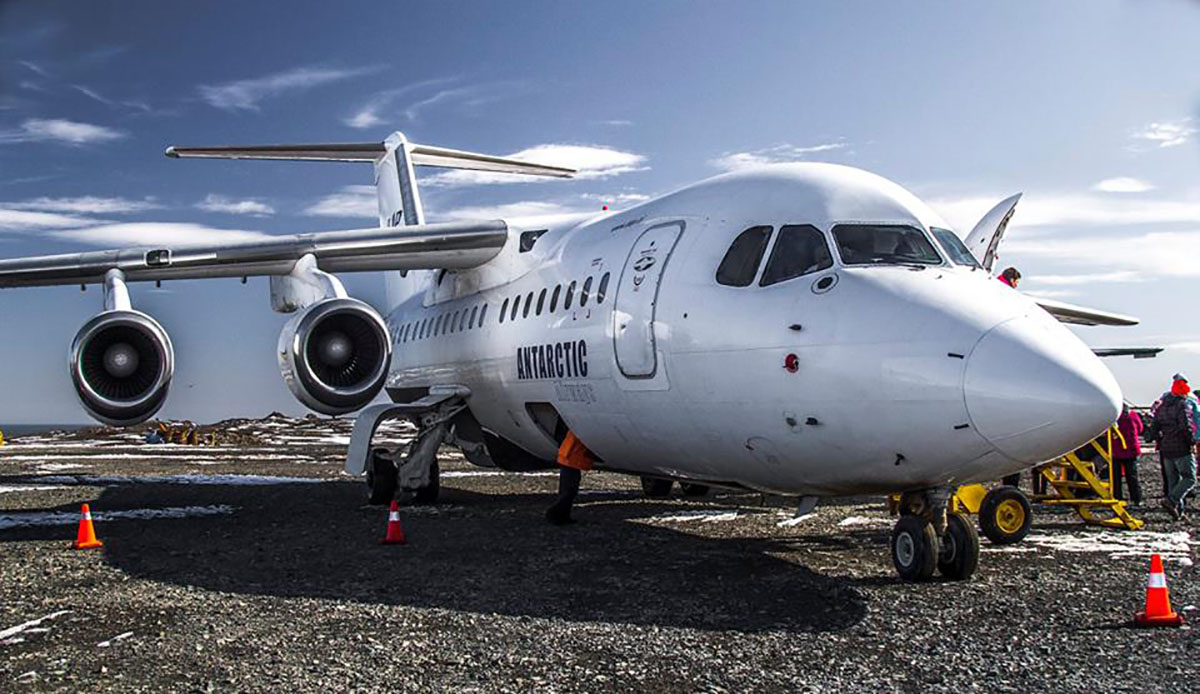
  • Monday, Friday and Saturday a BAE 146 with a capacity for 90 passengers.
  • Flight Duration: 40 minutes.

And

  • On Tuesday, Thursday and Saturday a Twin Otter, with a capacity for 16 people.
  • Flight Duration 1hr and 15mins.
Departure Times:
  • Punta Arenas (PUQ) to Puerto Williams (WPU) departs 10:00hrs.
  • Puerto Williams to Punta Arenas departs 11:30hrs.

Note: We can arrange this transfer as long as it is part of the rest of your itinerary that we are also arranging.

From Punta Arenas by Ferry (30hrs)

The Broom Austral ferry called Yagán operates twice a week. The trip takes 30hrs.

Note: There are only reclining seats for sleeping, therefore not particularly comfortable.

Puerto Williams Ferry Yaghan Experience Chile
From Punta Arenas to -

Puerto Williams departs on a Monday at 01:00hrs and Thursday at 18:00hrs.

From Puerto Williams to -

Punta Arenas departs on a Saturday at 16:00hrs; Tuesday at 14:00hrs and Sundays at 16:00hrs.

Note: We can arrange this transfer as long as it is part of the rest of your itinerary that we are also arranging.

From Ushuaia

Torres Del Paine Zodiac To TDP
Zodiac Dinghy

There are trips across the Beagle channel, subject to weather conditions, in a covered zodiac dinghy. Maximum 12 passengers.

The trip takes about 30 minutes and departs from the jetty in Ushuaia across to Puerto Navarino, which is about 50km from Puerto Williams. Therefore, there is a road transfer to get to Puerto Williams and this, allowing for difficult terrain, takes about 1.5hrs.

However, in order to make this journey you need to be very flexible regarding dates and have built in spare days in the event that you cannot cross, and you need to stay extra nights in Ushuaia.

For the return it is the reverse order, and you need to have extra nights in Puerto Williams built into your itinerary in the event that you cannot get across due to bad weather.

Note: We can arrange this transfer as long as it is part of the rest of your itinerary that we are also arranging.

Places of Interest, Puerto Williams, Patagonia

Places of Interest, Puerto Williams, Patagonia

Introduction

This island is a place for nature lovers and those who really enjoy the outdoors and who are not afraid of “real weather”. Yes, it will likely rain, be windy and cold too. There are many interesting, outdoor things to do and places to explore.

Here below, are only the better-known ones.

Details

Best Time: December to March.

Trekkers: You CAN buy gas cookers at hardware stores and one particular place called Shila where you can also rent other, required equipment for camping and trekking.

Main places of interest

Trekking Circuit “Dientes de Navarino”

Details

  • Duration: 5 Days / 4 Nights
  • Distance: 35km
  • Accommodation: Own tent and camping equipment required.
  • Start: West of the village at the River Robalo.
  • End: At the old Maclean fishing terminal, at the eastern side of the village.

Note: This trail passes through very remote territory and, as you can see above, take a few days to complete. During this time the weather can change and close in at any time, therefore you must be prepared to take shelter if need be.

Description

The “Dientes de Navarino” (means the Teeth of Navarino) is the name given to a series of jagged “teeth like” mountain peaks on the Navarino Island. This is a southern-most trekking trail in the World. On clear days from the highest part of the trail there are great views of the Beagle Channel and even the Cape Horn Island.

However, it is not for the “light trekker”, no, on this trek you need to be fully equipped for bad weather and any dangerous situation. Therefore, you need to have the right clothing and the right gear and, ideally, a guide.

Along the trail there are areas cleared for camping, in the event that you need to shelter from the elements. The weather can be extreme for long periods.

Trek La Bandera Cerro (or Hill)

This hill has a flagpole flying the Chilean flag and from the summit there is a fine view over the Beagle channel and Puerto Williams village.

The length of the trail is 4.5km, which starts and ends at Puerto Williams village. It is considered to be easy, even though there is a steady incline. The first part will pass by a waterfall called “La Virgin”, located 3km west of the village.

Description

To get to the Virgin Waterfall you walk from the central plaza along a street called “Lewaia” in a south-west direction until you get to the street called Muñoz. From here the path turns west along the street called “Cabo de Hornos”, whereupon at the end of this street is the “Cascada” street. There will be the Plaza Virgin, then, going in a north westerly direction, towards the airport, there will be a continuation of the street called “Cascada”. If you take this street and walk 3km you will come to the start of the trail for the “Dientes de Navarino” where there is a marker that says “Hito” 1 (76km). Take this trail head to the right and you will come across another marker for the trail to “Cerro La Bandera”.

From the main Puerto Williams Plaza to the trail head will take about 40 mins to 1hr walking.

Then, about 3km up the trail there is a panoramic view over Puerto Williams, the Beagle Channel, Tierra del Fuego Island to the north, and to the south the “Dientes de Navarno” (Teeth of Navarino).

Navigation to the Glaciers Cordillera Darwin

From Puerto Williams the navigation heads east to the northern arm of the Beagle channel where the glaciers come down from the Darwin mountains. These glaciers come down from the southern-most ice field in the World and form part of the Alberto de Agostini National Park, the final park in that make up the “Rutas de los Parques de la Patagonia”.

Other places of interest

Villa Ukika

This is a small settlement inhabited by descendants of the native Yagan people. There is a “Kipa Akar” workshop where artisan craft is made.

The Yacht Club

In the marina there is an old, half-sunken, steam ship that operates a great bar from within one of the central deck areas. If you feel like experiencing a totally unique place to have a beer or other drink, then a visit here is highly recommended.

Beagle Channel Navigation

Weather permitting there is an option to paddle in canoes on the Beagle Channel. Parts of the route will trace the same navigational path of Charles Darwin, when he discovered these waters and islands in 1826 and then returned in 1830.

Trek Bahia Virginia (Virginia Bay)

The start of this trail is 6km from Puerto Williams west of the village where there is an ECO Lodge. After hiking 2km you will arrive to the Bahia Virginia. In this area there are a number of birds such as: woodpeckers, caranchos (caracara plancus), tiuques (chimango caracara), caiquenes (magellan goose / chloephaga picta) and penguins; and, sometimes whales.

Further along there are archaeological sites depicting the life of the Yagan people.

Etnobotánico Omora Park

This park is a natural laboratory whereupon scientists can study the southern-most forest in the World. The park is open for visitors who are not scientists, as long as they respect the environment.

Horse Riding at the End of the World

From Puerto Williams there is the possibility to horse ride around the areas near the village. On clear days you will get nice views of the Beagle Channel, and the “Dientes de Navarino”. During the ride there are also some archaeological sites that mark the presence of the Yagan people.

Trek Punta Gusano, Laguna Zañartu & Bahía Róbalo

The start of this trek is on the beach close to the airport, 3.1km west from Puerto Williams.

The trail is on a bank of Puerto Williams bay where there are costal and marine birds. From here there is a view back to Puerto Williams, the Yacht Club “Micalvi” and the “Dientes de Navarino” in the distance.

Laguna Zañartu is located on a peninsula where the immediate landscape is that of pampa and Humedal. The view from here is of a view of the Beagle channel, and in the distance on the other side the city of Ushuaia and the Andes mountains.

Note: Experience Chile can arrange the above activities as part of the rest of your itinerary that we will have arranged. However, we do not arrange these services as standalones.

Puerto Williams Accommodation

Introduction

Puerto Williams is a very small village. In terms of accommodation there are a handful of bed and breakfast offerings and these vary from the very basic to the acceptable.

However, there are two, one could say “proper hotels” here. One is called Lakutaia and the other is Errante Lodge.

The Lakutaia lodge is located 2km west from the village on the road to the airport. It is a simple hotel, but modern. The 24 bedrooms rooms are spacious, warmly decorated and the hotel offers a restaurant, bar and activities.

Puerto Williams hotels

Note: Experience Chile will include either of the above hotels, or even a bed and breakfast option in Puerto Williams village, as part of your itinerary as long as we are also handling the rest of your itinerary.

We will not make reservations on a standalone basis.

Places of Interest, Ushuaia, Patagonia

Places of Interest, Ushuaia, Patagonia

Considering that Ushuaia is on the island of Tierra del Fuego in Patagonia and beside the Beagle Channel there are some interesting places of interest and activities to partake in when you are there.

The Beagle Channel

This is, perhaps one of the historically most famous stretches of water in the World. Made famous by Charles Darwin when he circumnavigated the World in search of new eco systems and plant life, his ship was called HMS Beagle and this stretch of water was named after his ship.

It is a relatively narrow channel of water that passes from the Southern Atlantic Ocean on the east and into the Pacific Ocean on the west. Ushuaia, in Argentina, sits on the northern shore of the channel and the small village of Puerto Williams, in Chile, sits on the other side, on the southern shore.

It is possible to cross the Beagle Channel in a rib-zodiac dinghy to get over to Puerto Williams in Chile (by previous arrangement and subject to local weather conditions). All cross border regulations apply.

Catamaran Beagle Channel

There are regular, daily, catamaran trips that depart from an area close to the port in central Ushuaia that offer a navigational trip into the Beagle Channel taking in colonies of sea lions, penguins and bird life as well as a few historically iconic structures such as the light house and an estancia viewed from the sea.

Ushuaia Port

The Ushuaia port is the place where ships come and go for navigations to Antarctica as well as ships that navigate to Punta Arenas, in Chile (Patagonia Cruises).

The Tierra del Fuego National Park

Tierra del Fuego National Park, located about 12km from the Ushuaia city centre. Options in the park include trekking, kayaking and a ride aboard the “End of the World” train. If you have some time on your hands then a visit here is one option to see nature at the end of the Southern continent.

Activities from Ushuaia, Patagonia

Trekking Activities from Ushuaia, Patagonia

Tierra del Fuego National Park Ushuaia

Tierra del Fuego National Park Ushuaia

Introduction

Ushuaia offers visitors a chance to enter the Tierra del Fuego National Park. Options in the park include trekking, canoeing and a ride aboard the “End of the World” train. Information about these activities is further below.

If you have some time on your hands then a visit here is one option to see nature at the end of the Southern continent.

This National Park is located about 12km west from Ushuaia city centre at the end of the ruta 3 and the southernmost park in all of Argentina. Created in 1960, it is the only National Park in Argentina that contains within its boundaries a marine element, with views of the Beagle Channel; coastal forests (of Antarctic Beech, Lenga Beech and Coihue) lakes, lagoons, peat bogs and mountainous landscape. It covers just short of 70,000 hectares, within which there are numerous types of flora and fauna. It is encircled to the west by the Andes and Chilean border, to the north by Lake Fagnano, to the south by the Beagle Channel – and to the east is the city of Ushuaia.

Among the fauna are guanacos, foxes, beavers (which are not native to the area and were introduced), rabbits, and muskrat. There is also a variety of bird life including kelp goose, torrent duck, black-browned albatrosses, the steamer duck, oystercatchers and seagulls at the coastal area and in the forest, there are austral parakeets, woodpeckers and the austral thrush. High above there is often the Andean condor.

Visitor Centre

At the visitor centre there is a good view of the lake Acigami as well as the source of the river Lapataia, Salmon Island and the “Cerro” Condor (Condor Summit), which is the point that divides Chile and Argentina in this area. There is also a café, snack bar and WC’s as well as a souvenir store and cultural exhibitions.

Scenery

The Tierra del Fuego National Park comprises some wonderful, natural scenery including waterfalls, mountains, glaciers, and woodland.

Getting to the Park

Ideally you will book a tour to the park with us, however, if not you can board a minibus at the junction of Maipu Avenue and Juana Fadul street, take a taxi or go in your own rent a car. Do NOT cycle because you are not permitted to ride bikes in the park.

Cost of Entry

Between 01 May to 30 September each year entry is free of charge. From 01 October to the end of February there is a cost, always in Argentine pesos (which changes frequently) and this can be paid in cash, or a well-known debit or credit card.

Where to stay

Most visitors to Tierra del Fuego National Park only spend a day or less.

However, there are four designated camping areas within the park at Río Pipo, Ensenada and Laguna Verde, Cauquenes and Laguna del Caminante on the Andorra-Oveja trek.

The first three have chemical toilets, available from November to April.

Best of all, the camp sites are completely free. If you don’t have a camper van, you can rent camping essentials in Ushuaia for a budget-friendly trip.

End of the World Train

There is a steam train ride that is aptly named “the end of the world train” that offers visitors an opportunity to be transported through scenic sectors of the park without having to move. The train was at one time used to transport prisoners in Ushuaia. However, in 1994 it was refurbished and established as a heritage project. A new steam engine was imported from England in 1995, and another two diesel engines were brought in from somewhere else in Argentina to provide three engines to drive the train around the park. The train station is located 8km west of Ushuaia, which is 3km before the official park entry point, and operates over a distance of 5km, which it covers in about 50 minutes, one way.

Canoeing / Kayaking

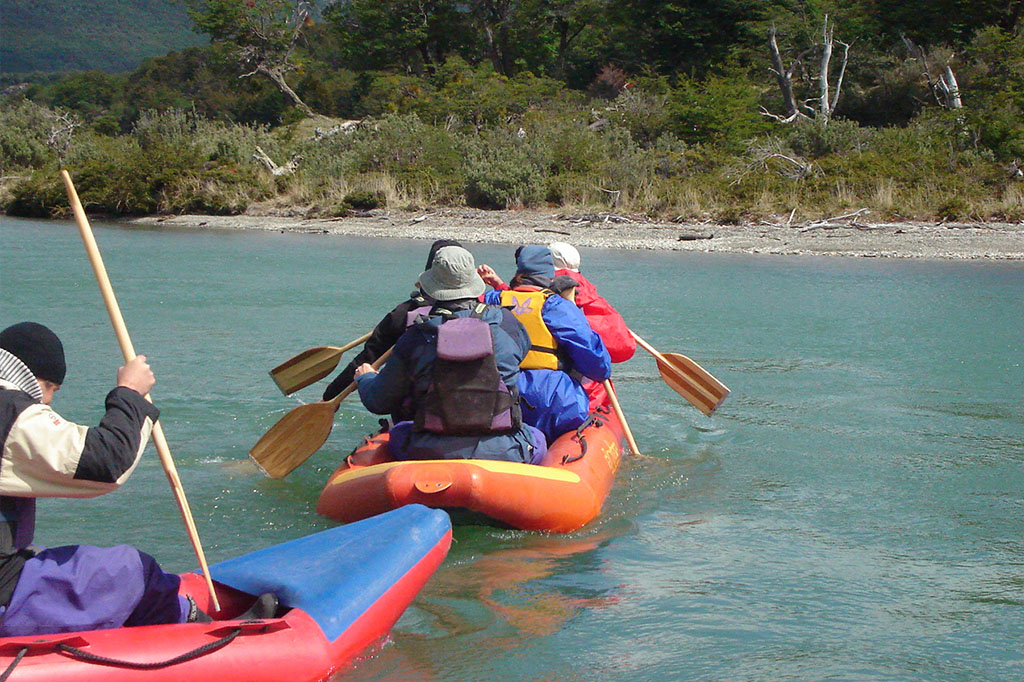
This is an alternative way to navigate rivers, lakes and lagoons; even to defy the strength of the Beagle Channel. It also possible to combine off road tours, trekking, bird sighting.

Hiking (Trekking) from Ushuaia, Patagonia

The park offers hikers a number of well-marked trails to explore ranging from easy to moderate, to more difficult.

The more popular treks are around Zaratiegui Bay, Acigami Lake, which is where the visitors centre is located, and Lapatia Bay.  The coastal path connects Enseñada Bay with Lapataia Bay on Lake Roca.

Below is brief information on the more popular treks.

Other Treks

Trek Pampa Alta trail

  • Operational: October – April
  • Difficulty: Medium.
  • Distance: 10km return.
  • Time: 3 hrs return.
Brief Description

The initial part of this trail follows the shore of the Beagle Channel. In total, the distance is about 10 km and takes about 3 hrs there and back, passing through Nothofagus forest, between Rio Pipo’s valley to the Enseñada inlet Aratiegui.

From Aratiegui you have a panoramic view over the Beagle Channel and its surroundings.

Trek Paseo de la Isla

  • Operational: October – April
  • Difficulty: Low.
  • Time: Approximately 20 minutes.
Brief Description

This trail crosses the Cormoranes Archipelago along the banks of the Lapataia and Ovando Rivers. Good opportunity for watching aquatic birds.

Trek Laguna Negra

  • Operational: All Year.
  • Difficulty: Low.
  • Duration: Approximately 20 minutes.
Brief Description

This is a walk through the forest to reach a peat bog. Good place to explain the peat bogs, peat bogs’ origin and species that live there.

Del Turba

  • Operational: All Year.
  • Difficulty: Low.
  • Distance: 2km.
Brief Description

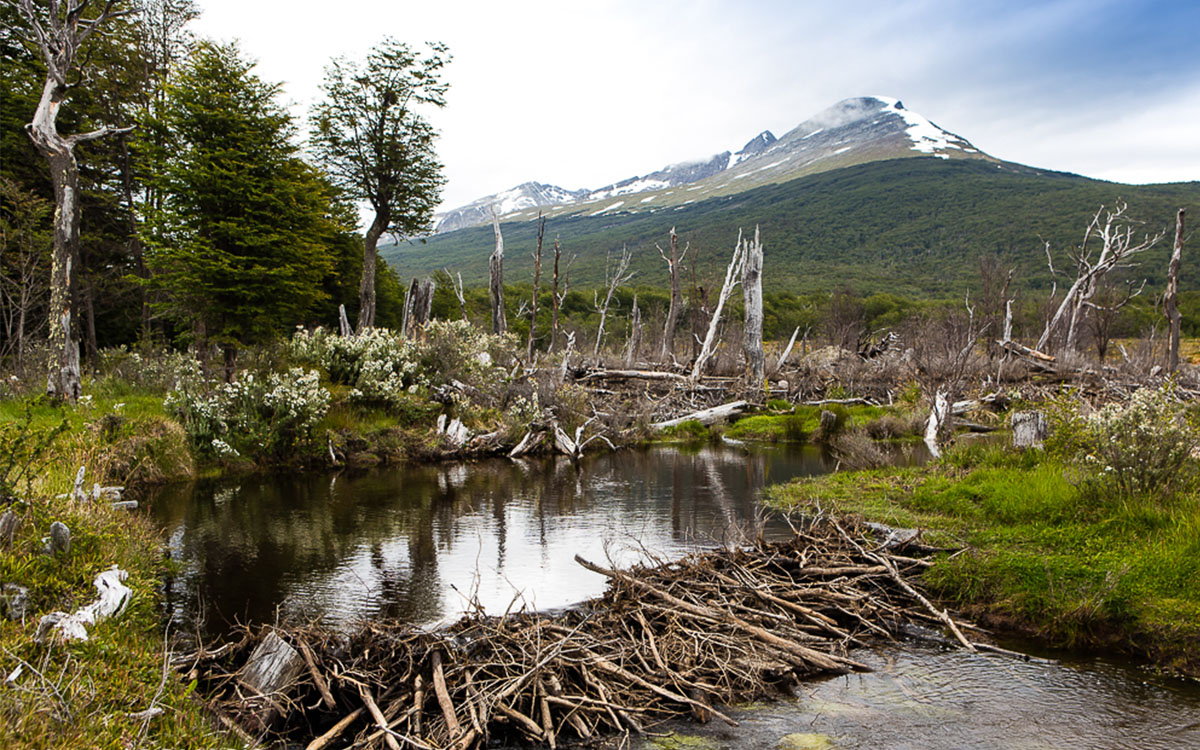
This is an alternative trail to reach Lapataia Bay. You can see an uninhabited beaver dam, walk besides a peat bog and, at the end, walk through the forest. There is an important panoramic viewpoint from where you can appreciate Lapataia Bay. The path finishes at the Lapataia, panoramic viewpoint: however, if you like, you can continue combining on the the Senda de la Baliza trail (see below).

Trekking in Tierra del Fuego National Park, Ushuaia, Patagonia

Trekking in Tierra del Fuego National Park

Introduction

As with most of the National Parks in Chile and Argentina it is possible to explore the natural beauty and great scenery just by walking. The Tierra del Fuego National Park, just the west of Ushuaia is no exception. Here, below we briefly describe some of the trails that you can hike within this National Park.

Observations

Inside the park there are different camping areas where you can spend the night without leaving the park, they are areas with basic services with toilets and drinking water.

The use of trekking poles is recommended, especially on tours such as Cerro Guanaco.

There are many areas of the trails that are muddy and others that are flooded with water such as peatlands, so it is important to bring waterproof shoes and spare socks to keep your feet dry.

If you do not go in your own vehicle, find out about the return times of the buses, have a taxi number on hand or go mentally to hitchhike, which is also an option.

In the summer in Ushuaia the days are very long, being clear almost until midnight. On the other hand, in winter it gets dark around 4 in the afternoon.

In Tierra del Fuego the weather conditions can change suddenly. Be prepared for cold, rain or snow even in summer. If you see that the weather it’s getting worse, start your return as quickly as possible.

Paying the entrance of the park you have the possibility of spending 48 hours inside it as long as you spend the night in it, or if you leave the park, the rangers will seal the entrance ticket and you will be able to return the next day without paying again.

If you go in your own vehicle you will not have any problem to visit Tierra de Fuego National Park. But if you arrived by public transport or hitchhiking, you will need to organize your itinerary well to get the most out of it.

Trekking Activities from Ushuaia, Patagonia

Ushuaia, Tierra del Fuego, Patagonia, Argentina

Ushuaia, Tierra del Fuego, Patagonia, Argentina

Introduction

The city is often regarded to be the southern-most city in the World (population approx. 65,000 in 2000), however, Puerto Williams, diagonally opposite, and in Chilean territory, is further south, but is a village and therefore not a “city”.

Ushuaia is situated beside the famous Beagle channel, named after the ship Charles Darwin sailed on when he arrived to the area: HMS Beagle (HMS means His or Her Majesty’s Ship). Ushuaia is located on the southern coast of the island “Tierra del Fuego” (land of Fire), called so after the first maritime explorers to the area noticed numerous fires on the land that were ignited by the indigenous people who inhabited the island. The Tierra del Fuego is a large island, south of continental South America.

History

In 1833, when Charles Darwin came exploring the area on board HMS Beagle he encountered a tribe of people known as the “Yamana”. These Indians were known for their strikingly, paint-covered bodies.

The first time the name Ushuaia appeared in writing was when, in 1869, the English missionary Waite Hockin Stirling documented his experiences of living with the “Yamana” people. More British missionaries arrived in 1870 and established a small settlement, erecting European-style houses which were pre-built in the Falkland Islands and shipped over. One such house was for the Reverend Thomas Bridges. His house comprised of two bedrooms and a third room. The bedrooms were allocated one for the Bridges family and the other for a married “Yamana” couple, and the third room was used as the chapel. In 1871 the first official marriage was recorded and in 1872 Thomas Despard Bridges was registered as the first birth in Ushuaia to a European.

It was not until 1873 when Argentine citizens arrived to teach at the newly-constructed school and the Argentine President, Julio Argentino Roca, decided to make Ushuaia a penal colony for serious criminals. This was likely based upon the British model of using Tasmania and Australia for the same purpose of sending criminals to a point as far away as possible from the main population of the country.

However, behind this plan was also a ploy to establish an Argentine colony for Argentina to lay claim to Tierra del Fuego, which eventually became formalized in 1881 after a boundary agreement between Chile and Argentina. The plan to build the new prison also required the construction of more houses for staff and logistical support personnel. Nevertheless, it was not until 1896 when the prison was officially recognized with an Executive Order issued from President Roca whereupon it could receive its first inmates.

On the 12th of October 1884, as part of the South Atlantic Expedition, Argentine Commodore Augusto Lasserre established Ushuaia as an Argentine sub-division, with the missionaries and naval officers signing an “Act of Ceremony”. Don Felix Paz was appointed as the Governor of Tierra del Fuego, and in 1885 then he decided that Ushuaia would be the Island’s capital. However,  it was not until 1904 when the Federal Government of Argentina followed through and recognized Ushuaia as the capital of Tierra del Fuego.

Ushuaia suffered several health epidemics, which were brought in by settling Europeans including typhus, whooping cough and measles. These illnesses decimated much of the native population, but because the indigenous “Yamana” people were not included in the census data the exact numbers of “Yamana” who died is not known. The first census was carried out in 1893 and recorded 113 men and 36 women living in Ushuaia (but not considering any “Yamana”).  By 1911 practically all the “Yamana” people had died and the original mission was closed. However, in the 1914 census (only 21 years later) the population had grown to 1,558 inhabitants.

In 1903 a military prison opened at the nearby Puerto Golondrina, which later merged with the original public prison in 1910, and continued to operate through to 1947, when President Juan Peron closed the facility by executive order due to reports of prisoner abuse. The building continued as a storage and office facility for the Argentine Navy until the early 1990’s. Today it is the Ushuaia Maritime Museum.

Ushuaia as since attracted farming pioneers, people who settled here and built estancias from where they farmed (and still do) mainly sheep, but also cattle. More recently the city has attracted people who want to work in the tourist industry.

Today

Ushuaia is now a flourishing southern, Patagonian city. Due to its sheltered, maritime location combined with its logistical “closeness” to Antarctica its port facilities offer the ideal departure point for the numerous ships that navigate from here to the Antarctic peninsula. Also, there are Patagonia cruises between Ushuaia, via the numerous channels and fiords, to Punta Arenas in Chile (farther north) and such a trip offers the idea add-on before or after visiting Torres del Paine and / or El Calafate and El Chalten.

The city is dominated on its northern side by the tail end of the Andes mountains and on its southern shore is the Beagle Channel connecting the Atlantic and Pacific Oceans. The other side of the Beagle Channel, and in clear eyesight is Chile, or the Chilean island of Navarino to be more precise, which is home to Puerto Williams.

Ushuaia is an ideal resting place prior to embarking on an Antarctic expedition, or upon returning from such a trip. There is the National Park to visit, boat trips into the Beagle Channel to see penguins, sea lions and other marine life, as well as kayaking and an off-road adventure into the back country to further experience the natural world.

Hotel accommodation varies from budget, through to moderate and up to the high end. If you have the funds, the high end offers top-level comfort and great views over the city or across the Beagle Channel whereupon the early morning sun rise is a wonderful spectacle to enjoy.

Ushuaia hotels

Ushuaia Activities and Trekking

Activities from Ushuaia, Patagonia

Activities from Ushuaia, Patagonia

Ushuaia is situated on the southern tip of Tierra del Fuego Island in Patagonia with the Andes at its back and the Beagle sea channel at its front. Consequently, there are a number of activities to participate in if you are staying here.

Here we give a brief summary on some of the options.

Activities from Ushuaia, Patagonia

Trekking Activities from Ushuaia, Patagonia

Mountain Bike Circuits

Riding through different circuits, in the city or in the countryside, alone or with guides, is a way of enjoying natural landscapes in a chilled, healthy way.

Most characteristic circuits go across panoramic and historic points of the city, the roads of Tierra del Fuego National Park, the coastal trail of Playa Larga and Túnel Ranch or a combined excursion to the base of Martial Glacier.

How to Get to Ushuaia,
Arrivals and Transfers

Arrivals, Transfers & Transport

Introduction

Even though Ushuaia is located in a remote part of Argentine Patagonia, on the southern shores of Tierra del Fuego, it is well served by flights, ships and busses from the mainland. Here we explain in more detail how to get to Ushuaia.

From each arrival option you will need an onward transfer to your hotel, which we can arrange as long as we are handling your full itinerary.

Flight and Transfer

El Calafate Flights
From Buenos Aires (Argentina)

There are regular, daily flights from Buenos Aires to Ushuaia, sometimes via El Calafate.

From El Calafate (Argentina)

There are regular, daily flights from El Calafate to Ushuaia.

Note: We can arrange this transfer as long as it is part of the rest of your itinerary that we are also arranging.

From Punta Arenas (Chile)

Puerto Natales Bus From Punta Arenas Experience Chile
Bus

There is a regular schedule that operates on Monday, Wednesday and Friday from Punta Arenas to Ushuaia departing each morning. It runs during the day and the trip takes about 12hrs. The route involves a ferry across the narrowest part of the Magallanes Strait between Chile and Tierra del Fuego, which is interesting because this is where the Atlantic passes through on its way to the Pacific. The crossing takes about 30 minutes, after which there is a long road trip down through the Tierra del Fuego, most of which is not particularly descriptive.

Australis Ship From Woods Experience Chile
Cruises

There are regular cruises that start in Punta Arenas and travel through the channels and fiords of Patagonia. Such a navigation is a great way to experience Patagonia from the sea and also get to Ushuaia. We offer various itineraries on board the Australis.

Note: We can arrange this transfer as long as it is part of the rest of your itinerary that we are also arranging.

From Puerto Williams (Chile)

Ushuaia Boat Ferry From Puerto Williams Experience Chile

Depending on local weather conditions it is possible to get across the Beagle Channel from Puerto Williams, in Chile, which is diagonally located south east from Ushuaia. The trip requires a road transfer of about 1.5hrs from Puerto Williams to Puerto Navarino.

From here the small, covered zodiac will transport passengers to Ushuaia. The navigation takes about 45mins. However, in order to make this journey you need to be very flexible regarding dates and have built in spare days in the event that you cannot cross, and you need to stay extra nights in Puerto Williams.

Note: We can arrange this transfer as long as it is part of the rest of your itinerary that we are also arranging.

Ushuaia Hotels and
Accommodation Options

Introduction

There are varying accommodation options in Ushuaia ranging from the hostel level right up to the top-end, luxury level.

What we will show you are hotels that have firstly been visited by us in order to verify what they are really like and secondly we have selected those that range from the mid-level up to the top-end level.

It goes to say that the top-end options offer much nicer, more comfortable bedrooms and better, overall services. If you are joining an Antarctica expedition trip or a Patagonia Cruise, then a stay at one of the top-end hotels pre and / or post the navigational part will give you further enjoyment from your Patagonia trip.

In order to distinguish the better hotels in Ushuaia we have categorised them into these groups:

Ushuaia hotels

Premium Hotels

These are hotels that merit the distinguished classification of being above those that are not in the premium category. These hotels offer better, overall services, well furnished and decorated rooms, courteous staff – all the ingredients that combine to form the “better than the rest” position.

All Ushuaia Premium Hotels

Top Level Hotels

The hotels that are the best at the destination in terms of comfort, decoration, service and the overall package we have put into the "top level" category. This does not mean that a hotel in this category is at the same level as another hotel in another destination in our "top level" category. It just means that these hotels are the "better hotels" at this destination out of all options.

All Ushuaia Top Level Hotels

Mid Level Hotels

The hotels we have put into the "mid level" category are those hotels that do not merit being in the "top level", but are not at the lowest level either, hence "mid level". Usually, these hotels are perfectly good for a couple of nights and offer "practical" accommodation and facilities. If you are looking for only a "place to stay" and nothing more then a mid-level hotel will suffice.

All Ushuaia Mid Level Hotels

Approved Hotels

During our inspections we ask the hotel owners if we can stay overnight at the hotel. We ask this because staying overnight is vastly different to just popping in with a quick visit. We like to know what the noise pollution is, what the breakfasts are like, how comfy the beds are, what the staff are like.

Therefore, if you see “inspected & approved” we are saying that we feel the hotel is perfectly good. If it does not have “approved” it means we have not stayed overnight or we feel it is not up to the level that our clients will require.

Approved By Experience Chile

Inspected Hotels

The reason we have a selected number of hotels that we choose to work with is because we regularly visit the hotels in Puerto Natales in order to know what they are really like. We cannot rely on the hundreds of often “suspect” reviews published in the internet. Therefore, we try to promote the better hotels that we know will make your trip more enjoyable. However, if you see that we have “inspected” a particular hotel, this does NOT mean that we recommend it necessarily. The ones we recommend are “approved”.

Inspected By Experience Chile

Other Hotels

We also include in the accommodation section information on hotels that are not, perhaps, that great, and in some cases maybe they are a little “tired”, but clients will often ask for such hotels because the cost is lower or because they are under the mistaken belief that they are better than they are. We have not said derogatory things about these hotels, but if you see a lack of enthusiasm in the description you can derive that that particular hotel is “average”.

Puerto Natales Patagonia, Chile

Puerto Natales Patagonia, Chile

Welcome to Puerto Natales

Puerto Natales is the closest village to Torres del Paine (TDP), which is only a 1hr drive if entering TDP from the west or a 2hr drive entering from the east. It is a small, almost quaint village sitting beside the “Canal Señoret” and facing the Sound (or Fiord) of Last Hope (“Seno de Ultima Esperanza”).

It is 250km north of Punta Arenas (3hrs) and 120km south of the Laguna Amarga entrance to Torres del Paine National Park (by road) (2hrs), but only 70km by road (1hr 15min) from TDP if entering from the west.

We suggest that you consider staying in Puerto Natales to benefit from a village atmosphere, nice restaurants, and good hotels at less cost than in the Park.

Description

Puerto Natales is a small settlement located in an area surrounded by natural beauty. From the water's edge you can see at the far end of the "Fiord of Last Hope" the glaciers coming down the mountain and if you know where to look on a clear day you can also see the western part of the Torres del Paine Central Massif – the snow-covered Paine Mountain. It is a nice place to rest pre and / or post Torres del Paine. It is also an ideal base to stay at and visit Torres del Paine each day.

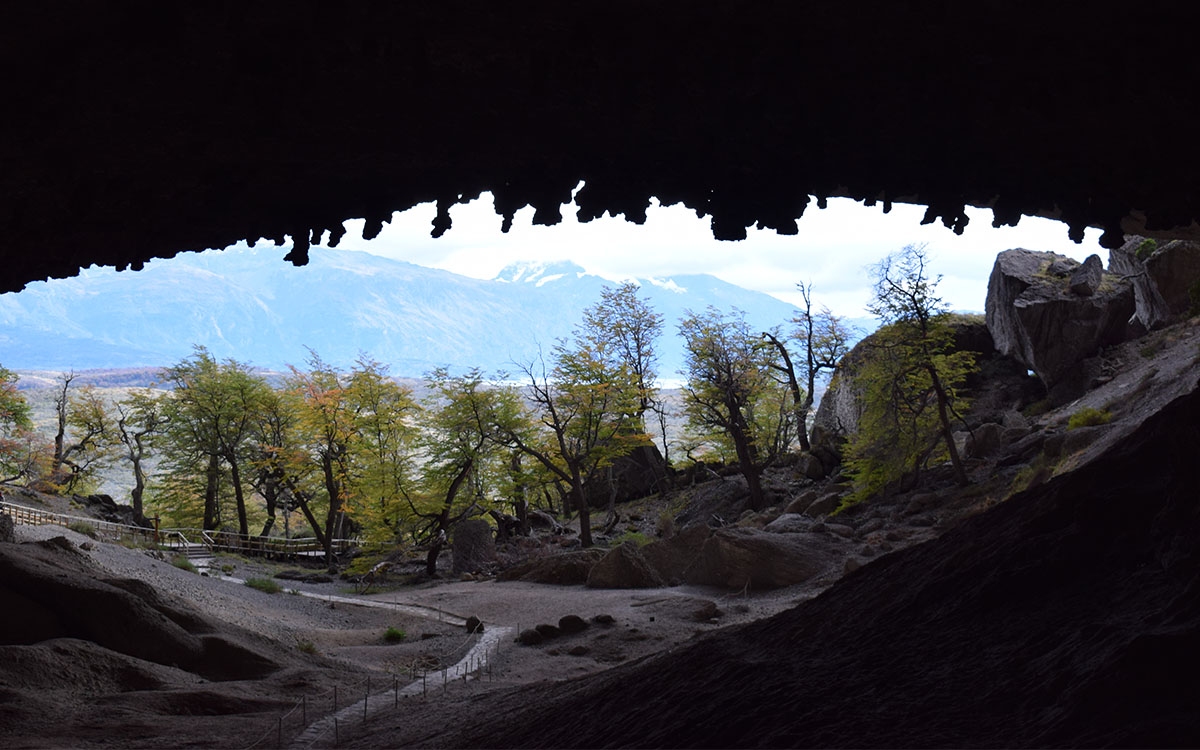
A good, paved road connects Puerto Natales to Punta Arenas and takes about 3hrs to drive. The road to Torres del Paine is paved as far as the border village Cerro Castillo, which takes about 50min to drive to and then a further 1hr 10min to drive the partly-paved road to Laguna Amarga in Torres del Paine. The other route from Puerto Natales to the Villa Serrano end of Torres del Paine is unpaved and takes just over one hour to drive and leads to the western entrance into Torres del Paine and the central CONAF Administration centre. This route also passes by the interesting and impressive "Milodon Cave" - a large, high ceiling cave dating back to prehistoric times.

Apart from Puerto Natales being an ideal stop-over place or an excellent base from which to enter Torres del Paine on day trips, it is also a base from which to travel to El Calafate or Punta Arenas. Accommodation in Puerto Natales at the high end is at an extremely good level.

One of the benefits to staying based in Puerto Natales is that there are the attractions of evening life such as restaurants and bars.

If you can walk down to the shore from the Church and look to your right, you will get a magnificent view of the fiord (or sound) and glaciated mountains at the end.

Puerto Natales hotels

Puerto Natales Places of Interest

Puerto Natales is the ideal place to stay pre, and post, your visit to Torres del Paine, or to be based all the time in Puerto Natales at a lower-cost hotel than staying in Torres del Paine itself, yet visit the Park every day.

Read about some of the places to visit in and around Puerto Natales, including in Torres del Paine as well some activities to participate in.

We Offer

We offer many itineraries that include a night or more in Puerto Natales. This is an ideal place to break the road trip between Punta Arenas and Torres del Paine (TDP) as well as relax and enjoy the tranquillity of the natural fiord (see below) beside which is the village.

There are also a couple of high-end, "World Class" hotels that merit a few nights stay to enjoy what they have. Another option we offer is to create an itinerary where you are based in Puerto Natales and venture out daily to Torres del Paine either to do the W trek or to see the sights. Staying in Natales will enable you to have a single, comfortable base from which to explore the area and return back to at the end of each day.

We suggest a night in Natales upon arrival and the next day either a fast-speed zodiac into Torres del Paine, a road transfer into TDP, or just a day to rest. A typical itinerary would be 1 night Natales, 4 nights TDP, 1 night Natales or over to El Calafate, however, if you have more time more nights would be even better.

Places of Interest and Activities from Puerto Natales, Patagonia

Places of Interest and Activities from Puerto Natales, Patagonia

Puerto Natales is the ideal place to stay pre, and post, your visit to Torres del Paine, or to be based all the time in Puerto Natales at a lower-cost hotel than staying in Torres del Paine itself, yet visit the Park every day.

Here, we explain about some of the places to visit in and around Puerto Natales, including in Torres del Paine as well some activities to participate in.

Places and Activities Close to Puerto Natales

Torres del Paine National Park

Torres del Paine (TDP) is only one hour from Puerto Natales via the estern, Serrano entrance and two hours via the eastern, Laguna Amarga entrance. Depending on your destination, it the distance from Puerto Natales to Torres del Paine can be shorter and quicker than going from one place to another within the Park.

Consequently, we say to may of our clients: consider staying in Puerto Natales all of your time and avoid the high cost of hotels within the Park.

On the basis of daily access to TDP we can suggest and include in your itinerary some, or all, of the Torres del Paine activities and places of interest below.

The Miradores (the viewpoints) Torres del Paine

On a typical day tour of Torres del Paine a number of viewpoints will be stopped at whereupon you can marvel at the view and take pictures. The main viewpoints are:

Mirador Cuernos

This involves a short, hour trek up from the Salto Grande (see below) to a point where there is a direct view of the massive Cuernos del Paine (the horns of Torres del Paine).

Mirador Condor

This is an area located about 100mts up the side of one of the hills near the Hosteria Pehoe (the hotel on a small island on Pehoe lake). From here there are wonderful views of the Torres del Paine massif and, if you are fortunate, condors often glide in the sky in this area.

Mirador Salto Grande

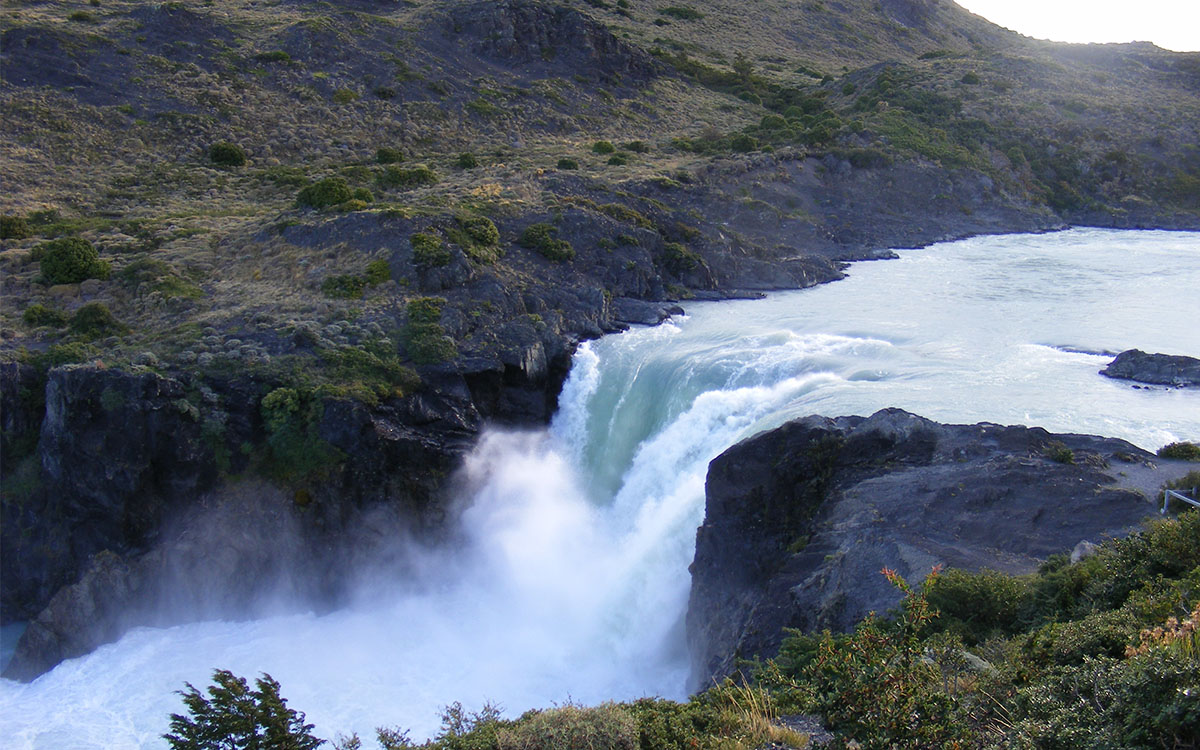
The word “salto” in Spanish means jump, and when applied to water coming from one hight and dropping down to a lower height, it means waterfall. Therefore the “Salto Grande” refers to “big waterfall”. It is called the Big Waterfall because of the powerful amount of water that crashes through a narrow gorge from the higher lake Nordenskjold into the lower Pehoe lake. The viewpoint is just above where all the action is taking place.

Mirador Cascada Paine

The Cascada Paine is another waterfall located in the eastern part of Torres del Paine. The arc of the waterfall is wider than of the Salto Grande and offers a pretty and impressive sight when lots of river water pours over the rock face and drops down to a lower level. As with the Salto Grande, the viewpoint is close to the action and on a clear there is the added scene of the Torres del Paine towers in the background.

Day Treks in TDP from Puerto Natales

The Torres Trek

The Trek up to the Torres is one of the classic arms of the iconic “W” Trek in Torres del Paine. It is the leg located in the eastern sector and starts at the Torres del Paine Welcome Centre. The trek requires a lot of effort in parts and is more or less a constant uphill path right up to the base of the towers. It will take a good 4hrs up and a good 4hrs down, plus time to rest at the top, so more like a 9hr trek for the day. The transport time will be 2hrs in and 2hrs out, so it will be a long day.

The French Valley Trek

The French Valley is the trek in the middle of the famous “W” trek in Torres del Paine. This requires a start at Pudeto, roughly in the middle of TDP, in order to take the catamaran across Pehoe Lake to the hostel called Refugio Paine Grande. This navigation takes 25 minutes.

From Refugio Paine Grande the walk to Camping Italiano takes about 2.5hrs. From here the trek starts in earnest into the French Valley. Depending on where you want to get to the trek will take from here 2.5hrs to get to the end, then 2.5hrs back. The trek involves uphill sectors.

Once you return back to Camping Italiano it will be 2.5hrs back to the Refugio Paine Grande, plus the catamaran trip back to Pudeto. Therefore, the trek time will be around 10hrs (can be less of course if you do not go to the end), plus the catamaran, 1hr total time and getting in to TDP2hr and back out to Natales 2hrs. Total time 15hrs, so a very long day, but many people do this and love it.

The trek time is the same if you are inside the Park or not and getting back to your hotel in the Park can, also, take an hour. The only exception is if you are staying at the hostels along the W Trek trail and in this case you would send the night there and not require the catamaran or transport back to Natales or a hotel in Torres del Paine.

Activities in Torres del Paine

Navigation Grey Torres del Paine

This is a boat trip from Hotel Grey in the western end of the Park, on the southern beach of Grey Lake to get close to the Glacier Grey. It will be a full day excursion. Travel time to Hotel Grey will be 2hrs from Puerto Natales.

Puerto Natales How to Get Here and Transport Options

Arrivals, Transfers & Transport

Introduction

Puerto Natales is located just south from Torres del Paine National Park, north from the southern city of Punta Arenas and south-west from the Argentine city of El Calafate. There are some direct flights to Puerto Natales from Santiago, but usually people fly into Punta Arenas.

There is also an option to arrive by boat from Puerto Montt, in Chile.

However, if you are coming from El Calafate, in Argentina, you will arrive by bus or car.

Flight and Transfer

El Calafate Flights

The flight to Punta Arenas from Santiago is usually 4hrs, but a little longer if the flight stops off at Puerto Montt on route.

You will then need a road transfer to Puerto Natales, which will take 3hrs. This can be done by taking the regular bus or have a private transfer be there to meet you and take you privately to Puerto Natales. Either way, the drive time to Puerto Natales is 3hrs.

Note: Experience Chile can arrange the bus or private transfer as part of the rest of your itinerary as long as we are handling that. We do not arrange these services as standalones.

From Santiago to Puerto Natales

El Calafate Rent A Car Arrival Experience Chile

Pre Covid, during the high season, there were direct flights from Santiago to Puerto Natales only on certain days of the week. This obviously cuts out the need to drive from Punta Arenas.

For the time being there are no direct flights Santiago to Puerto Natales.

Note: Experience Chile can arrange the onward transfer to your Puerto Natales or Torres del Paine hotel as part of the rest of your itinerary as long as we are handling that. We do not arrange these services as standalones.

From El Calafate (Argentina)

Puerto Natales Bus From Punta Arenas Experience Chile

From El Calafate the drive time, with border-crossing paperwork either side included, is around 6hrs. There is a bus service and the option to rent a car.

There is ONLY the road option from El Calafate and NO DIRECT FLIGHTS

Note: Experience Chile can arrange the bus transfer to your Puerto Natales or Torres del Paine hotel or get a rent a car for you in El Calafate, only as part of the rest of your itinerary as long as we are handling that. We do not arrange these services as standalones.

From Puerto Montt, by Ship (Navimag)

Puerto Natales Navimag Ferry Experience Chile

Puerto Montt is located at the southern end of the Chilean lake region and just north west of Chiloe Island and, one can say, at the northern part of Chilean Patagonia. From here there is a cargo ship called Navimag that comes to Puerto Natales. This ship also has accommodation on board for passengers and, effectively, offers a “poor mans” cruise. However, the route is through the Patagonian channels and fiords and is all a bit of an adventure and all at a much lower cost than a “normal cruise”. It also serves as an ideal way to get to Puerto Natales.

Departures are on set days of the week and involve two nights on board. Accommodation varies from private cabins with private bathrooms, to private cabins with shared bathrooms and shared cabins with shared bathrooms.

The trip will take 4 days and 3 nights.

Note: Experience Chile can arrange accommodation on board the Navimag for you only as part of the rest of your itinerary as long as we are handling that. We do not arrange this service as standalone.

Puerto Natales Hotel Accommodation

Introduction

We work with many types of hotels in Puerto Natales from mid-level upwards. And we will include any hotel you wish in your itinerary, however, there are a selected, few hotels that we prefer to work with.

In fact, this is the point. When travelling such a long way to South America there are two options. One is to keep all costs down, which often means sacrificing comfort and enjoyment where you sleep each night. The other is to enjoy all aspects of your trip and stay in a nice hotel, with good, comfortable, well decorated rooms and relax and enjoy that part too.

Puerto Natales hotels

Premium Hotels

Here we have separated the hotels in the premium category away from all the other hotels.
The reason we have included some properties in our premium category is quite simply because they offer overall nicer, and better comfort and facilities than the rest.

Therefore, if you are a person who is accustomed to, or seeking to experience, the better type of comfort and attention available, the premium category hotels are likely going to be better for you.

All Puerto Natales Premium Hotels

Top Level Hotels

The hotels that are the best at the destination in terms of comfort, decoration, service and the overall package we have put into the "top level" category. This does not mean that a hotel in this category is at the same level as another hotel in another destination in our "top level" category. It just means that these hotels are the "better hotels" at this destination out of all options.

All Puerto Natales Top Level Hotels

Mid Level Hotels

The hotels we have put into the "mid level" category are those hotels that do not merit being in the "top level", but are not at the lowest level either, hence "mid level". Usually, these hotels are perfectly good for a couple of nights and offer "practical" accommodation and facilities. If you are looking for only a "place to stay" and nothing more then a mid-level hotel will suffice.

All Puerto Natales Mid Level Hotels

Boutique Hotels

Our definition of a "boutique hotel" is one that offers a particular, "personal charm". These hotels are usually small in terms of the number of rooms and also "cosy", even "homely". However, there are also more modern "design" hotels that also come into the category of "boutique". These hotels also small regarding room numbers, but rather than offer the "cosy" feeling they offer the "clean, minimalist" feeling.

All Puerto Natales Boutique Hotels

Approved Hotels

During our inspections we ask the hotel owners if we can stay overnight at the hotel. We ask this because staying overnight is vastly different to just popping in with a quick visit. We like to know what the noise pollution is, what the breakfasts are like, how comfy the beds are, what the staff are like.

Therefore, if you see “inspected & approved” we are saying that we feel the hotel is perfectly good. If it does not have “approved” it means we have not stayed overnight or we feel it is not up to the level that our clients will require.

Approved By Experience Chile

Inspected Hotels

The reason we have a selected number of hotels that we choose to work with is because we regularly visit the hotels in Puerto Natales in order to know what they are really like. We cannot rely on the hundreds of often “suspect” reviews published in the internet. Therefore, we try to promote the better hotels that we know will make your trip more enjoyable. However, if you see that we have “inspected” a particular hotel, this does NOT mean that we recommend it necessarily. The ones we recommend are “approved”.

Inspected By Experience Chile

Other Hotels

We also include in the accommodation section information on hotels that are not, perhaps, that great, and in some cases maybe they are a little “tired”, but clients will often ask for such hotels because the cost is lower or because they are under the mistaken belief that they are better than they are. We have not said derogatory things about these hotels, but if you see a lack of enthusiasm in the description you can derive that that particular hotel is “average”.

How to Get to El Calafate, Patagonia

Arrivals, Transfers & Transport

Arrivals

There are two main ways to get to El Calafate.

  • One is to fly in from Buenos Aires, Ushuaia or even Bariloche, all in Argentina. The two main airlines are LATAM and Aerolineas Argentinas.
  • The other is to come in by road transfer from Torres del Paine or Puerto Natales in Chile.

Flying In

El Calafate Flights

The Flight from Buenos Aires

  • This takes around 2hrs

The Flight from Bariloche

  • This takes about 1hr

The Flight from Ushuaia

  • This takes about 1.5hrs.

If we are handling your full itinerary, ExperienceChile.Org can also arrange and include the flights you will need.

NOTE: There are NO direct flights from Chile.

By Road From Puerto Natales

From Torres del Paine or Puerto Natales the road transfer time, including the processing at the two border posts, is around 6hrs (not what Google maps says!).

Regular Bus

There are morning, regular scheduled public bus services between Puerto Natales and El Calafate.

Semi-Private Bus

There is a bus service that is privately operated and departs later in the day than the regular, public bus.

Private Transfer

Private transfers, meaning that you are the only people in the car or van, offer a more exclusive experience.

Rent a Car

If you have a driver who is up for driving the long distance then this option offers total independence.

ExperienceChile.Org can arrange any of the above services and include them in your itinerary.

By Road From Torres del Paine

Semi-Private

There is a semi-private bus option that operates from Torres del Paine in the afternoon to El Calafate. We call this “semi-private” only because it is a privately operated service and not like the regular bus.

Private Transfer

For total exclusivity and a door-to-door service we offer private transfer from anywhere in Torres del Paine (as long as there is access by road) to El Calafate.

ExperienceChile.Org can arrange any of the above services and include them in your itinerary.

Transfers from El Calafate Centre to the Sights

From El Calafate the transfer to the Perito Moreno Glacier takes around 1.5hrs and to El Chalten the transfer time is 3hrs.

ExperienceChile.Org can arrange any of the above services and include them in your itinerary.

El Calafate Places of Interest

El Calafate Places of Interest

There are a number of interesting excursions and activities that can be experienced from your base in El Calafate.

Here below we detail what these are.

El Calafate Places of Interest

El Calafate Activities

Note: For all the above excursions you must take the right clothes.

We suggest:

Backpack, outdoor trekking clothes (warm, waterproof and wind-breaker jacket, trekking pants (or trousers for the English), sturdy outdoor trekking boots, hat, sunglasses, lip balm, sunscreen cream, camera and water bottle.

Activities to do from El Calafate, Patagonia

El Calafate Activities

If you are staying in El Calafate for a few days, there are a number of great activities to participate in. These range from visiting the famous Perito Moreno Glacier to walking on its surface, or even climbing some of its inner ice walls.

There is also a 4 x 4 truck expedition that goes up into the high hills above the city, horse riding at an estancia, trekking, fly fishing and seeing even more glaciers.

El Calafate Activities Available

El Calafate Places of Interest

El Calafate, Patagonia

El Calafate, Patagonia

Introduction

El Calafate, named after the local “Calafate” plant that produces blue-coloured berries, has developed as a tourist destination only because it is the base from which visitors can enter the spectacular ice field Los Glaciares National Park (a UNESCO World Natural Heritage Site), which is 80km away to the west of the city.

The park is the second largest in Argentina covering 600,000ha of which 40% is covered by ice fields that descend down from the Southern Patagonia Ice Cap, and includes the famous Perito Moreno glacier.

Over 13 glaciers descend into two large lakes: Lake Argentino and lake Viedma, linked by the river La Leona that flows from Lake Viedma into the Lake Argentino.

It is also a logistical stop over to get to El Chalten and Torres del Paine, and serves as the ideal connection city for all southern Patagonia, including coming up from Ushuaia.

It will take approximately 3hrs 10min to fly to El Calafate from Buenos Aires and up to 6hrs, or longer, by road from Torres del Paine. Google maps say the transfer is a less in time, however, they do not allow for the 1hr – 2hrs required each side of the border due to the often-slow immigration and customs procedures – information that a locally-based operator knows about and just one reason why it is best to use the services of a company such as ours.

The Experience Chile Service

We can include El Calafate and any of the excursions as part of your larger Patagonia itinerary.

Maybe you are trekking in El Chalten and / or Torres del Paine. Either way we can build in a couple of nights at El Calafate as a logistical connection between El Chalten and Torres del Paine, and this will enable you to also visit Perito Moreno Glacier, walk on its surface or ice climb its interior.

El Calafate hotels

El Calafate offers various options for hotel accommodation ranging from hostels to luxury level.

Perito Moreno Glacier

The “Ventisquero Perito Moreno” (Perito Moreno Glacier) – is the "big one" that everyone comes to see. It has a 5km long, vertical wall of glacial ice face rising to heights of around 60m that flows some 30km from its source in Southern Ice Filed on top of the Andes Mountains.

The Breaking off of the Glacial Ice Face into the Lake

The main spectacle occurs when, every few years, there is a mighty breaking off of the glacial ice face into the lake. What happens is that the Perito Moreno glacier advances (one of the few in the world not to be receding) towards lake Argentino until part of it makes contact with the peninsula of land opposite (from where there is a direct viewing area).

When the glacier makes contact with the peninsula it then cuts the lake Argentino into two parts creating “two lakes”. As you look directly at the glacier, the “new” lake on the left is now closed in and cannot flow into the larger lake Argentino as it previously did. However, the newly-created lake continues to be fed with the water from rivers and ice melt causing the water level of the lake to rise. Eventually the higher-level new lake manages to erode a hole through the Perito Moreno glacial ice dam until it flows once again into the lake Argentino.

As this hole becomes larger, and the water flow gets quicker and more powerful it eventually causes the glacial dam to collapse. It is this massive collapse of towering glacial ice that causes such a stunning spectacle that people flock in from all over Argentina and the World to witness it. The spectacle only happens every few years. However, even without this incredible sight, just being close to the massive glacial wall is an exhilarating experience in itself.

El Calafate Places of Interest

Perito Moreno Glacier

The principal place of interest is the large and impressive Perito Moreno Glacier - well worth a visit. There is the regular tour, an ice hike on top f the glacier and an ice climb in parts of the glacier. Our regular excursion includes a navigational aspect too.

El Calafate Discovery Tour

This an educational and exciting excursion that takes you up and into the mountains behind El Calafate in large 4 x 4 off road bus. Spectacular views on a clear day, including as far away as Mount Fitzroy in El Chalten.

Rivers of Ice or All Glaciers Navigation

A long full day navigation on board a catamaran that takes in some of the largest glaciers in the area as well as stunning raw, Patagonian scenery.

El Chalten

El Chalten is a sought-after trekking destination and home to the stunning Mount Fitzroy. It is accessible by a three-hour drive from El Calafate.

Clothes to Pack

This being Patagonia you need to pack for all "four seasons in one day".

Hotel Accommodation, El Calafate

Introduction

We work with all hotels in El Calafate from mid-level upwards. And we will include any hotel you wish in your itinerary, however, there are a selected, few hotels that we prefer to work with.

In fact, this is the point. When travelling such a long way to South America there are two options. One is to keep all costs down, which often means sacrificing comfort and enjoyment where you sleep each night. The other is to enjoy all aspects of your trip and stay in a nice hotel, with good, comfortable, well decorated rooms and relax and enjoy that part too.

El Calafate hotels

El Calafate offers various options for hotel accommodation ranging from hostels to luxury level.

Premium Hotels

Here we have separated the hotels in the premium category away from all the other hotels.
The reason we have included some properties in our premium category is quite simply because they offer overall nicer, and better comfort and facilities than the rest.

Therefore, if you are a person who is accustomed to, or seeking to experience, the better type of comfort and attention available, the premium category hotels are likely going to be better for you.

All El Calafate Premium Hotels

Top Level Hotels

The hotels that are the best at the destination in terms of comfort, decoration, service and the overall package we have put into the "top level" category. This does not mean that a hotel in this category is at the same level as another hotel in another destination in our "top level" category. It just means that these hotels are the "better hotels" at this destination out of all options.

All El Calafate Top Level Hotels

Mid Level Hotels

The hotels we have put into the "mid level" category are those hotels that do not merit being in the "top level", but are not at the lowest level either, hence "mid level". Usually, these hotels are perfectly good for a couple of nights and offer "practical" accommodation and facilities. If you are looking for only a "place to stay" and nothing more then a mid-level hotel will suffice.

All El Calafate Mid Level Hotels

Boutique Hotels

Our definition of a "boutique hotel" is one that offers a particular, "personal charm". These hotels are usually small in terms of the number of rooms and also "cosy", even "homely". However, there are also more modern "design" hotels that also come into the category of "boutique". These hotels also small regarding room numbers, but rather than offer the "cosy" feeling they offer the "clean, minimalist" feeling.

All El Calafate Boutique Hotels

Estancia Hotels

An estancia is the South America name for a traditional horse, cattle or sheep ranch. Therefore, if you stay at such a place you will often not be far from working farm animals such as sheep, horses and / or cows. In other words, staying in an estancia is all part of the authentic Patagonian experience, and adds yet another dimension to your enjoyment of this part of the world.

All El Calafate Estancia Hotels

Approved Hotels

During our inspections we ask the hotel owners if we can stay overnight at the hotel. We ask this because staying overnight is vastly different to just popping in with a quick visit. We like to know what the noise pollution is, what the breakfasts are like, how comfy the beds are, what the staff are like.

Therefore, if you see “inspected & approved” we are saying that we feel the hotel is perfectly good. If it does not have “approved” it means we have not stayed overnight or we feel it is not up to the level that our clients will require.

Approved By Experience Chile

Inspected Hotels

The reason we have a selected number of hotels that we choose to work with is because we regularly visit the hotels in Puerto Natales in order to know what they are really like. We cannot rely on the hundreds of often “suspect” reviews published in the internet. Therefore, we try to promote the better hotels that we know will make your trip more enjoyable. However, if you see that we have “inspected” a particular hotel, this does NOT mean that we recommend it necessarily. The ones we recommend are “approved”.

Inspected By Experience Chile

Other Hotels

We also include in the accommodation section information on hotels that are not, perhaps, that great, and in some cases maybe they are a little “tired”, but clients will often ask for such hotels because the cost is lower or because they are under the mistaken belief that they are better than they are. We have not said derogatory things about these hotels, but if you see a lack of enthusiasm in the description you can derive that that particular hotel is “average”.

Cape Horn Islands, Chile

Cape Horn Islands, Chile

NOTE: The above photos, including the large one, include images of other places in the southern Patagonia area close to Cape Horn that are seen and visited when participating in the Australis cruise (see further below). However, the image of people walking on a boardwalk to the sailors’ memorial is the actual Horn Island visit.

For centuries, the Cape Horn has been the fabled point on Earth around which many sailors have risen to the, often frightening challenge, of navigating through and over the huge waves that rise between the Atlantic and Pacific Oceans.

On the map it is clearly marked as the southern-most tip of South America – the final land point until reaching the Antarctic.

Here we describe some of the history about Cape Horn as well as, further down, explain how you can actually set foot on this piece of World history.

Introduction

The famous Cape Horn (“Cabo de Hornos”) is in Chilean territory and named after the city of Hoorn in the Netherlands (actually named “Kaap Hoorn” by the Dutch, then referred to as Cape Horn by the English). It is the southernmost point of the “Tierra del Fuego” archipelago and of South America. It is a small piece of rock, or island, among others that make up the Horn Islands, around which the oceans from the southern Atlantic and Pacific converge.

The sea passage around Cape Horn (the Drake Passage) is notorious for its huge seas, violent winds, strong currents, and general danger. It is the graveyard for many tall ships that took this route when sailing from one side of the Americas to the other until the discovery, in 1520, of the natural sea passage further north (passing by Punta Arenas) connecting the Southern Atlantic and Pacific Oceans by Portuguese sailor Ferdinand Magellan.

Named after Magellan, the Straights of Magellan enabled ships to take the more protected passage and take on supplies at Punta Arenas, cutting out the need to go around Cape Horn, although many Clipper-class ships still rounded the Horn because the narrow Magellan Straight did not offer enough width for necessary navigational maneuvers. In 1914 when the Panama Canal opened, both the passages around Cape Horn and the one through the Magallanes Straight became redundant for most shipping.

For yachtsmen, the challenge of sailing around Cape Horn is often irresistible and many conquer their fear when participating in one of the major yachting races that takes in this passage. Likewise, many people who look at the World Atlas often dream about being able to see Cape Horn and wonder what it must be like to “go around” it.

The Actual Cape Horn Island

The Horn Islands archipelago, as previously mentioned, lies within Chilean territorial waters and the Chilean Navy maintains a station on an island close to the real Cape Horn, but not on the island itself because it is so difficult to access.

On Horn Island (not on Cape Horn Island), there is a residence, utility building, chapel, and lighthouse. A short distance away from the main station is a memorial, including a large sculpture featuring the silhouette of an albatross, in honour of the sailors who died while attempting to "round the Horn".

On the real Cape Horn there is a 4m (13ft) fiberglass light tower with a focal plane of 40m (131ft) and a range of about 21km (13mi). This is the authentic Cape Horn lighthouse. There are no trees on the island.

How to Visit Cape Horn

Unless you have a helicopter the only way to visit Cape Horn is to book, with us, a great Patagonia Cruise on the Australis. The Australis offers navigational trips between Punta Arenas in Chile and Ushuaia in Argentina. Each journey takes in the natural beauty of the archipelagos, channels, and fiords; abundant marine life and sights of millennial glaciers coming down from the mountain tops to sea level.

That experience in itself is exhilarating, however, one of the options is the route that will also take in Cape Horn, with a land stop off, weather permitting. This is how you can visit Cape Horn.

Types of flowers and vegetation

Descriptions of types of flowers and vegetation in
Torres del Paine National Park

The Flora of Torres del Paine National Park

During your visit to the Park you will be seeing many different types of animals as well as flowers, trees and other plants, mostly for the first time. Therefore, here is a summary of what you may see with regards to wildflowers and vegetation.

View Over Magical Austral Forests Peat Bogs And High Mountains In Tierra Del Fuego National Park Patagonia Argentina

Introduction

With regard to vegetation, Torres del Paine can be divided into different zones that relate to the different environments and conditions in the area. These, microclimates, in turn, determine what plant life can flourish and what cannot.

The vegetation in Torres del Paine is remarkable. Different types of shrubs, flowers and trees can be found in areas throughout the Park as well as on the trails and valleys of this natural sanctuary, where plants have had to adapt according to the prevailing conditions, available water, prevalence of winds, soil type and altitude.

The Microclimate Zones

English Name / Chilean Name

Patagonian Steppe / Estepa Patagónica

This is the region that occupies most of the surface of Patagonia, for example about 730,000 km². It is characterized by vast plains, low-rise mountains, stepped plateaus, river valleys and canyons. The soils are a stony-sandy mix, and poor in organic matter.

The climate is temperate-cold, rainfall is scarce, concentrated mainly in the coldest months, between April and September. In spring and summer strong winds from the west predominate.

Magallanic Tundra / Tundra Magallanica

The Magallanic Tundra is a type of biome. This refers to a community of plants and animals that show common characteristics to the environment they exist in, wherever that environment has been created. For example, such areas and plants can be found on different continents. In the case of Patagonia this means a sub-glacial environment.

The Magallanic Tundra is flat terrain, whose main characteristics are that of an extremely cold climate, little rainfall, strong winds, poor nutrients in the soil, a short growing season and simple vegetation. The soil is often frozen and there is an absence of trees, although there are some plants of low dimensions with up to 400 types of flowering vegetation, but much of the land is covered by moss and lichens. Overall, the low biological diversity results in a “polar desert”.

On the drive between Punta Arenas to Puerto Natales this typical Patagonian landscape can be clearly seen on either side of the road, often right up to the horizon.

Pre-Andean Scrub Land / Matorral Pre Andino

This is typically the land on the banks of rivers and on the edges of lakes.

In Torres del Paine, you will find it near the Sarmiento lake, Salto Grande and at the Nordenskjold viewpoint. The plants found in these areas have developed the ability to store water and survive fierce weather conditions, such as the intense Patagonian wind.

Plants such as the Mata Varrosa, Messophyte Scrub Zarcilla, Calafate Enano and Chaura can be found growing in these areas. One plant, the Arvejilla, looks like Lavender because of its purple and mauve-coloured flowering. It blooms in November and December and bears fruit in February and March. Typically found in the Pre-Andean Scrub land and the Andean Steppe. It can also be found in the French Valley and on the trail to Grey Lake and Sarmiento Lake.

Magellanic Deciduous Forest / Bosque Magallanico

The Magellanic forest, Magellanic Taiga, Magellanic subpolar forest or cold forest is an ecological region of the extreme southwest of South America, which covers sectors of the extreme south of Chile and Argentina. The climate of this area is influenced by the Andes mountains, which traps moisture from prevailing winds coming from the Pacific. This creates a favourable, humid environment within which the trees can grow. Moreover, the air currents originating from the Southern Ocean provide the moisture for the Magellanic Subpolar Forest to thrive. The average annual temperature ranges from 6° C in the north to 3 ° C in the south, and the annual rainfall ranges from about 5,000 mm in the west to 450 mm in the east. In Torres del Paine the average, annual rainfall is around 600mm.

In Torres del Paine National Park these woods comprise the native trees such as Lenga (Nothofagus) and Coigue. Typically, the wooded areas in Torres del Paine are around Lago Grey, specifically on the slopes adjacent to Glacier Grey, in Valle Pingo (west of Grey Lake), in the Valle Frances (middle of the W Trek), Valle Los Perros, Ascencio Valley and near Laguna Azul.

In addition to the native trees there are other trees, shrubs and lichens, that make up the forested areas, each with their own special qualities.

Flora

Calafate / El Calafate

The Calafate (the Argentine town El Calafate has its name derived from this plant). It is found mainly in open and humid places, and can reach up to 3m in height. Flowering takes place between the months of October through to January whereupon yellow flowers will be produced.

The fruit produced is in clusters of small, dark-blue, berries that are used locally to make jams and other food products.

An evergreen plant, it can be seen mainly on the path that connects the Las Torres sector to the Serón camp.

Notro / Chilean firebush

This tree is known as the Chilean “fire” tree, because it produces a deep, red flower, when it blooms in the spring. Usually it grows in sandy soil where there is humidity. It can grow up to 15m tall and up to 20cm in diameter. The bark of the tree has the reputation as being easy to work with and having a beautiful appearance. Typically, it will grow among thickets and can be seen on the trail between the Las Torres sector to Cuernos and the Pingo Valley.

Capachito / Calceolaria morisii

This is a grass shrub that produces orange-coloured flowers in the shape of a “slipper”. It is small, leafy and with many branches. It can reach a height of 70cm and 1cm in diameter.
Usually found on rocky terrain such as around the base area of Las Torres.

Armeria / Thrift Armeria

Known for its medicinal qualities this is an easily visible plant that produces a voluminous pink flower.

Usually found around the Park entrances Laguna Amarga and Sarmiento.

Types of birds in Torres del Paine

Descriptions of types of birds in Torres del Paine National Park

In and Around Torres del Paine there are 105 Species of Bird. Here, we mention 13 of the more common species.

English Name / Chilean Name

Rheas / Ñandu

This bird looks like a small ostrich and that is because it is part of the same family of the African ostrich. The Rhea is a flightless bird that lives in the Southern Cone of South America. It is smaller than the typical ostrich measuring 1.5m to 1.8m in height and has three claws on each foot, while the ostrich has only two.

It can be seen in various places of Torres del Paine, especially in the eastern sector. They group together to form large “herds” in search of fruits, insects and reptiles for food. Although it has small wings, which it will flap, the bird cannot fly, but can run at a fair speed, up to 80km per hour, for example, to escape predators and can swim if it needs to cross a river.

Black-Neck Swans / Cisne de Cuello Negro

The Black-Neck swan says exactly what this bird is. In other words, a swan with a white body, and black-coloured head and neck. It inhabits lagoons, lakes and coastal waters. They feed on algae, aquatic plants, and sometimes on insects. As it floats on the surface of the water, where it lives for most of its time, rarely venturing on to the land, water gets filtered through its beak when it submerges its neck and head in search of the food it is seeking. These birds can be seen on many lagoons and lakes in the Park as well as by the shoreline at Puerto Natales.

Austral Parrot / Cachaña

The Austral Parrot, or Parakeet, inhabits the area from Torres del Paine down to the Tierra del Fuego, and is only found in this southern tip of South America. It is mostly green in colour with some red on the underbelly. Usually found in wooded areas, especially the Nothofagus forests and semi-open areas close to wooded sectors, often flocking together with other Parakeets that fly from tree-to-tree and swoop down as a group.

It feeds on seeds, fruits, sprouts, berries, and bulbous roots. It has a similar appearance in colour to the Choroy, but the Cachaña is smaller, with a hooked, short beak. This is the southern-most parrot in the World.

Flamingo / Flamenco Chileno

The Flamingo can be found in Patagonia and the Atacama Desert in northern Chile as well as Chiloe Island. Its usual habitat is that of shallow lakes, lagoons, muddy coastal areas and river mouths. Typically, it will be 1.1m to 1.3m in height, with a pretty pink plumage with darker pink near its tail. The beak is quite large, curved downward at the end, coloured black at the end part, but a lighter colour closer to the bird’s head. The tall, thin legs are straight except for the tarsal joint about halfway down. Eyes are yellow. It feeds mainly on algae and plankton. Typically it will have its head submerged under water and move it side to side whilst moving slowly on its feet in order to disturb the sediment and release its food, which is then filtered through its beak.

Flamingos can be seen in some of the lakes and lagoons in Torres del Paine as well as on a couple of water stretches beside the road from Punta Arenas to Puerto Natales.

Ducks / Pato Anteojillo

This is a common duck that lives amid humid forests, usually not too far from a river. It is a large bird, with a height of around 55cm and weight of 1kg. It has white lines under each eye that look like it is wearing a pair of glasses, and also a white patch on its neck.

It will make a squawk sound, which is more like a bark. An omnivorous bird that feeds on seeds, herbs and insects, which is forages on the banks of rivers.

Merganetta Armata / Pato Corta Corriente

This duck, grows up to 46cm in length and is found along the length of the Andes from northern Chile down to Tierra del Fuego. It has a slender, but strong body, living exclusively in very fast-flowing rivers. It does not fly much and is more adept at flowing against the strong current of a river, resting where it can on a rock. It feeds on vegetables, small fish, larvae, worms and crustaceans.

Magellan Goose / Caiquen - Chloephaga Picta

The Caiquen goose is one of the most prevalent throughout the Magallenes and Aysen areas of Chile. The male has a white head, and breast but dark plumage on its wings, whereas the female has a brown neck and body. Each has black-stripped wings. Typically, in size both male and female grow to around 73cm in height. It lives in open plains where there is lots of grass to eat and nests both in low-lying areas, on plateaus and hills taking advantage of any natural holes or depressions in the ground, usually close to lagoons, rivers or estuaries. It will line the nest with its own, soft feathers.

There are usually many of these geese around the Serrano village, which is the western sector of Torres del Paine, the other side of the Serrano River.

Fish Martin / Martín Pescador

The Fish Martin lives in lakes, lagoons, estuaries, rivers and in calm water surrounded by trees. It mainly feeds on fish, hence its name, and grows up to 20cm in length, but sometimes consumes frogs, insects and crabs. It is easy to identify because it has a blue coloured body, red chest and white line on its neck and is generally found on the branches of trees on the edge of rivers and lakes. It also has a long beak.

Magellan Woodpecker / Carpintero Magallanico

The Magellan Woodpecker usually inhabits to area of Tierra del Fuego, up to the middle of Patagonia, living mainly in native forest areas. It is a large for a woodpecker, up to 45cm in height, completely black in colour except for red feathers that surround the beak, if female; and the male with a bright red head, crest, throat and neck making it impossible to confuse with any other woodpecker.

It will eat worms, larvae and insects, which it will extract from tree bark by “hammering” on the tree with is beak.

Buff-Necked Ibis / Bandurria

This bird, reaching a height of around 75cm is found from Antofagasta in the far north of Chile down to the Tierra del Fuego, living mainly in swampy areas and on the shores of lakes and lagoons.

Its main feature is its elongated, black, curved, downward beak. It feeds on toads, tadpoles, insects and other small animals found on the shores of lakes, ponds or reservoirs. However, it is sometimes spotted in freshly- ploughed fields.

Patagonian Sierra Finch / Phrygilus Patagonicus / Cometocino Patagónico

This bird is found in the area between La Serena, in the north of Chile, down to Tierra del Fuego and can often be spotted on heavily vegetated slopes and gorges where there are seed bushes and rocky ledges.

It is between 15 – 16cm in height and has an orange-coloured tint on its back, which distinguishes it from the Cometocio de Gay species. It feeds on grass seeds and arthropods, fruit and flower nectar, often getting tree sap from the holes that a woodpecker has made.

Cinclodes Patagonicus / Churrete Comun

This bird lives in the southern part of Chile, from Tierra del Fuego to the Gulf of Penas. It can be seen in the canals near the coasts, as well as in the hills and plains, but also near towns and hamlets.

It measures between 18 and 20 cm in height and weighs between 37 and 54 grams. Its bill, legs and dorsal are a dark brown, and with a white line on its head. It feeds on invertebrates, insects, crustaceans and mollusks.

Leistes Loyca / Loica Comun

This bird lives in the area from the Atacama Desert in northern Chile down to the Magallanes in the Patagonia far south.

It prefers to live close to the earth, ideally on humid soil, but is also found in the mountains at around 2,500 meters. It has a length of 28cm. The males and female are different in appearance. The male head and neck are a dark brown, with a white line with a touch of red towards the forehead. Its tail, back and bottom, are a dark brown and the front part of his neck, chest and upper abdomen is hot-red colour. It has a pointed, dark-brown bill.

The female has different colouring on its throat and neck, which are white, and the the breast and abdomen are a pale red.

They feed on insects, fruits and seeds. The Loyca is easy to recognize by its characteristic red breast and can be found alone or in pairs. In winter they tend to gather in flocks.

National Park Fauna

Torres del Paine National Park Fauna

There are 25 species of mammal in and around Torres del Paine National Park. Here we describe 6 of the those you will most likely spot during your travels.

English Name / Chilean Name

Puma / Puma

The Puma, related to the Cougar family, is the largest wild, feline to inhabit the American continent and is found in more places than any other native, American mammal. Chile is considered to be home to the largest Puma’s with a typical body length of between 103cm to 197cm, not including its tail, and that alone can measure another 52cm to 82cm. With regards to its weight, usually a grown adult will be between 25kg to 55kg.

Many Puma’s live in Torres del Paine, where they are able to prey on the plentiful supply of Guanaco’s roaming within the Park. They are very shy and difficult to spot due to their excellent camouflage, but usually eat their kill just before the dawn.

Grey Foxes / Zorro Gris

The Torres del Paine Grey Fox is small and has an overall, general greyish-coloured fur, with areas of yellowish markings, edged in white closer to its head and on its legs. The ears are typically large, and the tail is long with a bushy fur. It is native to the Southern Cone of South America living mainly in the areas either side of the Andes, therefore, Chile and Argentina, but reaching as far north as Bolivia and Uruguay. Typically, the Grey fox will eat Mammals, birds, bird eggs, arthropods, reptiles, fruit and carcass. In Torres del Paine its favourite habitat is usually around the Laguna Azul, and the lakes Nordenskjöld, and Sarmiento. In some parts of the Park they have become “domesticated” due to tourists feeding them.

Fox / Zorro Culpeo

Known as the “Red Fox” because of the colour of its reddish fur on its head and legs, this fox lives anywhere it can burrow. This means near bushes, steppe, banks of streams and low, dense shrub vegetation. It can be often spotted around the Lago Grey area, Pehoé camping and close to the Conaf Park Administration. It will usually hunt for mammals, birds eggs, but even sheep.

Skunks / Chingue - Zorrillo

The Skunk, also known as the South American Skunk, is a solitary, nocturnal animal that lives in caves that it digs out or occupies from another animal. It is small and stocky in appearance with a long snout designed to enable it feed on beetles, grasshoppers, and crickets, but will also eat small rodents and animal carcass. It is omnivorous and measures around 70cm in length. When under attack it will emit a pungent scent as a defence mechanism to repel the attacker, therefore do not get too close to this animal! Easy to identify by its small size, black fur and white strip down its back from head to tail. Usually found around the Laguna Amarga entrance to the Park as well as the Laguna Azul and Lake Sarmiento areas.

Huemul /Huemul

The name huemul is from the Mapudungun wümul.

The Huemul is related to the cervidae species, he lives in the Andes and is illustrated as part of Chile’s national coat of arms. It is very shy, usually avoiding areas of population and humans. It is also, unfortunately on the extinction danger list. However, it is a resident of Torres del Paine, where it is protected. The mammal can be seen, if you are fortunate, in the western sector of the Park, but its excellent camouflage of brown makes it blend seamlessly into the natural background vegetation.

Guanaco / Guanaco

The Guanaco is an herbivorous mammal native to South America, belonging to the Camelid family group (Camel). Often reaching heights of up to 2m, they roam around Torres del Paine in large herds and are easy to see. They have a brown and reddish fur and white under belly. One of their surprising characteristics is the fact that they cab run fast, up to 60kl per hour – very handy to get away from a Puma, but not always.

You will see them in many areas, but especially around the Laguna Amarga, Laguna Azul and near the Sarmiento Lake.

Birds of prey in Torres del Paine

Descriptions of birds of prey in Torres del Paine National Park

In and Around Torres del Paine there are 105 Species of Bird, including Fifteen Birds of Prey. Here we mention 8 of the birds of prey you will more likely see during your trip.

English Name / Chilean Name

The Andean Condor / Condor

Found throughout Chile, this is the iconic bird of the Andes. The Condor can exceed 3mt from wing tip to wing tip, making it a massive bird. It can fly at 7,000mt high, gliding from thermal to thermal for hours on end as it scans, with laser-accurate eyesight, for food below. Usually a Condor will swoop down to feed on a carcass. However, if desperate it will eat eggs, small birds, and young animals. It is the largest, flying bird in the Southern Hemisphere and is easily recognisable from a white-coloured band of features around its neck, like a white collar. The life span of this bird is usually around 75 to 80 years.

American Kestrel
Falco Sparverius Cinnamonis / Cernícalo

This is a hawk bird lives in the area from the Atacama Desert down to the Tierra del Fuego, usually found in fields, meadows, and mountain areas. It is a solitary bird, but one of the most common in Chile, that feeds on insects and small vertebrates such as rodents and also small birds.

It is brick red in colour, agile and quick in flight and can stop mid air in order to observe. This hawk can also be quite aggressive and is capable of evicting any other raptor that enters its territory. It is adaptable to live in any area except a forest.

recognisable from a white-coloured band of features around its neck, like a white collar. The life span of this bird is usually around 75 to 80 years.

Black-Chested Buzzard-Eagle / Aguila Mora

This hawk is found all over Chile, but especially in the lower altitude zones of the Andes. It feeds on live animals, mainly mammals such as rabbits, mice, but also snakes and partridges. The bird will hunt by diving down on its prey and catching it with its claws. It can be identified in flight by its short, wedged-shaped tail.

Rufous-Tailed Hawk / Aguilucho de Cola Rojiza

This bird of prey is found mainly in Patagonia, in the low Andes, especially the temperate, Nothofagus Steppe and forest. Typically, its wingspan measures between 45-60cm. It will feed mainly on small birds as well as mammals such as mice, rabbits, and hares. Usually it will stalk its prey from a high point on land, or when it is gliding, and once it has established where the next meal is coming from it will swoop down and get it.

Cinereous Harrier / Vari

This Harrier is a species of Falcon, typically found throughout South America. The bird is “plain” looking with long legs, a long tail and slender body. They are usually around 50cm in length, with small beaks.

It will inhabit low, swampy terrain feeding on insects, reptiles, small birds, mammals and on a smaller scale on arachnids.

Both the male and female are able to puff out feathers around their necks to make them appear larger than they are, similar to what an owl will do. It will fly slowly and erratically, often remaining motionless in the air, gliding, as it searches for food.

Chimango Caracara / Tiuque

The Chimango is also part of the Falcon family, found throughout the southern half of South America, however, it has also been spotted as far east as the Falkland Islands. Typically it grows to between 37 to 40cm in length.

It is a sedentary bird, but with great ability to adapt to its environment. Usually it lives close to water, hills and in fields. It does not go into the mountains. It will feed on insects, slugs, worms and larvae, but will also consume small fish, toads and even the carcass of dead animals.

Magellanic Owl or Great Horned Owl / Tucuquere

The name “Tucuquere” alludes to its cry, which is notable for its deep hooting, consisting of a double-note followed by a loud, vibrating sound. This is the largest of the owl family to live in the region of Patagonia, reaching 45cm in length, and usually found living in forests.
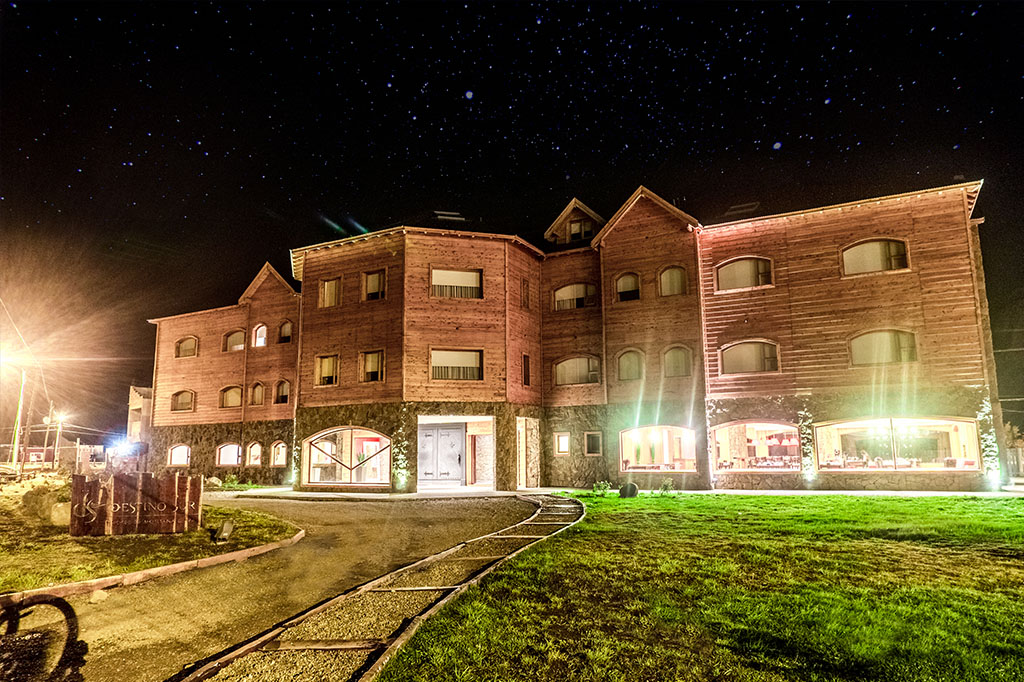
Typically, during the day it will rest on a branch inside the forest. It then comes to life at night and with its incredible night vision it will seek out and feed on rodents, small mammals, birds, reptiles and some invertebrates.

Austral Pygmy Owl / Chuncho

This owl inhabits the Southern Cone of South America. It is a small bird that measures 20cm head to tail with a hooked beak, yellow legs and large, yellow eyes. However, its most distinguished feature is its pair of “fake” eyes that are drawn on the feathers of the neck and help to ward off attacks from predators. It is small in size and silent in flight. When it flies from branch to branch it will usually do so unnoticed.

The Chuncho has relatively diurnal customs, as does the Tucuquere, and can be quite aggressive and fierce with its prey. Furthermore, it will hunt larger animals than itself, quickly killing them with is small, but powerful claws. It feeds on birds, insects, mammals and reptiles.

Caracara Plancus / Carancho

You can find this bird throughout Chile, from Arica in the far north, down to Tierra del Fuego in the far south. It can be found specifically near forests, open fields or scrub land.
In Magellan it is quite common to find it standing on fences or light poles beside rural or interprovincial roads. It measures between 55 and 58cm in length and its height is 120cm. Typically it weighs up to 1.6kg.

On its head is a black crown of feathers, and its cheeks and neck are of a cream color. Then its loin and legs are dark brown and its breast also a dark brown, but with cross lines cream color. It has a yellowish bill with a bluish and orange base. This bird is carnivorous. The Carancho does not hunt in the same way as other birds of prey. Instead, it places itself at a certain distance from its prey, then it walks towards it and then charges at the prey as it gets closer. When live prey is not available it will feed on carcasses. Often it can be seen eating next to vultures and condors. It will eat mice, small birds, chickens, snakes, toads.

Eagle / Aguila Mora

The eagle lives in throughout Chile, from the Atacama to Tierra del Fuego. It lives anywhere but is seen more in the low areas of the mountain range, on vegetated slopes, shrubs and forests.

It is a large bird that measures up to 200cm in height and 80cm in length. Usually weighing around 2kg.

The upper part of its body is a bluish black. Its throat, abdomen and legs are white, but with thin dark veins. The wings are black with greyish parts. The Eagle has a hooked bill, which is bluish grey at the tip and yellowish at the base.

Females of this species are larger than males. The juvenile eagles have a different color to the adults such as dark almost black with reddish brown tones. However, when the young birds are about 4years of age they assume the color of an adult.

Its feeding is mainly based on live animals, such as small mammals (mice or rabbits), sometimes hunting snakes and partridges.

The hunting strategy is typical of birds of prey, which is to swoop down from above and catch the victim with its claws. Once in its clutches the bird will kill its prey by burying its talons into the body or pecking it to death with its beak. Once the prey is caught it will be taken to its nest where the young will be fed.
It is a bird very suspicious of anything getting close to it and will fly away if anyone tries to get near.
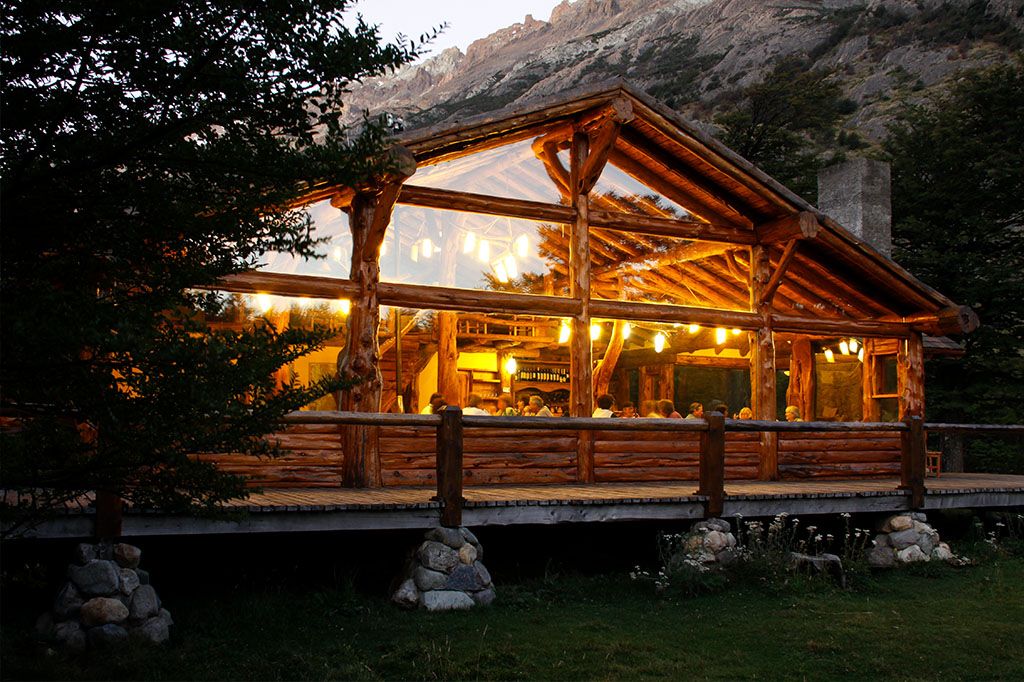
Other Treks in Torres del Paine
National Park

Other Treks in Torres del Paine National Park

There are trekking trails all over Torres del Paine. Below we detail some of the other, less know trails, that offer great exercise and stunning views.

Trekking the Lesser-Known Trails in Torres del Paine

The iconic trekking trails in Torres del Paine National Park are the W Trek and the Full Circuit Trek. These two trails are very popular and offer fantastic scenery and undulating trails.

However, there are also some other trails that offer amazing views and often without too many other people. Below are the details.

Eastern Sector Torres del Paine

Western Sector of Torres del Paine

W Trek Accommodation Torres del Paine

There are various options for accommodation along and nearby the W Trek trail in Torres del Paine. Refugios, Domos, Serviced Camping, Luxury Camping (Glamping), Hotels and Luxury Lodges.

Refugio (Hostel)

Torres del Paine W Trek Refugios

However, if you prefer to mingle with other travellers and are okay to share a dorm room, sleep in a bunk bed and have meals with everyone else, as well as share communal WC – shower rooms, then a refugio is what you need. Note that in one place, Cuernos, there are also private A-framed cabins that sleep up to three people (still need to use communal WC, shower room). The cabins are 50m away from the refugio, where meals are taken.

Refugios are youth hostels that are dotted along the trail and provide a fun social space to unwind and re-charge after your day on the trail. However, here at Experience Chile we only book full-board accommodation, so all of your meals will be included throughout the duration of your trip.

The refugios of Torres del Paine National Park vary in size and quality, so make sure to contact us if you’re unsure which option is right for you. If you don’t mind a bit of a squeeze and love a chat with interesting people then these are the perfect choice for you.

The W Trek refugios are located at key points along the trail so that trekkers have a sturdy, warm, shelter after several hours hiking.

Private Cabins

Torres del Paine W Trek Private Cabins

These cabins, which are private, are the Cabins Cuernos, located 50mts up the hill from the Refugio Cuernos in the middle of the W Trek Trail.

The cabins offer a private, snug and cosy alternative to staying in the dorm rooms in the refugio or tents in the serviced camping area.

The cabins are small, A-framed huts that can sleep two comfortably and three if you have a good friend. There are real beds with bedding too.

There is a communal shower and WC unit as well as a communal outside hot tub, from where you can relax after a heavy day walking – but bring your bathing gear.

Serviced Camping

Torres del Paine W Trek Serviced Camping

If you want privacy, like the outdoor experience and want to keep costs down, then the serviced camping option will work in the case. Serviced camping, that includes the tent, ground mat, sleeping bag, liner, and all meals, are located beside the refugios (see below). Tents are also on top of raised platforms. Here at Experience Chile we will be pleased to include serviced camping in your itinerary.

Dome Camping

Torres del Paine W Trek Dome Camping

These domes are located at Frances, which is a spot located half-way between Refugio Cuernos and the entrance to the France Valley (also known as Camp Italiano). The domes are structures built in the shape of a dome, hence the name, and comprise plastic supported over a metallic frame. Each unit is on top of an elevated wooden base and has its own, communal en-suite shower and WC unit. The interior is spacious with a bunk bed configuration in a dormitory format.

Estancias

Torres del Paine W Trek Estancias

This is hotel is located on an authentic, Patagonia working estancia. This means that on the land are sheep, horses and some cattle as well as thousands of hectares of Patagonian space.

The rooms are in the original, but renovated estancia accommodation buildings. With regard to design, this particular one is the country-style with large, private rooms with equally large en-suite bathrooms in its older sector. The restaurant offers good food and wines.
Here, you can experience life in Patagonia and also sense and feel the history of the past 100 years.

There is only one such place and it is located in the Torres del Paine zone.

Luxury Camping (Glamping)

Torres del Paine W Trek Luxury Camping (Glamping)

The Torres del Paine Glamping means that the accommodation is luxury level camping in either Yurt or Dome tent (two different places in different areas of the Torres del Paine zone). The exteriors maybe hard, plastic sheeting over metallic frames, but the interiors are decorated with nice fabrics, wooden furniture, good beds and bedding, and en-suite bathrooms that you would normally find in an hotel.

One has communal bar and dining area with wine, and in the other has more of an up-market restaurant with good wines. Both options are located within the Torres del Paine zone.

Hotels

Torres del Paine W Trek Hotels

There is only one hotel actually located on the W Trek trail and this is at the trail head to go up to the Torres Base. This hotel, called Hotel Las Torres, and one of our partners, is a good option to mix with either refugios and / or camping, or as a one or two night rest, followed by nights at other hotels when you complete the trail. The advantage of a hotel is that you get a private room, private en-suite bathroom, usually decent restaurant and an overall more comfortable experience. 

Experience Chile can arrange full W Trek itineraries with accommodation at a hotel each night.

Luxury Lodges

Torres del Paine Luxury Lodges for the W Trek

Should you have the budget, namely a few thousand USD per person, for an all-inclusive 4-night experience then without doubt a stay at one of the up-market, top-end luxury lodges is where you need to be. The top-end of the market offers guests superb comfort, facilities (two of the places have excellent indoor pools), educated guides, nice transport and daily, guided W Trek excursions as well as plenty of other tours.

Here at Experience Chile we are distinguished partners of all the luxury lodges in Patagonia, whereupon we include additional, special offers should you book with us.

Please see our Torres del Paine Accommodation section for full information on the options Click HERE

Torres Del Paine Serviced Camping

Definition of Serviced Camping

Sleeping Bag, Tent and Ground Mattress

Beside each refugio is a camping area. These camping sites ARE SERVICED CAMP SITES and offer bathroom (toilet) facilities, tent rental, ground mattress rental, food supplies and sheltered cooking areas. There is also WC and bathroom facilities.

Camping areas or camping sites that are NOT next to a refugio are only camping areas and nothing more than that and at these places you need to bring your own tent, ground mat, cooking gear and food.

At Camping Central, Chileno, Cuernos, Frances and Seron you will find platforms, upon which the tents are pitched.

Serviced Camp Sites Next to Refugios