Torres del Paine Circuit Trek

Introduction

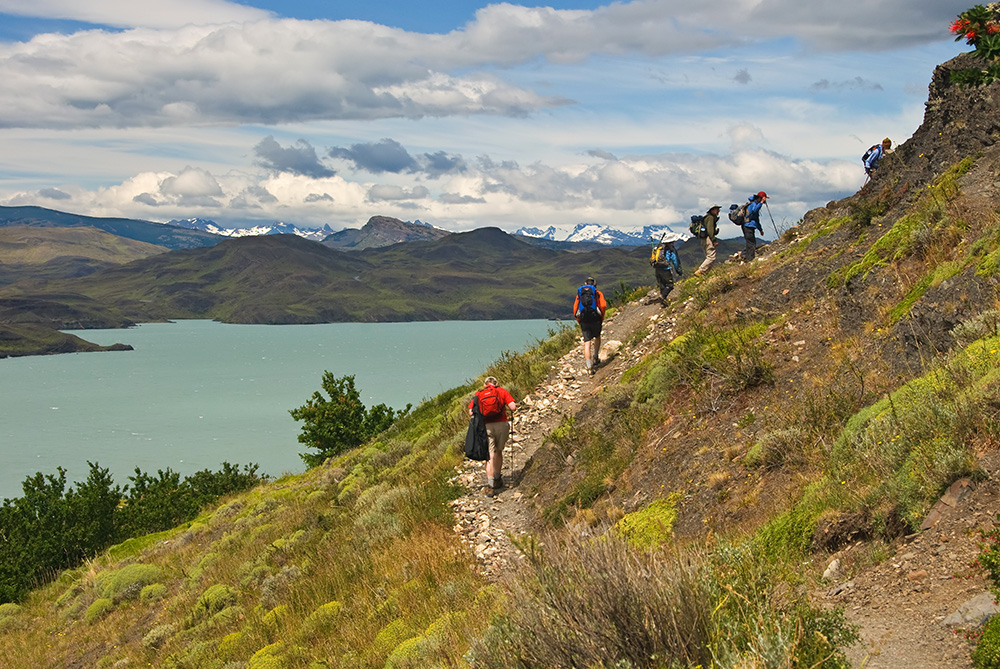
You may have heard about the other popular trek in the Torres Del Paine National Park, the full circuit “O” Trek. It is called the “O” because it starts and ends at the same place and forms a circular path around the Park. This is the trek that includes the W Trek, but also the trail that goes into the “back country” behind the Torres del Paine Massif. The O Trek is a longer and generally more demanding trek than the W Trek. This trek will take you off to more remote areas with even fewer traces of human life.

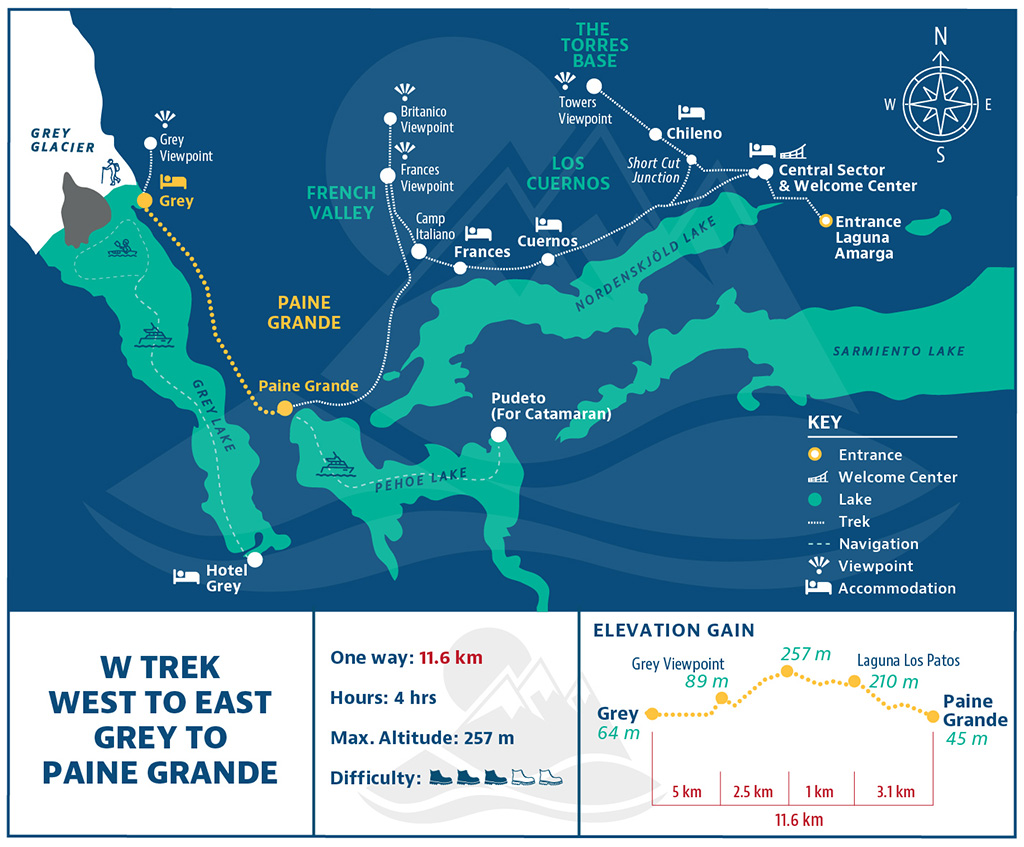
Mapa W Trek Elevation Circuit Trek

The trek is recommended for more experienced hikers only taking between seven to nine days, and will require you to camp at two serviced campsites. At a serviced camp site all gear and camping equipment is included as part of the program, so you will not need to worry about bringing your own gear.

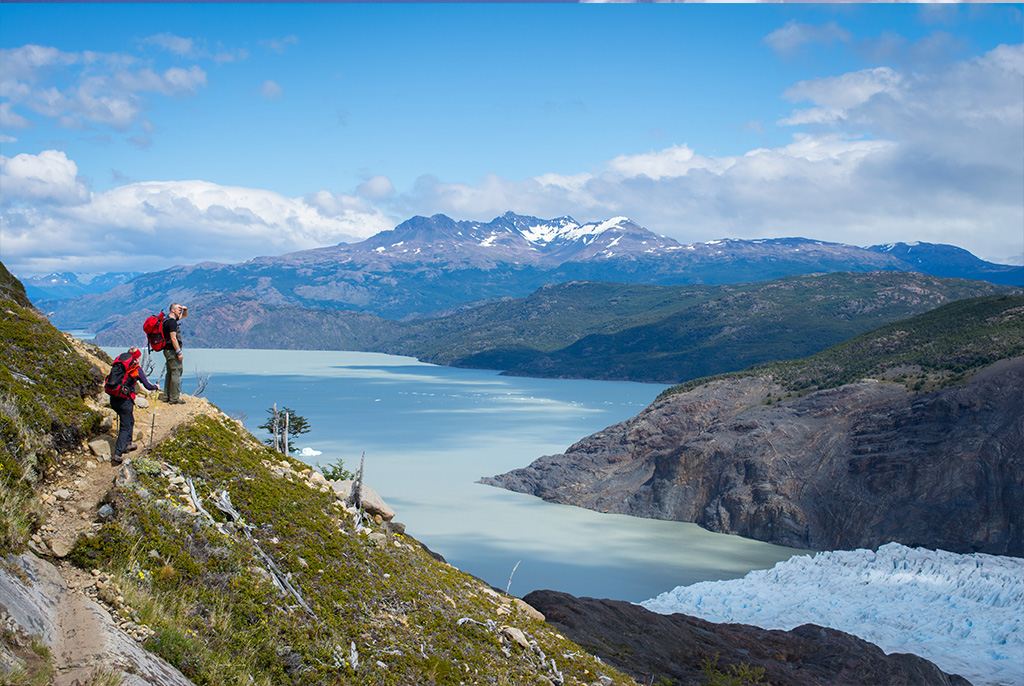
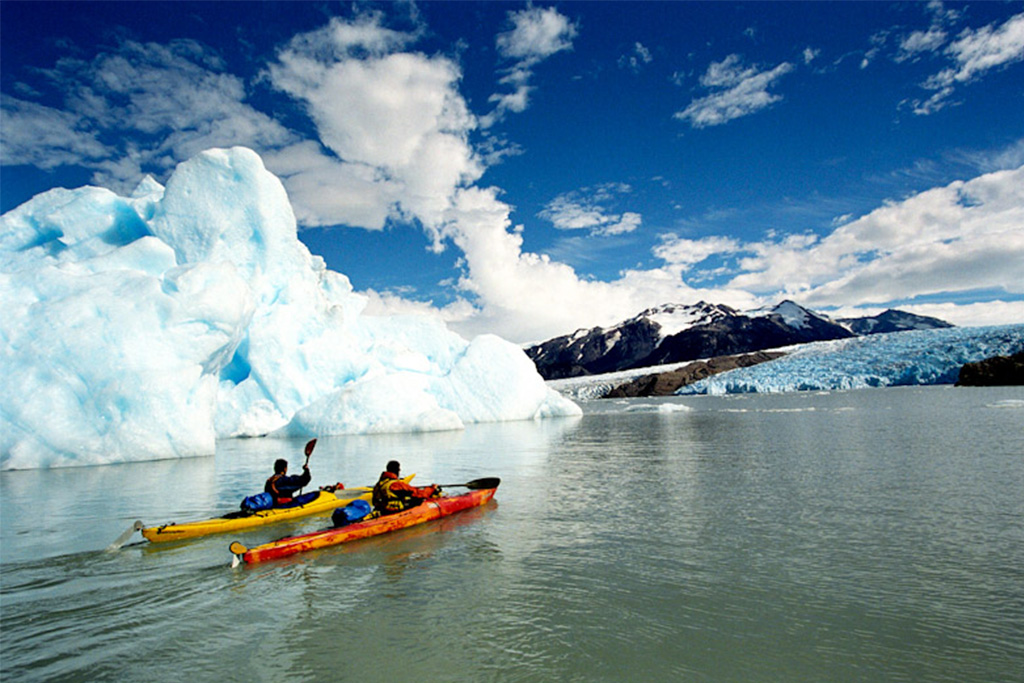
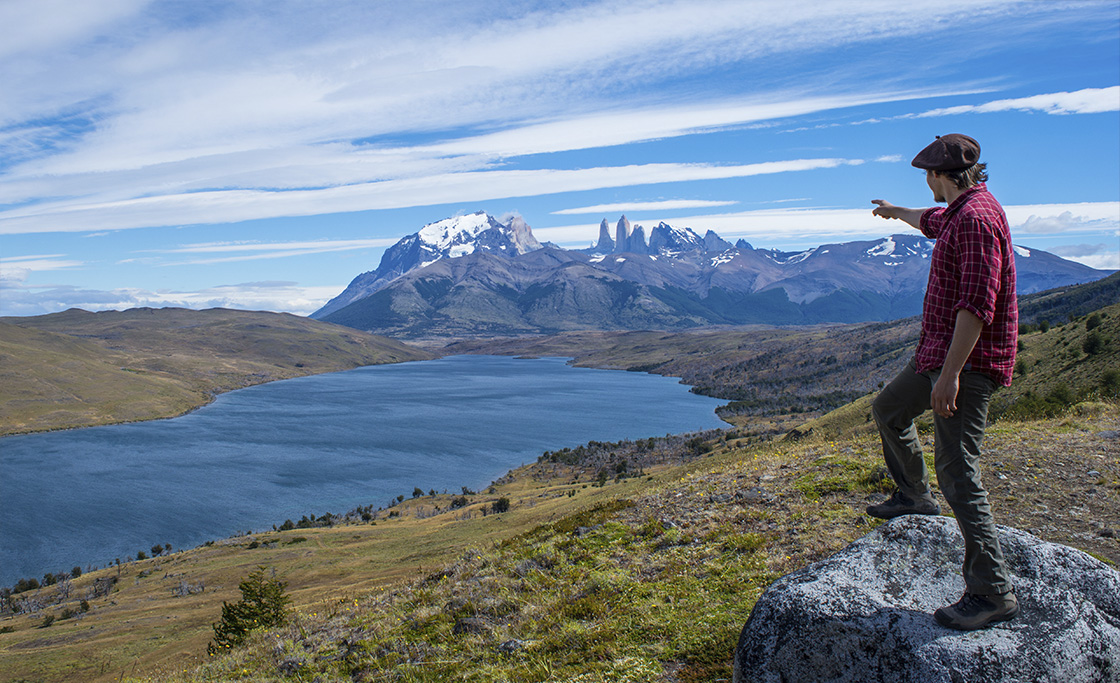
If you embark on the O Trek then you’ll be blessed with unique views of the Grey Lake and the Southern Patagonian ice field.

NOTE:

  • Made bed means duvet, pillow and sheets.
  • Simple bed + Kit: The staff provide you the sheets and duvet and you set up the bed.
  • Full Board Means: Hot dinner, breakfast and box lunch (in this order).

Usual Meal Times:

  • Dinner: 19:30 – 21:30hrs
  • Breakfast: 07:30 – 09:30hrs
  • Lunch: 19:30 – 21:30hrs (if trekking you will get a box lunch to go).

The Torres del Paine Circuit Trek Trail (Anticlockwise)

This trail joins the W Trek Trail at Refugio Grey - please see W Trek Route for full W Trek details.

Warning:

The information below is provided in good faith and we cannot be held responsible for any changes or if some facilities mentioned are not available.

The quality of refugio’s varies and not all the camp sites are serviced. Herewith is a summary of what is on offer from the refugio’s and the serviced camp sites on the “Circuit” and “W” routes.

The route must be walked in an “anti-clockwise” direction. Therefore, although you can start from any of the refugios, the main start place is from Laguna Amarga CONAF entrance, or the Refugio las Torres, Refugio Torre Norte, Refugio Chileno (eastern side of the W trek), or Camping Seron (which is the first serviced camp of the circuit). Note that the trail on the CIRCUIT trek (the back country) are heavily degraded in places. The trail must be walked “anti-clockwise”.

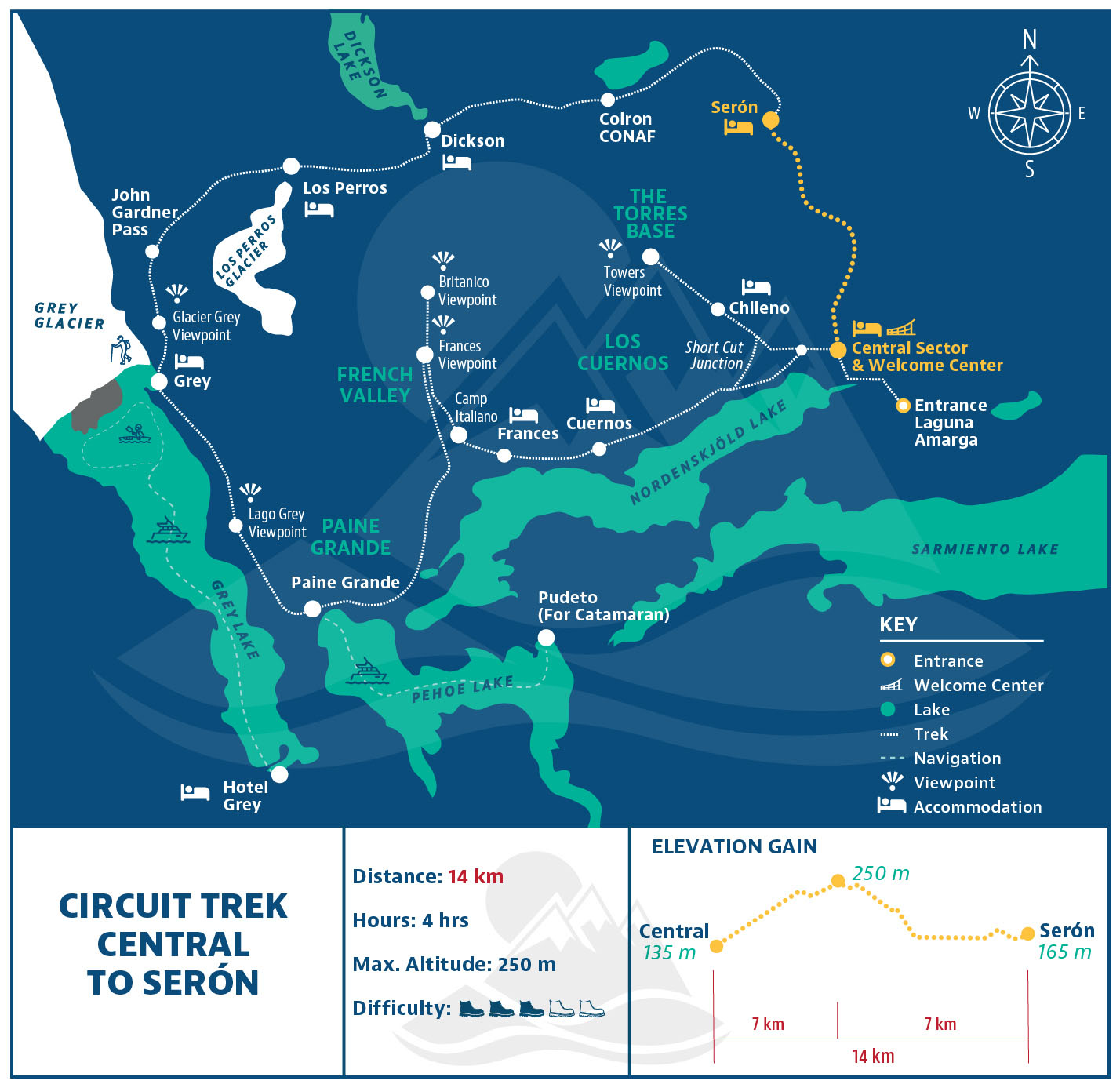
Estancia Sector to Camping Serón

  • Allow 5hrs approx (13km)
  • Vertical Climb 250m
Description of the Route

The trail initially passes through a beech-tree (lenga) wood with openings that offer a constantly changing view. The identifying characteristic of this trail is its abundance of panoramic views (“vistas”), and its excellent bird-watching opportunities.

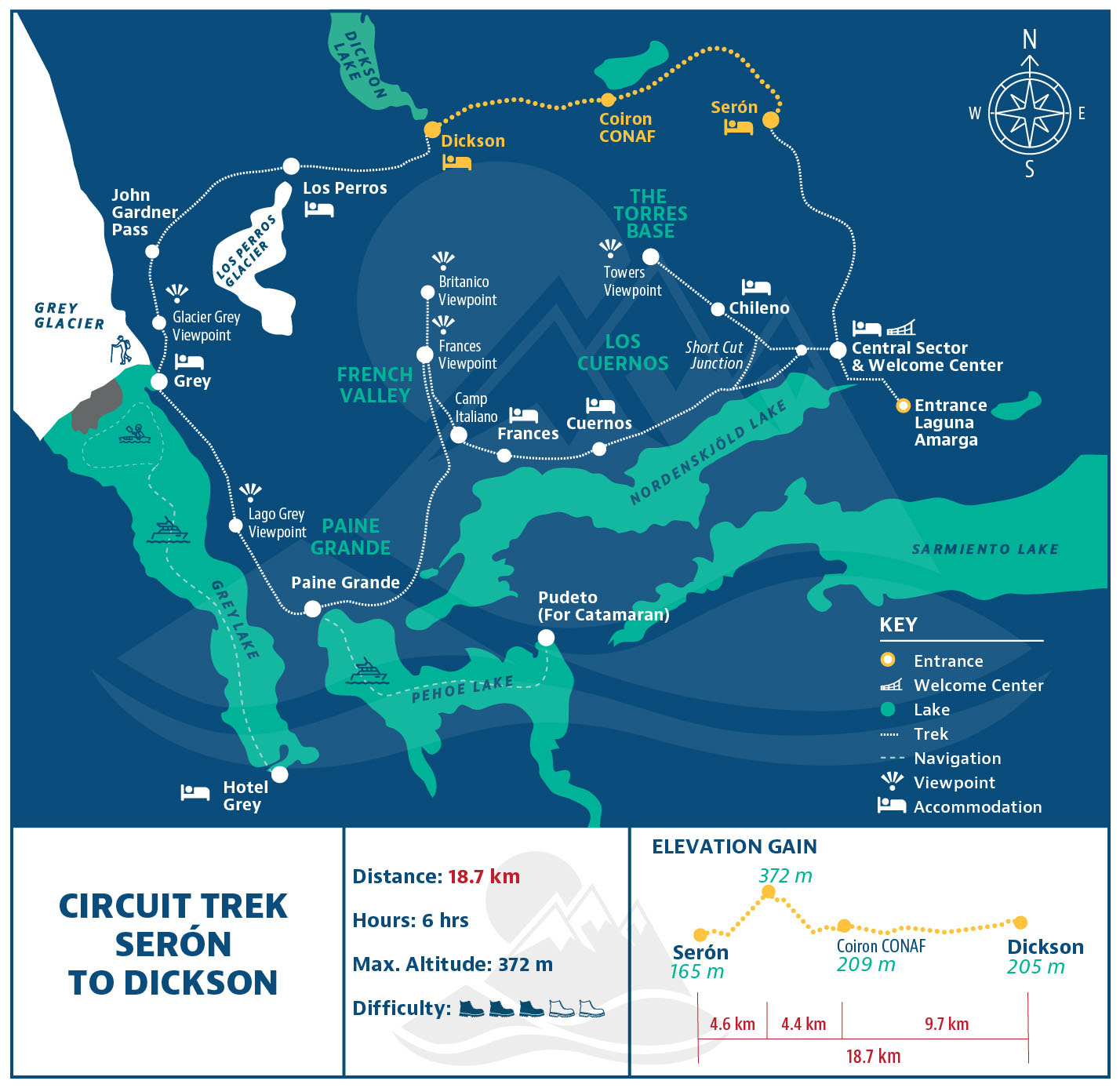
Camping Serón to Refugio Dickson

  • Distance is 18 km, 6hrs walking
  • Vertical Climb 200 m
Description of the Route

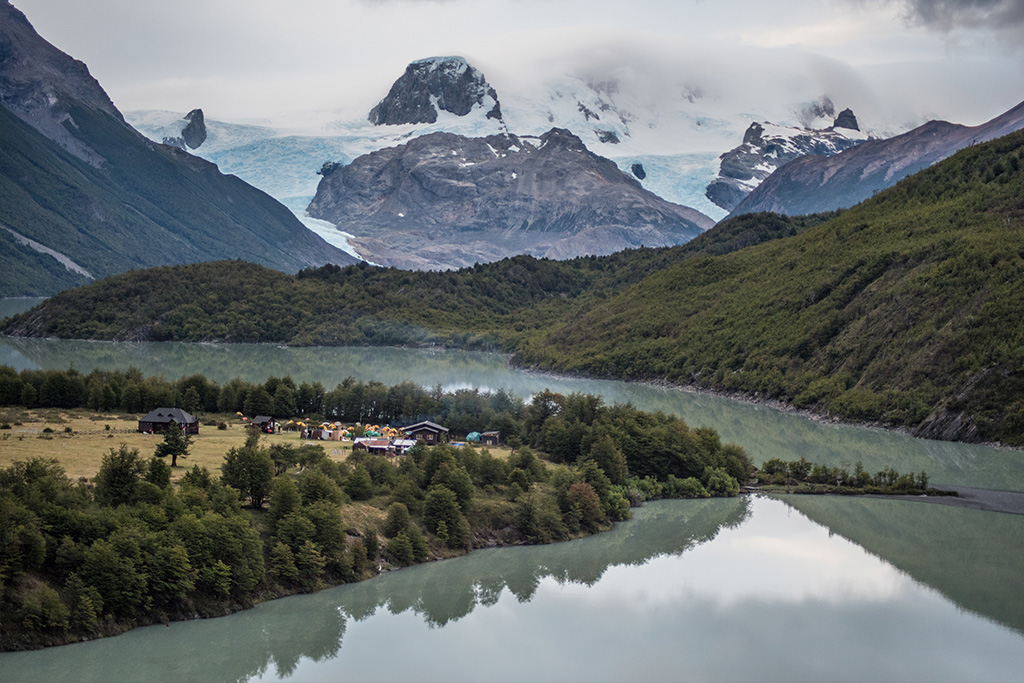
The trail passes through woods and then opens into “pampa” (flat prairie) with views of the northern face of the Paine Massif. This trek allows an opportunity to see “behind” the “Oggioni”, “Tridente” and “Cabeza del Indio” peaks. The viewpoint is not seen by many as this trail is not frequented by as many backpackers as other parts of the park, and rarely is this beautiful sector of TDP highlighted in postcards or photos. From time to time, and on clear days, the peaks of the Towers can be seen rising from behind the mountains. After 6 hours hiking you will be able to see Dickson Refugio and campsite.

Refugio Dickson to Camping Los Perros

  • Distance is 9km, 4.5hr walking
  • Vertical Climb 360m
Description of the Route

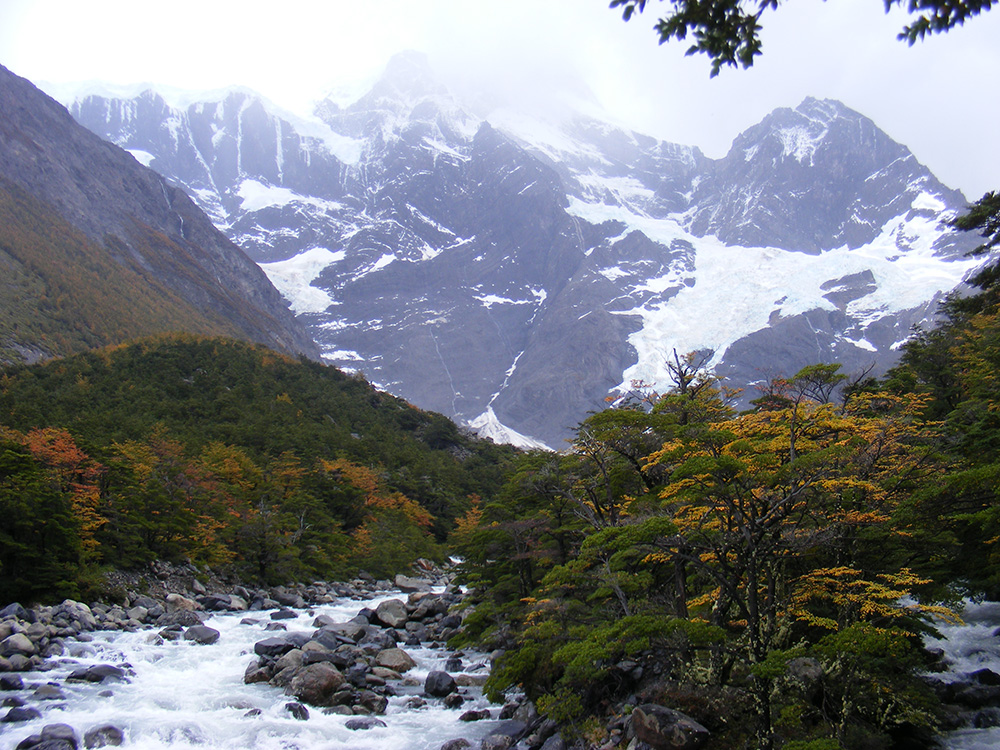
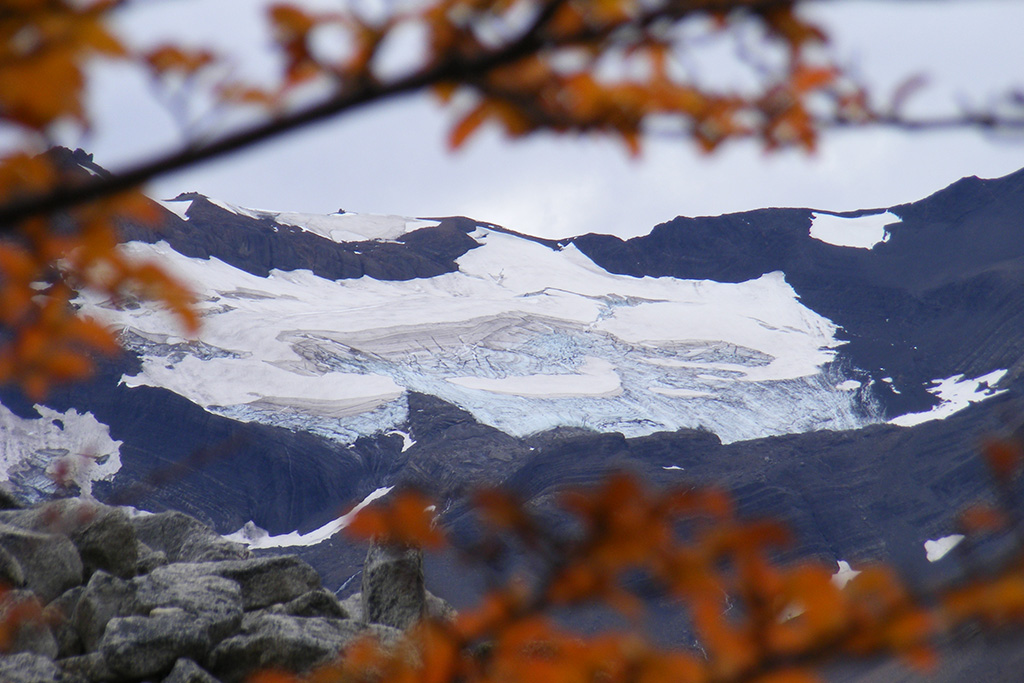
During the first hour, if the weather permits, hikers will get a view of the granite needles that encircle the French Valley. The trail then passes through a valley with mountains on both sides before entering a dense forest of towering beech trees before crossing a hanging foot bridge over the “Los Perros” River. Once over the other side the path climbs over glacial moraine whereupon the “Los Perros” Glacier comes in to view. The glacier is bordered by great deposits of rock that create a tiny lake to form at the glacial face. After another hour you will reach the Los Perros camp ground, set within a wood.

Camping Los Perros to Refugio Grey

  • Distance is 22km, 9 hrs walking
  • Vertical Climb 620m
  • Highest Altitude Point 1,241m (John Garner Pass)
  • Descent 1,000m
Description of the Route

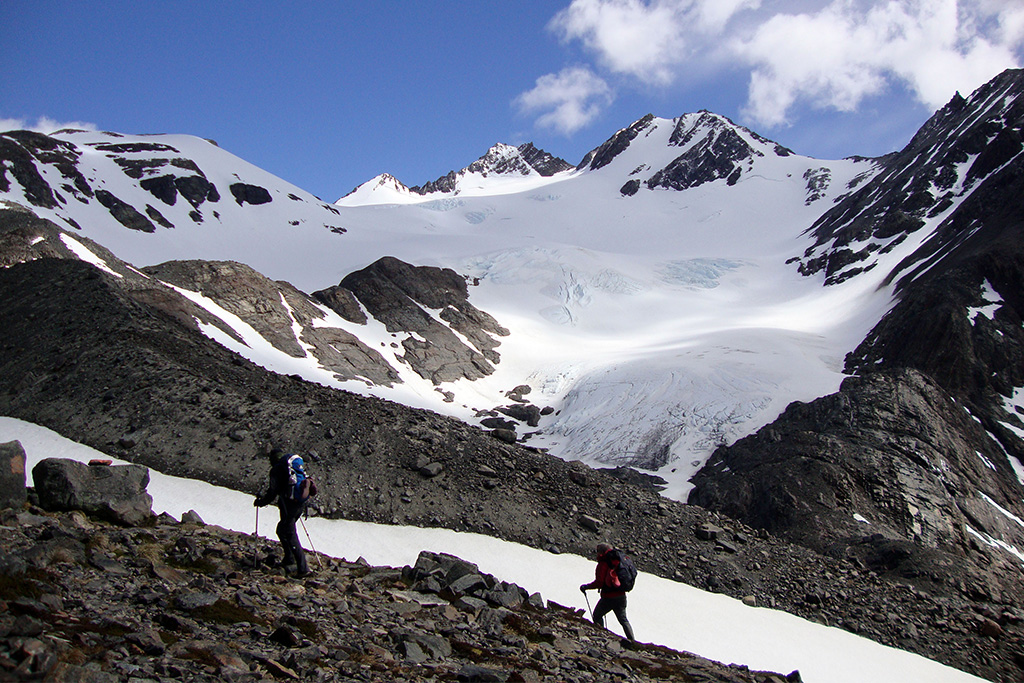
This is the longest and most difficult sector of the trekking routes in Torres del Paine. The trail begins with a slight climb, which continues to increase in severity until it reaches a 45° incline at the top of the tree line (approx. 900 meters above sea level). The trail in this sector is also often muddy making it slippery. There is also mud on rocks leading up to the famous John Gardner Pass, at 1,241 meters above sea level.

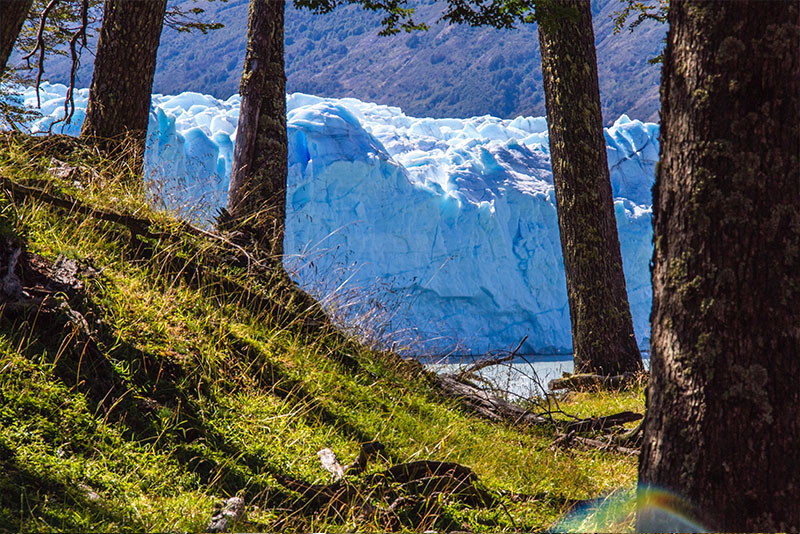
Once at the summit of the John Gardner Pass, on a clear day, there is undoubtedly the most spectacular view in the Park of Glacier Grey, including Grey Lake and part of the Southern Ice Field. The trail continues on a long, very steep descent followed by what feels like an endless undulating path passing through beech wood (lenga), with occasional glimpses through open areas of the massive Glacier Grey all the way to Refugio Grey.

From here on, please refer to the W Trek sector for all information you need. See the TAB W Trek Trail or click here.

Torres del Paine W Trek West to East

Refugio Grey to the Torres Base

The W Trek is Patagonia’s most famous trek, where you can traverse the three valleys that the trail enters, which, in turn creates a W form and when viewed from above tis W shape is what gives the trek its name.

Torres Del Paine General Map

The W Trek West to East Start and End

The trek can start at either the Western end, therefore at Refugio Grey, or even at Refugio Paine Grande and end at the Eastern sector meaning Refugio Chileno, Hotel Las Torres, Refugios Central or Norte or even ECO Camp.

Main W Trek From West To East

On the other hand, it can be walked in reverse, starting at the Eastern end at any of the accommodation establishments mentioned above and then end at the Western sector at Paine Grande or Grey.

Here, we will describe the trek starting from Refugio Grey and walking EAST towards the Torres Base.

ALSO, for those who are coming from the full circuit trek, you will join the W Trek at Refugio Grey.

The Three Main Sectors of the Torres del Paine W Trek

Western End (is the Grey Sector)

The first section of the trek runs parallel to Lago Grey (the Grey lake). This a world-famous geological phenomenon dominated by Glacier Grey (the Grey Glacier).

NOTE:

You can begin this trek from Refugio Grey if you are on the full-circuit trek from Los Perros.

Or if you have come over on the Navigation Grey boat from Hotel Grey.

Or, in the case that you have travelled from Refugio Paine Grande to Refugio Grey the previous day.

Central Part (is the Cuernos Sector)

In the central part is the French Valley. Consequently, this is the middle, or central section of the hike and prominently features the stunning Glacier Francés, which you’ll be able to see up-close.

Eastern End (is The Estancia Sector, or the Las Torres End)

The Ascencio Valley – will take you right up to the base of the towers that you’ll see in every photo of the W Trek. To get to the base of the towers you’ll begin from Refugio Chileno followed by a demanding 800m ascent until you arrive to the Torres Base. The return trip will involve trekking down to Hosteria Las Torres, Refugio Torre Norte, Refugio Torre of Central, Eco Camp and the welcome centre.

Torres del Paine W Trek Trail Description

Trek from Refugio Grey to Refugio Paine Grande

Operated: Between September to the end of April

  • Start: Refugio Grey
  • End: Refugio Paine Grande
  • Trek Time: 4 hours
  • Distance: 11km
  • Difficulty: Medium.
  • Experience Required: None.
  • Altitude Gain at Highest Point: 388m

From Paine Grande to Refugio Cuernos (via the French Valley)

Operated: Between September to the end of April

  • Start: Refugio Paine Grande
  • End: Refugio Cuernos, Cabañas Cuernos, or Domos Frances
  • Trek Time: 5hrs (direct to Refugio Cuernos and Cabañas Cuernos) or 10hrs (through the French Valley). You can take an hour off both of these times if you’re staying at Domos Frances.
  • Distance: 22.6km (if going via the French Valley) or 11.6km (if going direct to Refugio and Cabañas Cuernos).
  • Difficulty: Medium to high.
  • Experience Required: None.
  • Altitude at Highest Point: 762m (at Camp Britanico)

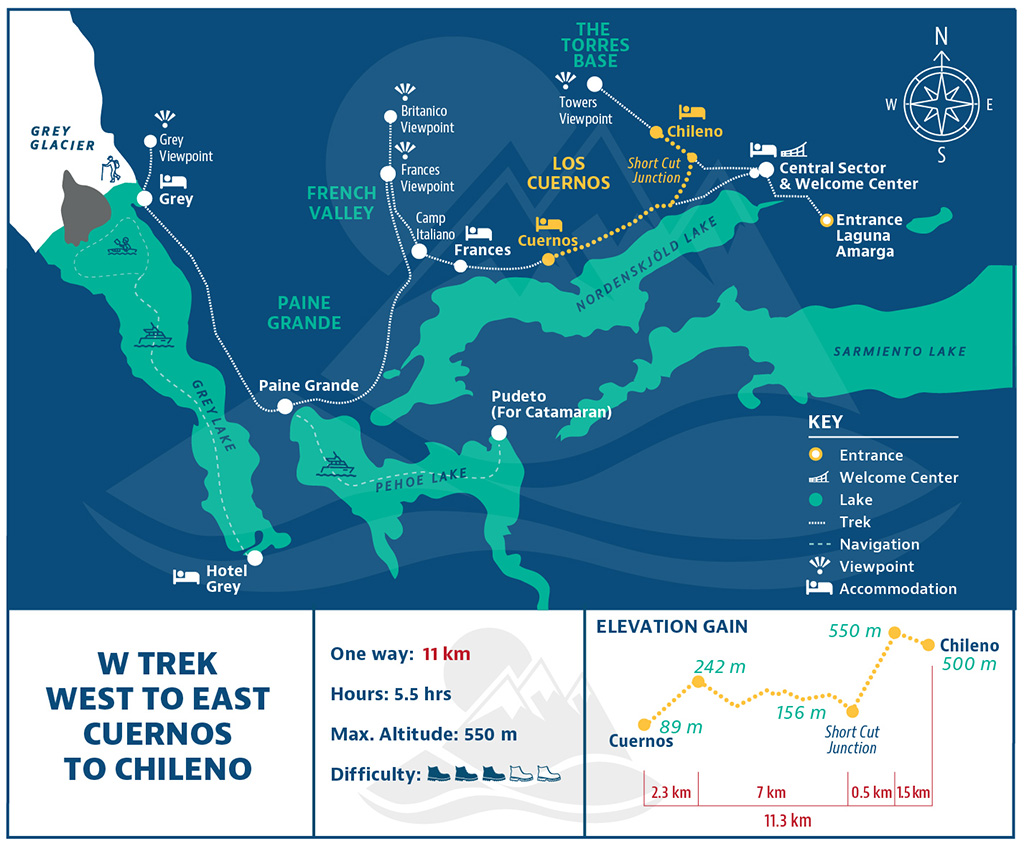
From Camping Frances / Refugio or Cabañas Cuernos to Refugio Chileno

Operated: Between September to end of April

  • Start: You’ll begin from Camping Frances, Refugio Cuernos or Cabañas Cuernos
  • End: Refugio Chileno
  • Trek Time: 5.5 hours one way from Cuernos, 7 hrs from Frances
  • Distance: 11km (to Refugio Chileno) or 14.5km (if travelling from Domos Frances)
  • Difficulty: Medium
  • Experience Required: None
  • Altitude at Highest Point: 550m (at Refugio Chileno)

From Refugio Chileno to the Torres Base

Operated: Between September to end of April

  • Start: Refugio Chileno
  • End: The welcome centre, Hotel Las Torres, Refugio Torre Central, Refugio Torre Norte, the welcome centre or the Eco Camp.
  • Trek Time: 2 hours up from Chileno, 2 hours back to Chileno and 2 hours down to Hotel Las Torres. Add an extra half an hour to your trip if you’re travelling back to down to Refugio Torre Central, Refugio Torre Norte, the welcome Centre, and add an hour if you’re heading to back to the Eco Camp.
  • Distance: 6 km from Refugio Chileno to Torres Base and back
  • Difficulty: Medium to high
  • Experience Required: None
  • Altitude Gain: 870m

Torres del Paine W Trek East to West

From the Torres Base and end at Refugio Grey

The W Trek is Patagonia’s most famous trek, and if walking east to west you will begin at Hotel Las Torres, Refugio Las Torres, Refugio Chileno, or Refugio Grey. Most importantly, you will traverse the three valleys that give the trek its name, before finishing your trek at Refugio Grey. Moreover, each valley possesses its’ very own set of natural wonders.

Torres Del Paine General Map

Should I trek the W Trek on My Own?

It is not advisable to trek either the full circuit, or W Trek on your own. The reason is twofold. One, should you twist an ankle or get injured in any way, you may be waiting an awfully long time until help arrives. Two, you never know who else is around, who could, if given the opportunity, do harm to you in the case that you are a single woman, for example

Main W Trek from West to East map

The Three Main Sectors of the Torres del Paine W Trek

Eastern End (is The Estancia Sector, or the Las Torres End)

The Ascencio Valley – will take you right up to the base of the towers that you will see in every photo of the W Trek. To get to the base of the towers you’ll begin from Refugio Central, or Refugio Torre Norte, or the ECO Camp or Hotel Las Torres, or even from the Welcome Centre, and hike up hill to the Refugio Chileno, followed by a demanding 800m ascent until you arrive to the Torres Base.

Central Part (is the Cuernos Sector)

In the central part is the French Valley. Consequently, this is the middle, or central section of the hike and prominently features the stunning Glacier Francés, which you will be able to see up-close.

Western End (is the Grey Sector)

The final section of the trek runs parallel to Lago Grey (the Grey lake). This a world-famous geological phenomenon dominated by Glacier Grey (the Grey Glacier).

NOTE:

When you end this trek at Refugio Grey, you have the option to either take the Navigation Grey across the lake to Hotel Grey. One benefit of doing this is that you will get an up-close view of Glacier Grey. Alternatively, you can hike back to Refugio Paine Grande and take the catamaran across Pehoe lake to Pudeto and then continue to wherever you need to get to.

We will arrange all that you need, just ask.

From the Eastern, Estancia End to the Torres Base

Trail Head to Refugio Chileno

This First Sector can be Broken into Two Smaller Sectors

Sector 1 - Trail Head to the Ascencio Valley Entrance

Operated: Between September to end of April

  • Start: The Trail Head is considered to be from any of these locations:
    • Eco Camp • Hotel Las Torres • Refugio Torre Central • Refugio Torre Norte • The Torres del Paine Welcome Centre.
  • End: Refugio Chileno
  • Trek time from the trail head to Refugio Chileno to the Torres Base and back Refugio
  • Chileno is around 6hrs to 6.5hrs, plus the time spent at Torres Base.
  • Return Distance: 6km
  • Difficulty: Medium to high. The final one-hour sector up to the Torres Base will require hiking up steep parts on a very narrow path whereupon in places you will need to navigate your way up and over large boulders as well.
  • Experience Required: You don’t need any experience to embark on this trek, but you need to be physically fit and used to long walks.
  • Altitude Gain: 870m (at the Torres Base lookout)

Sector 2 - Refugio Chileno to the Torres Base

Operated: Between September to end of April

  • Start: Refugio Chileno
  • End: Refugio Chileno
  • Trek Time: 4 hours.
  • Distance: 8km return
  • Difficulty: Difficult.
  • Experience Required: You don’t need any experience to embark on this trek, but you need to be physically fit and used to long walks.
  • Altitude: 500m at Refugio Chileno
  • Altitude Gain: Highest Point 870m

Refugio Chileno to Cuernos or Frances

Operated: Between September to end of April

  • Start: Refugio Chileno
  • End: Cabañas Cuernos, Refugio Cuernos or Camping Frances.
  • Trek Time: 5.5 hours to Cuernos and 7 hrs to Frances.
  • Distance:
    • To Refugio and Cabins Cuernos: 11km
    • To Camping and Domos Frances: 14.5km
  • Difficulty: Medium.
  • Experience Required: None.
  • Altitude Gain: 250m
  • Altitude at Highest Point: 250m

Cuernos or Frances to Refugio Paine Grande

Operated: Between September to end of April

  • Start: Cabañas or Refugio Cuernos. Alternatively, you can begin from Camping and Domos Frances.
  • End: Refugio Paine Grande
  • Trek Time:
    • Direct trek from Frances sector to Paine Grande: 3hrs
    • Via the French Valley: 9hrs
    • From Refugio or Cabañas Cuernos to the entrance to the French Valley: 2.5hrs
    • From Camping Frances to the entrance of the French Valley: 0.5hrs
    • From the entrance to the French Valley to the end: 2.5hrs, therefore 5hr return trip.
    • From the entrance to the French Valley to Refugio Paine Grande: 2.5hrs
    • Direct trek from Cabañas Cuernos to Paine Grande: 5hrs
  • Distance:
    • From Frances sector to Paine Grande: 9.5km
    • Via the French Valley: 20.5km
    • Direct trek from Cabañas Cuernos to Paine Grande: 11.6km
    • Via the French Valley: 22.6km
  • Difficulty: Medium to high
  • Experience Required: None.
  • Altitude at Highest Point: 762m (at Camp Britanico)

Refugio Paine Grande to Refugio Grey

Operated: Between September to end of April

  • Start: Refugio Paine Grande
  • End: At Refugio Grey
  • Trek Time: 4 hours
  • Distance: 11km
  • Difficulty: Medium.
  • Experience Required: None.
  • Altitude Gain at Highest Point: 388m

Torres del Paine Hotels and Accommodation Options

Introduction

There are various types and levels of accommodation in and around Torres del Paine National Park, which we call “the zone”, and this includes Puerto Natales. Here, we will describe the different types of accommodation available in this area as well as the various categories.

We will also outline where various hotels are located within and outside the official park boundaries, as well as point out that there is no need to stay “inside” the park, because it really does not make so much difference if you are “inside” the Park or back at Puerto Natales. The reality is that the area is so large that even if to stay in a hotel within the Torres del Paine official boundary, it can take you up to 2hrs to get to a particular place of interest. It can also take the same time to see a different place of interest coming in from Puerto Natales. Staying at Puerto Natales offers the great advantage of lower cost and the chance to enjoy a village atmosphere each night, maybe go out to a restaurant, for example.

For fast access to our Featured Hotels please click here.

Hotels in and Around Torres del Paine Zone

Considering our history and unique local knowledge we can work with all the accommodation options in and around Torres del Paine for those visiting this incredible national park.

However, considering the varying degrees of quality and comfort, we prefer to work with only a selected few that we consider to meet certain minimum standards.

Accommodation Options

You have the option to stay within the park in a hotel, or around the W Trek trail heads in a refugio, depending on the activities you want to take part in.

Moreover, you can, of course, stay at a hotel in the nearby village of Puerto Natales too. That is to say that we consider Puerto Natales to be an excellent alternative, often less costly, and one that can even be considered better than staying inside the park.

In conclusion, no matter whether you simply need a comfortable room after a long day of treks, or you want free wifi to share your trip with the world, we have plenty of options to suit your needs.

Types of Accommodation in and Around the Torres del Paine Zone

Further below we talk about the categories of accommodation.

You can enjoy the stunning scenery, fresh air, witness moving glaciers, walk through woods, challenge yourself with adventurous trekking and be in the heart of nature during the day in Torres del Paine. But at night you have the following types of accommodation where you can relax and get your sleep:

Luxury Lodges

Hotels

Estancia Hotels

Luxury Camping (Glamping)

Refugio (Hostel)

Serviced Camping

Dome Camping

Within the Official Torres del Paine Boundary

There are, in total, four hotels and one up-market camp (glamping) that are within the official boundary lines of Torres del Paine National Park (TDP). These are: Hotel Las Torres, Explora Salto Chico Lodge, Hotel Lago Grey, Hotel (Hosteria) Pehoe and the ECO Camp.

Western Sector of Torres del Paine

To the west, literally just over the “boundary line” of TDP on the other side of the Rio Serrano are: Hotel Rio Serrano and Hotel del Paine, with a few others such as Pampa Lodge, Lago Tyndal and Nash lodge nearby.

East of Torres del Paine

To the east of TDP we have: Tierra Patagonia, Awasi Patagonia and Estancia Cerro Guido.

South of Torres del Paine

Here we have: The Patagonia (Yurt) Camp.

Torres del Paine Accommodation Categories

Luxury Lodges

Category: Luxury Lodges

Luxury Lodges Definition

These are world-class lodges with luxury-level private rooms; en-suite, well-equipped bathrooms, plus spa and pool facilities, quality food and wines.
Which Ones are in this Category?

Explora Salto Chico, Tierra Patagonia, Awasi Patagonia, The Singular (Puerto Natales) and Remota (Puerto Natales).

Locations of These Options
  • Explora Salto Chico is in the heart of Torres del Paine.
  • Tierra Patagonia is in the south-eastern sector, near Lago Sarmiento
  • Awasi Patagonia is in the eastern sector.
  • The Singular is based in Puerto Natales.
  • Remota is based in Puerto Natales.

NOTE: For Explora Salto Chico, Tierra Patagonia, The Singular and Remota hotels and lodges we have offers. Please see the offers section or open up the information on each hotel.

Hotels

Category: Hotels

Hotel Definition

This is a hotel with private room and en-suite bathroom or shower rooms, restaurant, decent food and wine selection. These are located in different areas within the Torres del Paine zone and, of course, at Puerto Natales.

Which Ones are in this Category?

Hotel Las Torres, Hosteria Pehoe, Hotel Lago Grey, Hotel Rio Serrano, Hotel del Paine as well as in Puerto Natales – Hotel If, Hotel Altiplanico Sur and Weskar Lodge.

Locations of These Options
  • Hotel Las Torres is located in the east of Torres del Park at the trail head up to the Torres base.
  • Hosteria Pehoe is located in the heart of Torres del Paine on its own island in Pehoe lake, not too far from Pudeto, where the catamaran departs and arrives to.
  • Hotel Lago Grey is located in the north-western sector of Torres del Paine at the southern shore of Grey Lake.
  • Hotel Rio Serrano is located in the western end of Torres del Paine, just the other side of the river Serrano.
  • Hotel del Paine is located in the western end of Torres del Paine, also just the other side of the river Serrano.
  • In Puerto Natales, we have Hotel IF in the heart of Puerto Natales, and Altiplanico Sur and Weskar Lodge, are a few kilometres away from the city.

Estancia Hotels

Category: Estancia Hotel

Estancia Hotel Definition

This is hotel is located on an authentic, Patagonia working estancia. This means that on the land are sheep, horses and some cattle as well as thousands of hectares of Patagonian space.

The rooms are in the original, but renovated estancia accommodation buildings. With regard to design, this particular one is the country-style with large, private rooms with equally large en-suite bathrooms in its older sector. The restaurant offers good food and wines.
Here, you can experience life in Patagonia and also sense and feel the history of the past 100 years.

There is only one such place and it is located in the Torres del Paine zone.

Which Ones are in this Category?
  • Estancia Cerro Guido
Locations of This Option
  • The Estancia Cerro Guido is located east of Torres del Paine.

Luxury Camping (Glamping)

Category: Luxury Camping (Glamping)

Glamping Definition

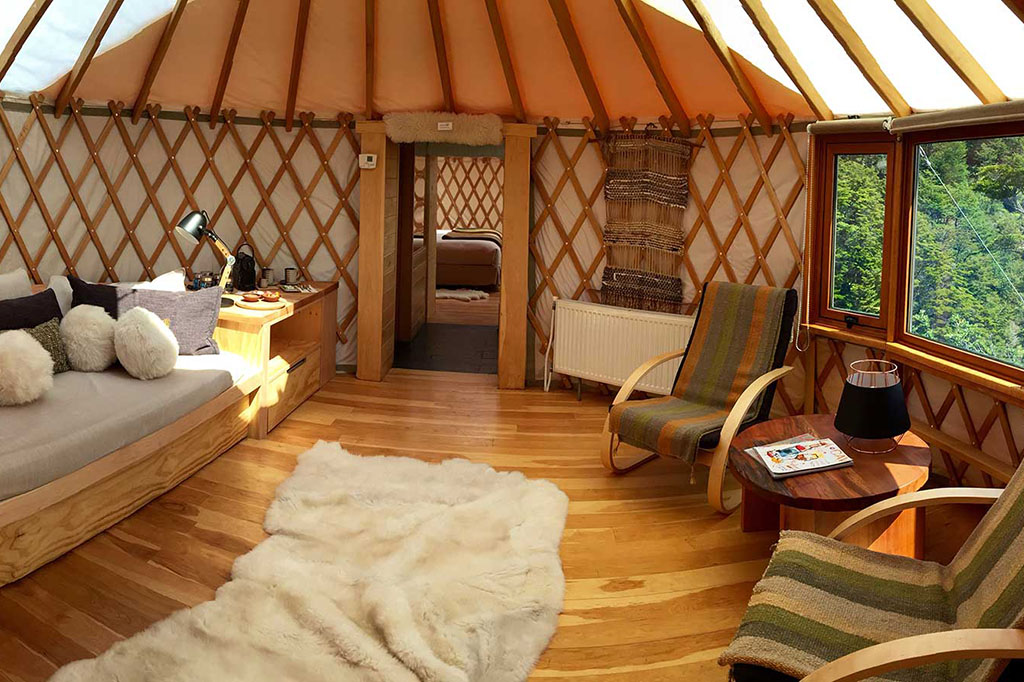
The Torres del Paine Glamping means that the accommodation is luxury level camping in either Yurt or Dome tent (two different places in different areas of the Torres del Paine zone). The exteriors maybe hard, plastic sheeting over metallic frames, but the interiors are decorated with nice fabrics, wooden furniture, good beds and bedding, and en-suite bathrooms that you would normally find in an hotel.

One has communal bar and dining area with wine, and in the other has more of an up-market restaurant with good wines. Both options are located within the Torres del Paine zone.

Which Ones are in this Category?
  • Patagonia Camp and ECO Camp
Locations of These Options

Patagonia Camp is located south of Torres del Paine.

  • ECO Camp is located eater of Torres del Paine close to the trail head up to the Torres base.

Refugio (Hostel)

Category: Refugio (Hostel)

Refugio Definition

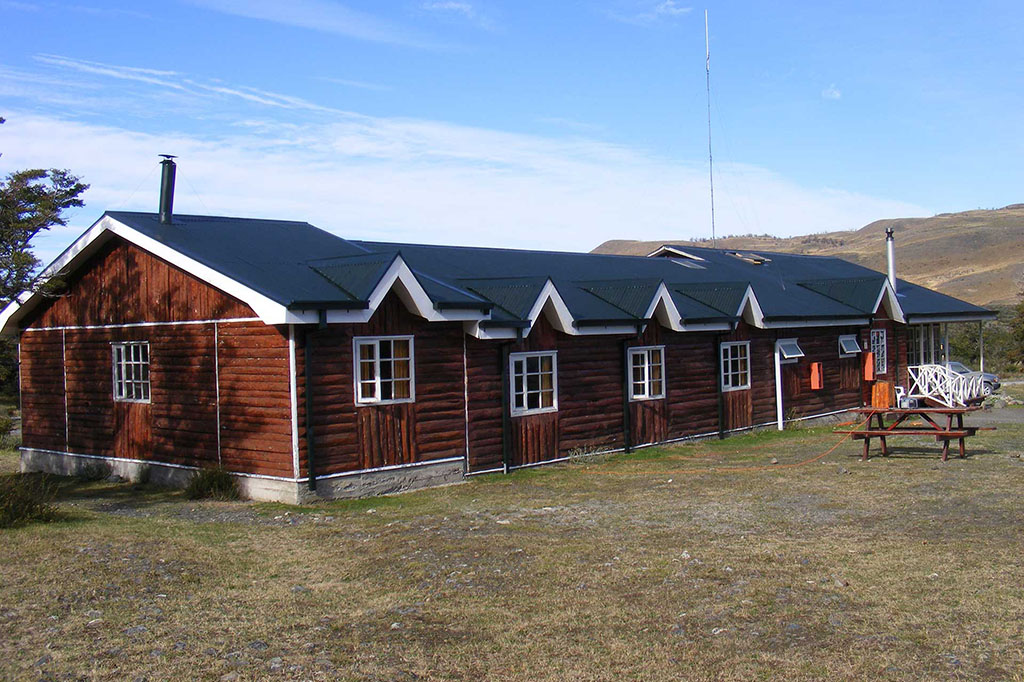
The Refugio means “refuge” and is a simple place, which is basically a hostel with dorm rooms and bunk beds, 6 to 8 people to a room, communal “canteen style “dining room. These are located on the W Trek and the “back country” Circuit Trek.

Which Ones are in this Category?

Refugio Central, Refugio Torre Norte, Refugio Chileno, Refugio Cuernos, Dome Frances, Refugio Paine Grande, Refugio Grey, Refugio Dickson

Locations of These Options
  • Refugio Central is located in the eastern sector of Torres del Paine almost next to the trail head up to the Torres base. It is also next to the Torres del Paine Welcome centre.
  • Refugio Torre Norte is located 50mt in front of Refugio Central.
  • Refugio Chileno is located about halfway up the trail heading towards the Torres base.
  • Refugio Cuernos is located half way between Refugio Central and the entrance to the French Valley.
  • Dome Frances is located between Refugio Cuernos and the entrance to the French Valley.
  • Refugio Paine Grande is located half way between the entrance to the French Valley and Refugio Grey.
  • Refugio Grey is located in the far western arm of the W Trek, close to Glacier Grey.
  • Refugio Dickson is located on the “back country “O” circuit near Lake Dickson.

Cabin (Cabaña in Castellano)

Category: Cabin (Cabaña in Castellano)

Cabin Definition

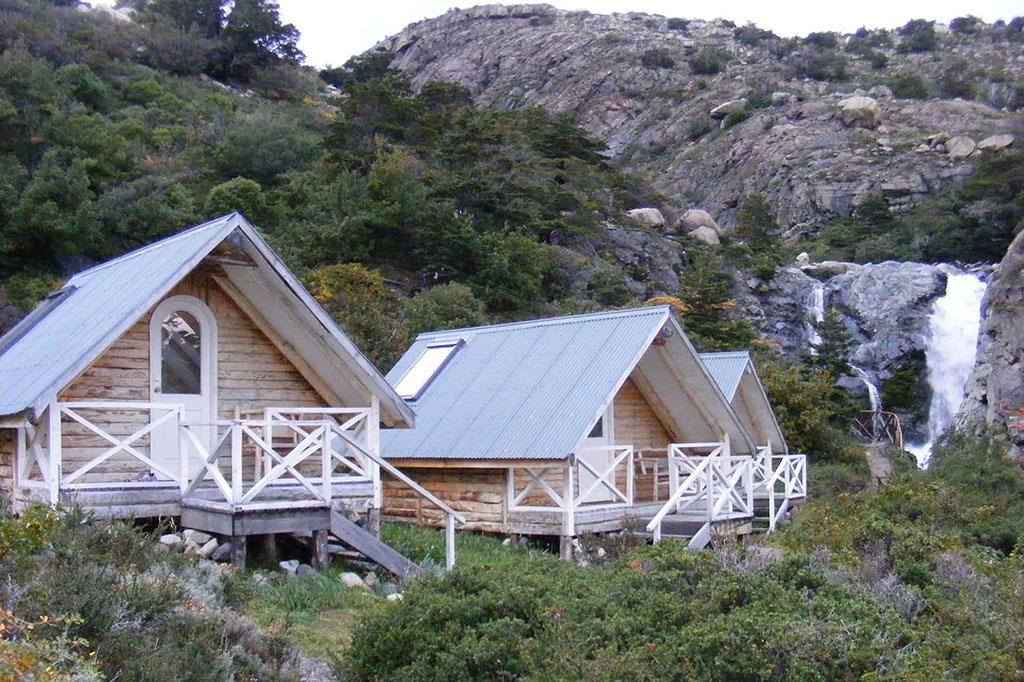
This means a self-contained wooden hut (usually). In the case of the W Trek, the only cabins are the small A-framed huts that sleep up to three people that have a small deck. The bathroom and shower facilities are communal, in a separate building and meals are to be taken in the nearby refugio called Cuernos.

Which One is in this Category?
  • Cabins Cuernos
Locations of These Options
  • The Cabins Cuernos are located 80mts up the hill from Refugio Cuernos, which is halfway between Refugio Central and the entrance to the French Valley on the W Trek trail.

Serviced Camping

Category: Serviced Camping

Definition of Serviced Camping

Serviced camp sites comprise a platform where a good tent is already erected for use. A ground mat, sleeping bag with liner (the liner is cleaned each time after use).
All the camping places have bathroom facilities with hot showers.

Also the people who stay at a serviced camp site can eat all their meals inside the adjacent refugio.

One of the great advantages to serviced camping, opposed to staying in a refugio, is that you will get privacy.

Which Ones are in this Category?

Camping Central, Camping Cuernos, Camping Frances, Camping Paine Grande, Camping Grey, Camping Seron. There is also Camping Los Perros, but this has limited services.

Locations of These Options
  • Camping Central is adjacent to Refugio Central at the trail head up to the Torres base, eastern sector Torres del Paine on the W Trek.
  • Camping Cuernos is adjacent to Refugio Cuernos halfway between Refugio Central and the French Valley on the W Trek.
  • Camping Frances is hallway between Refugio Cuernos and the entrance to the French Valley on the W Trek.
  • Camping Paine Grande is adjacent to Refugio Paine Grande halfway between the French Valley entrance and Refugio Grey.
  • Camping Grey is adjacent to Refugio Grey in the western end of the W Trek and close to Glacier Grey.
  • Camping Seron is the first stop on the full “back country” Circuit “O” trek, walking east and north from Refugio Central.
  • Camping Los Perros is past Refugio Dickson, on the “back country” full Circuit “O” trek and just before climbing up the John Gardner pass. Here, there are limited services regarding food, they only have one menu for everyone.

Dome Camping

Category: Dome Camping

Definition of Dome Camping

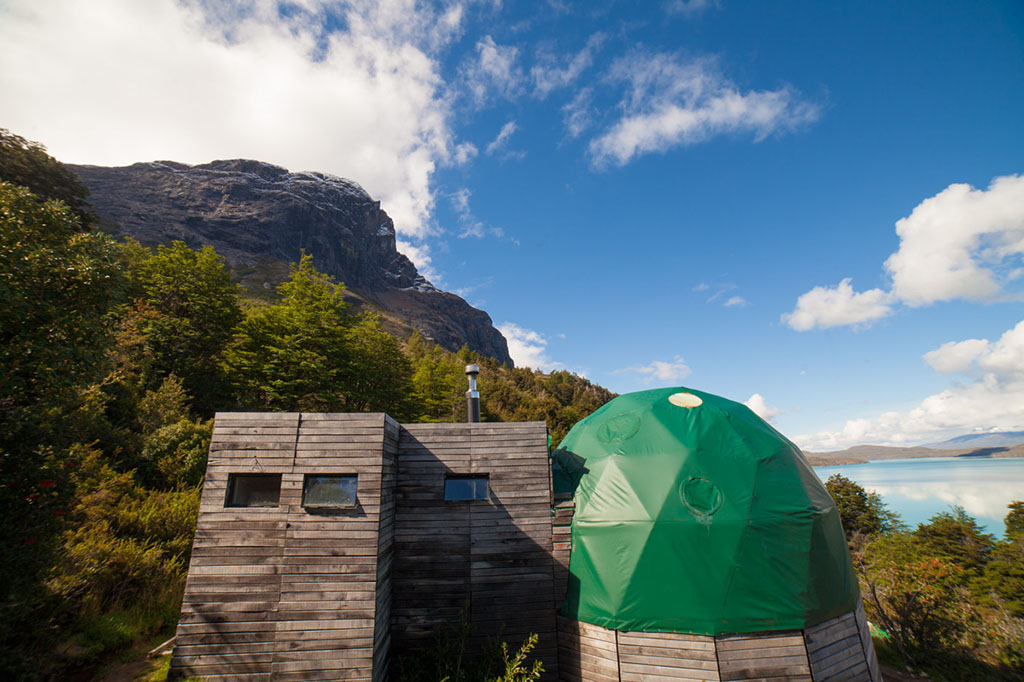
Dome camping is, effectively, accommodation in a dorm room setup inside a dome-shaped, plastic tent supported by a metallic frame forming a dome shape.
The interior is reasonably spacious.

You will only really stay here if you are hiking the W Trek and going into the French Valley or going on to or coming from Refugio Paine Grande.

Which Ones are in this Category?

Although in Torres del Paine there are two locations for dome camping we have included the ECO Camp under the category of Luxury Camping even though there are dome tents here.

The principal Dome Camping is at Frances on the W Trek.

Locations of These Options
  • This spot is more or less, half-way between Refugio Cuernos and the entrance to the French Valley, or Camping Italiano, which is located at the entrance to the France Valley.

Approved Hotels

During our inspections we ask the hotel owners if we can stay overnight at the hotel. We ask this because staying overnight is vastly different to just popping in with a quick visit. We like to know what the noise pollution is, what the breakfasts are like, how comfy the beds are, what the staff are like.

Therefore, if you see “inspected & approved” we are saying that we feel the hotel is perfectly good. If it does not have “approved” it means we have not stayed overnight or we feel it is not up to the level that our clients will require.

Approved By Experience Chile

Inspected Hotels

The reason we have a selected number of hotels that we choose to work with is because we regularly visit the hotels in Puerto Natales in order to know what they are really like. We cannot rely on the hundreds of often “suspect” reviews published in the internet. Therefore, we try to promote the better hotels that we know will make your trip more enjoyable. However, if you see that we have “inspected” a particular hotel, this does NOT mean that we recommend it necessarily. The ones we recommend are “approved”.

Inspected By Experience Chile

Estancia Hotels

Estancia Hotels

Stay at an Authentic Patagonian Estancia for Torres del Paine

An estancia is the South America name for a traditional horse, cattle or sheep ranch. Therefore, if you stay at such a place you will often not be far from working farm animals such as sheep, horses and / or cows. In other words, staying in an estancia is all part of the authentic Patagonian experience, and adds yet another dimension to your enjoyment of this part of the world.

Estancia Accommodation

Our selected estancia partner for when you take a trip to Torres Del Paine is Estancia Cerro Guido and here you can choose from bed and breakfast options or all-inclusive packages with a minimum of four nights stay.

Torres Del Paine Premium Hotels

Torres Del Paine Premium Hotels

Here we have separated the hotels in the premium category away from all the others.

What is a Premium Hotel?

The reason we have included the properties below in our premium category is quite simply because they excel in all that they offer.

These hotels enjoy unique locations in the Torres del Paine area that offer spectacular views from many parts of the hotels’ interior and bedrooms. The level of accommodation is extremely high in terms of comfort, furnishings and interior decoration.

Premium Hotels

What do Premium Hotels offer?

They offer top-end facilities such as:

  • Swimming pool, spa and massage as well as jacuzzi and / or hot tubs.
  • The food is at gourmet level, accompanied with the best Chilean wines.
  • Guides are educated and professional.
  • Transport provided is in spacious, high-level vans.
  • Staff in general are friendly and professional, but guides are especially educated and knowledgeable.

Overall, these hotels offer a level that the other do not and for the above reasons these are categorised by us as “premium-level” hotels.

Therefore, if you are a person who is accustomed to, or seeking to experience, the type of comfort and attention described above then these are the places you need to stay at.

Fuel-Filling Points

Torres del Paine Fuel-Filling Points

Distances Between Locations

If you have your own car please be aware that distances within the park can be quite long between refugios, hosterias and campsites. Therefore, it is imperative that you have a full tank of petrol (gas) prior to setting off from Puerto Natales, for example. However, at Cerro Castillo, about halfway between Puerto Natales and the Torres del Paine Park entrances, sometimes has petrol, but can also be sold out.

Moreover, there is an emergency supply of petrol in the park near the CONAF centre close to Posada Rio Serrano, but again, this should not be relied upon.

Torres Del Paine Morning Mist On Road Experience Chile

Routes into Torres del Paine

The Cueva Milodon Route: from Puerto Natales will lead to the Rio Serrano sector with access to:

  • Patagonian Camp
  • Hostel Rio Serrano
  • Hotel del Paine
  • CONAF Park Admin
  • Hotel Grey and Navigation Grey as well as the Explora Hotel
  • Hosteria Pehoe and Pudeto (for the catamaran)

The Cueva Milodon road is accessed by taking the road out of Puerto Natales in the direction towards the airport and Cerro Castillo. After about 16km there will be a LEFT TURN to “Cueva Milodon”. This road leads to the Milodon Cave and then continues into the Rio Serrano sector of TDP and will take about one hour to drive the distance between Puerto Natales and Rio Serrano.

The Cerro Castillo Route: via the border village of Cerro Castillo, is better to get to Estancia Cerro Guido, Laguna Amarga and Hotel Las Torres. Explora Hotel, Hosteria Pehoe and Pudeto (for the catamaran) can also be reached on this route. Also, Tierra Patagonia and Awasi lodges.

Road Distances Between Locations (approx km)

From Punta Arenas to:
  • Laguna Amarga in Torres del Paine (TDP) – 370km (5hrs drive)
  • Puerto Natales – 254km (3hrs drive)
From Puerto Natales to:
  • TDP Laguna Amarga – 115km (2hrs to drive)
  • Cerro Castillo (border village): 58km
From Puerto Natales via Milodon Road to:
  • Patagonia Camp: 68km
  • Serrano Entrance: 83km
  • TDP Park admin. & CONAF Centre: 88km
  • Hostel Lago Grey: 104km
From El Calafate to:
  • Torres del Paine 264Km (6hrs to drive, including two border posts)
  • Puerto Natales 274Km (6hrs to drive, including two border posts)
From TDP Park admin. & CONAF Centre to:
  • Laguna Amarga: 37km
  • Hotel Las Torres: 44 km
  • Hotel Explora Salto Chico: 10km
  • Hosteria Pehoe: 12km
  • Hotel Lago Grey: 16 km
  • Sector Serrano (Hotel Rio Serrano): 8km
From Cerro Castillo (border village) to:
  • Hosteria Mirador del Payne Junction: 27km
  • Hosteria Mirador del Payne: 52km
  • Estancia Cerro Guido Junction: 30km
  • Estancia Cerro Guido: 46km
  • Laguna Amarga: 55km
  • Hotel Las Torres: 63km
  • Laguna Azul: 57km
  • Pudeto: 72km
  • Hosteria Pehoe: 75 km
  • Hotel Explora Salto Chico: 78 km
  • TDP Park Admin. & CONAF Centre: 77 km via Bahía el Bote
  • TDP Park Admin. & CONAF Centre: 92 km via Laguna Amarga
  • Sector Serrano: 76 km via Bahía el Bote
  • Sector Serrano: 100 km via via Laguna Amarga
  • Hotel Lago Grey: 94 km via Bahía el Bote
  • Hotel Lago Grey: 108 km via Laguna Amarga
  • El Calafate: 212 km
From Estancia Cerro Guido (via Laguna Amarga) to:
  • Hotel Lago Grey: 94km
  • TDP Park admin. & CONAF Centre: 78km
  • Laguna Amarga: 40km

Torres Del Paine Self Drive

Torres del Paine Self Drive

Rent a Car Option

Having you own car can be liberating. You can go where you want, when you want. However, there are considerations too, some of which we have outlined below.

Torres Del Paine Self Drive Car Banner

Self Drive Advantages

Some people like independence. Therefore, we offer rent a car as part of any itinerary we are creating for you, but not as a stand-alone service. For example, only if rent a car is part of the rest of your itinerary that we are creating for you. Moreover, the advantage to renting a car is that you have total freedom to go where you want, when you want. Therefore, if you intend to drive around to the sights and not trek much a car may be a good option, especially if you are four, or more people together.

The Self Drive Disadvantages

The disadvantages of renting a car are that the driver will usually get tired and miss a lot of the stunning scenery. Also, you will be paying for something when it is in the car park, as it may be for several days if you are trekking in Torres del Paine. As a result, if you are trekking the W, for example, you will have to leave it in one place, but then need to get back to that place after the trek, which may require a private transfer to get you back to where the car is. On the other hand, it also costs money with petrol (gas if you are from the United States), and there is a fee to pay to take it across the border to Argentina should you be doing that.

Things to Consider if Renting a Car

Rent A Car

If you feel a car is the way to go, remember that you will need one sufficiently large enough not only for you and your passengers, but also for all your bags.

Here at Experience Chile we can offer rent a car with pick up from Punta Arenas airport, or city centre. Moreover, we can also arrange pick-up from Puerto Natales city centre. And, for other destinations in Patagonia we can also arrange for pick-up at El Calafate airport or city centre, Puerto Montt airport or city centre, and at Coyhaique, Balmaceda airport.

Please note: As yet there is NO option to collect, or drop off a rent a car in Torres del Paine National Park.

Border Crossing

Torres Del Paine Cerro Castillo Border

To take a car over the border requires a special permit. Therefore, we can arrange the permit for the border crossing, as well as to drop a car off at a different city location to the pick-up location. In this case of different drop off place to where the car was collected there will be a drop-off fee.

Our Rent a Car Partner

We work with one, reliable, rent a car provider for the Patagonia area. As a result, here below are the car options we can offer. However, please note that to get a cost we need to know the full details of pick-up time, drop off time, location of pick up and drop off.

In the meantime, please mention in your enquiry the type of car you want, time of pick-up, where and time and place of drop off.

Experience Chile can arrange rent a car from Punta Arenas, El Calafate and Puerto Natales. What follows are some of the typical types of car available in the Torres del Paine zone.

Catamaran Service

Torres del Paine Catamaran Service

Catamaran Torres Del Paine National Park Patagonia Chile

Operated Between Pudeto Jetty and Refugio Paine Grande Across Pehoe Lake

This service is subject to local weather conditions and can be delayed or cancelled. Most importantly, reservations are NOT taken in advance. Therefore, you need to organise your crossing directly at Pudeto or Refugio Paine Grande, for the 25-minute navigation.

Payment

You need to pay in cash in Chilean Pesos even though prices below are shown in USD, but in high season they accept other currencies too (established hard currencies like Euro and USD).

Prices - Season 2020 - 2021

The one-way fare is approx USD35 per person

Catamaran Departure Times 2021 - 2022
The crossing takes about 25 minutes
From PudetoFrom Pudeto
01 Sep to 15 Sep11.00am11.35am
16 Sep to 31 Oct11.00am
6.00pm
11.35am
6.35pm
01 Nov - 30 Nov9.00am
11.00am
6.00pm
9.35am
11.35am
6.35pm
01 Dec 2019 to 31 Mar 20209.00am
11.00am
4.15pm
6.00pm
9.35am
11.35am
5.00pm
6.15pm
Christmas & New Year12.00pm
4.15pm
6.00pm
12.35pm
5.00pm
6.35pm
01 Apr to 30 Apr11.00am
6.00pm
11.35am
6.35pm
Only the 1st and the 15th of each month
01 May to 31 Aug
12.00pm12.35pm
Note: Crossing charge approx USD35 per person - One back pack per person.

Catamaran is operated by

Hielos Patagonias Tel: (+56) - (61) - 241 - 133 - Arrieros 1517 Puerto Natales

Emergency Rescue

Torres del Paine Emergency Rescue

Torres Del Paine Helicopter Rescue
Torres Del Paine Rescue Experience Chile

Be Safe

Trekking in Torres del Paine requires attention to safety, personal responsibility, and common sense. Moreover, you need to come with the right clothes, be very aware of changing weather conditions and bring other items such as a torch, water, and food for the period when you are out trekking. Consequently, if you need serious emergency help it may well be VERY SLOW in arriving.

Helicopter Rescue

Moreover, often helicopters cannot get into the park because of high winds and the long distance from Punta Arenas. For this reason, rescue from the remote sectors of the Park will usually mean transport by horseback or being carried on a stretcher. Above all, such “extractions” from the Park will be over rough terrain to the nearest road vehicle, followed by drive for 2 or 3 hrs to Puerto Natales, or even longer to Punta Arenas.

Therefore, it really would be a good idea to NOT fall down, twist and ankle or worse.

Torres Del Paine Trekking

Torres Del Paine Trekking

Torres del Paine is a major trekking destination. The reason for this is because the area offers unrivalled footpaths among, arguably, some of the most outstanding, dramatic, natural geographic scenery on the planet.

Suggestion

Consider asking us to reserve accommodation in Puerto Natales or El Calafate the night before you start your trek and the night of the day you end your trek. Puerto Natales to Torres del Paine is approx 2hrs on the old road or 1hr to the CONAF ADMIN (Sector Serrano) on the new road that passes by the Milodon cave.

Punta Arenas from Puerto Natales is approx 3hrs. There is a direct bus from El Calafate to TDP and also TDP to El Calafate and this transfer takes approx 6hrs.

The Main Trails

The most well-known trail is the W-Trek, followed by the Circuit Trek, which we describe below as well as on the W Trek page (see menu option), but there are others too, which we describe further below.

The W Trek Key Places of Interest

El Sendero de Ascencio (the Torres Base Trek)

This trek will take around 8hrs return and starts from the Hotel Las Torres area. It passes through the Ascencio Valley and Nothofagus Forest and ends up at the Mirador (viewpoint) at 870m altitude. Above all, from here there is a spectacular view of the three Towers of Paine and the Condor’s Nest. Moreover, there are some amazing rock formations. However, the trek is demanding although part of it can be done on horse back up to Refugio Chileno, which is half way up, from Hotel Las Torres.

It takes 2hrs to reach the Refugio Chileno on foot, from Hotel Las Torres. However, it is then another 2hrs to reach the Torres base (the “Mirador”).

The French Valley

To get to the French Valley it is necessary to take the catamaran from Pudeto across the Lake Pehoe to Refugio Paine Grande, unless you are coming from Refugio Cuernos or Camping Frances. However, the trek From Refugio Paine Grande, or Refugio Cuernos to the entrance to the French Valley is about 2.5hrs. Whereupon, the trek to the end of the French Valley from the entrance is another 2.5hrs.

The actual valley offers stark and impressive views of Glacier Frances and the Cuernos del Paine. However, if you do this trek you need to consider the time for returning to either Refugio Paine Grande, Camping Frances, or Refugio Cuernos (and Cabins here too).

Note that Camping Frances is only 1hr from the entrance to the French Valley.

Glacier Grey

Access to Glacier Grey is either by boat from Hotel Lago Grey, or by trek from Refugio Paine Grande. However, by boat from Hotel Lago Grey the excursion lasts about 3 hrs and offers a close-up view of the glacial face. During the navigation you will be offered the chance to drink samples of Whisky or Pisco with millennia-old ice!

Most importantly, trekking to Grey from Paine Grande takes about 4hrs. The trek to the first Mirador (lookout) to see Glacier Grey, is located in the middle of the trail between Paine Grande and Grey and takes about 1.5hrs from Paine Grande after a steep uphill sector.

Most importantly, from Refugio Grey you will need to take the boat to Hotel Lago Grey or trek back to Refugio Paine Grande.

The trek from Refugio Paine Grande to Refugio Grey is moderately demanding.

Torres del Paine Trekking Food, Sleeping Bags, Ground Mattresses & Tent Rental

Food

You will need to pay for food separately when you are at the refugios unless you have booked full board in advance (and most people do so). The cost for meals varies from refugio to refugio. Full board means: hot dinner, breakfast and box lunch to go (in that order).

Sleeping Bag, Tent and Ground Mattress

All refugios offer either a sleeping bag or bedding. The serviced camping sites offer sleeping-bag rental, when available, and in most cases a soft ground sheet or mattress.

Some of the Other Torres del Paine Trekking Trails

Eastern Sector Torres del Paine

Western Sector of Torres del Paine

W Trek Torres del Paine

The W Trek in Torres del Paine

Hiking the Torres del Paine W Trek is now a World-renowned, iconic trail that has become a "bucket list" must for outdoor enthusiasts.

We invite you to come and hike this 63km long Torres del Paine W Trek trail, following the figure of a W when looked down upon from above, as it passes through raw and rugged ice-carved valleys in the heart of the Torres del Paine National Park in Patagonia, Southern Chile.

Exhilaration

The Torres del Paine W Trek trail allows those who love the exhilaration of outdoor activity, to walk freely amid a stunning area of sublime natural wonder.

Hiking the narrow path along valley sides that were carved out of granite by vast-sized glaciers, through woods, crossing raging rivers, passing waterfalls, hearing the birds tweet, observing the fauna and absorbing jaw-dropping scenic views along the way, combine for a “once in a life time” wilderness experience.

Fixed Accommodation Locations

Participants of this activity will be able to hike, daily, between fixed accommodation locations, where they can meet with fellow hikers and enthuse, together, over a Pisco Sour, how their day has gone, before tucking into a hot dinner.

Food

Each night a hot dinner is served in the refugio. The next morning, breakfast will be served and a box lunch handed to you for the day ahead.

The famous W-Trek in Torres del Paine is a much sought-after walking trail that people from all over the world come to experience, and the reason is rather simple.

It's because the path is in the centre of the spectacular Torres del Paine National Park in the heart of Patagonia, in Southern Chile.

The Three W Trek Valleys

Hiking the W trek trail means entering the three iconic valleys, from east to west these are the Ascensio Valley that leads up to the Torres Base; the French Valley, which is in the middle of the trail and at the end of the western leg is the Grey Glacier.

However, it is possible to do an express hike over two or three nights, or complete the traditional 4-night trek. Either way, ExperienceChile.Org will sort out all the logistics for you.

What Else is Below?

THere is a summary below along with information relating to: East to West and West to East hiking descriptions, the meal times at refugios, all about the accommodation along the trail, the fitness level you need and the seasons.

Also here we have a direct link to our specialist W Trek site for full, comprehensive info: Torres del Paine W Trek, Experience it Here

Lucky for Some

For those lucky enough to come here you can walk with and experience an incredible sense of freedom amid the raw, natural beautiful landscape of Patagonia. Here you can see tall, vertically sided, needle-like granite towers and blue-colored lagoons. Also, there are the massive, jagged mountain peaks, hanging glaciers and huge moving glaciers. This, in addition to the large lakes, waterfalls, puma’s, guanacos, eagles, condors and native forests to name some of the great attributes to this part of the world.

W Trek Extra Activities

As well as the trekking and sights, you can also kayak in a lake past icebergs, climb on a glacier, ride at fast speed in a zodiac up or down river and horse ride. If you ever wanted to “feel alive”, then a visit and walk on the W Trek will certainly give you that feeling.

Here, below, we outline all you need to know about the W Trek in Torres del Paine.

Then, if you refer to the above tabs you will find more key information about the W Trek such as route descriptions, accommodation descriptions as well as hiking times and distances.

Warning:

Weather can change in an instant in Torres del Paine. Take the right clothes for cold wind and wet weather, sturdy walking boots, extra food and water, and a torch and DO NOT go off the TRAIL.

Torres del Paine W-Trek Brief Summary

Total Trekking Distance: 63km approx., depending on which route you take.

Number of Days: Full Trek 5 days, but shorter version can be done in 4 days.

Starting and End Points:

East to West
  • Start at Refugio Chileno, Refugio Central (or Norte) or Hotel Las Torres, or ECO Camp
  • End at Refugio Grey
West to East
  • Start at Refugio Grey, or Paine Grande
  • End at Refugio Chileno, Refugio Central (or Norte), Hotel Las Torres, or ECO Camp
Note:
  • Made bed means duvet, pillow and sheets.
  • Simple bed + Kit: The staff provide you the sheets and duvet and you set up the bed.
  • Full Board Means: Hot dinner, breakfast and box lunch (in this order).
Usual Meal Times:
  • Dinner: 19:30 – 21:30hrs
  • Breakfast: 07:30 – 09:30hrs
  • Lunch: 19:30 – 21:30hrs (if trekking you will get a box lunch to go).

Hiking the W Trek in Torres del Paine

Taking between 4 – 5 full days of hiking, the full W Trek will enable you to see all of Torres Del Paine National Park’s best views, like the Base of the Towers, the French Valley and the Grey Lake.

Accommodation Along the W Trek Trail

For the W Trek, traditionally visitors stay in various refugios (hostels) each night for the duration of the trek. However, some choose to camp.

Here at Experience Chile we provide full-board reservations, so you won’t need to buy your own food on the trek.

Suggestion

You can hike the Torres del Paine W Trek trail from Puerto Natales. Consider asking us to reserve accommodation in Puerto Natales or El Calafate the night before you start your trek and the night of the day you end your trek.

Puerto Natales to Torres del Paine is approx 2hrs on the old road or 1hr to the CONAF ADMIN (Sector Serrano) on the new road that passes by the Milodon cave.

Punta Arenas from Puerto Natales is approx 3hrs. There is a direct bus from El Calafate to TDP and also TDP to El Calafate and this transfer takes approx 6hrs.

Fitness

In order to trek the Circuit and “W” people need to be reasonably fit.

Not necessarily as an athlete, but perfectly able to walk for up to 10hrs a day (in the longest sectors) over rugged terrain, uphill, over streams and rocks, through woods and sometimes in driving rain and strong winds.

If you are not able to endure this environment, you should seriously consider not trekking in TDP.

Questions

Seasons

Torres del Paine High Season

Hiking the Torres del Paine W Trek in December, January and February, are the most crowded months of the year.

For the reason mentioned above, October, November; March and April are considered by “those in the know” to the best months to embark on the W-Trek.

Flexible Dates

If your schedule is flexible, out of all the options we recommend visiting the park in April because it is quieter and there is less wind.

All bookings will need to be made up to one year in advance in order to secure your spot. However, if you have limited availability, don’t hesitate to get in touch and we can build a custom travel itinerary that suits your exact needs.

The Torres del Paine Low Season

The winter months of Chilean Patagonia (late April to early September) present challenges to itinerary design that have to be worked around. Days are shorter and the weather is generally colder, leading to a high likelihood of snow on the roads and trails.

Guided Only

Self-guided programs are not available in the winter period, as a result and many hostels scale back their opening hours and services offered to compensate for the reduced quantity of tourists. If a Patagonian winter is still the only time you can make it, or you just love a challenge, we can still easily create your custom itinerary to work around these restrictions, but with a guide.

Welcome Centre

Where is the Torres del Paine Welcome Centre?

Torres Del Paine Welcome Centre Base Experience Chile

The Welcome Centre is located in the Eastern sector of Torres del Paine about 1.5km from the entrance to Hotel Las Torres. Moreover, the centre is close to Refugios Central and Norte and a short distance from ECO Camp.

Most importantly, only if you are entering the Torres del Paine National Park at the Eastern end will you need to enter the Welcome Centre. As a result, you need to show that you have confirmed reservations for accommodation on the W trek, if you are staying over. Above all, you also need to present, or fill in a visitor’s form.

There are public WC’s here as well as information.

Principle Entry Points into Torres del Paine

The Principle Entry Points into Torres del Paine are:

Park Registration

New for season 2020 onwards is a pre-registration, which Experience Chile will arrange for all our clients. You will receive the entry tickets direct to your email account or cell phone.

If we are not making your arrangements you need to register at the park entrance, and pay for their entry ticket there, in person via the internet. Ideally bring local, Chilean currency i.e. cash.

Torres del Paine Park Entrance Points

Most importantly, the official park entrances are at:

  • Laguna Amarga (eastern entrance)
  • Largo Sarmiento (south-eastern entrance)
  • Serrano (western entrance)

Serrano

This is 80km (1hr drive), on Ruta 9, from Puerto Natales past the Milodon Cave. Therefore, plan in some extra time if you want to visit the cave, which is well worth the visit.

Lago Sarmiento

The Sarmiento entrance is also located on the Eastern side of the park 150km (2hrs drive) on Ruta 9 from Puerto Natales. Consequently, to get here you will go via the border village of Cerro Castillo. However, as mentioned above, at this point the road becomes Ruta Y 150. Moreover, about one hour from Cerro Castillo there will be a fork in the road and a sign to Laguna Amarga and Sarmiento, here you need to follow the left fork instead of right (right goes to Laguna Amarga entrance).

However, note that the Sarmiento entry is often CLOSED and not used that much.

Laguna Amarga

This is located on the Eastern side of the park 150km (2hrs drive, or 3hrs by bus) on Ruta 9 from Puerto Natales, which goes via the border village of Cerro Castillo. However, at this point the road becomes Ruta Y 150.

Park Entry Cost

Torres del Paine Park entrance cost in 2020 is Ch$35.000 or approx USD50 per person.

Corporacion Nacional Forestal (CONAF)

The National Park is administered by CONAF. This body administers all the National Parks throughout Chile. However, income is distributed throughout the organization, which means it goes to fund all the Parks. Consequently, the income generated from Torres del Paine visitors does not all go to the Torres del Paine Park, even though TDP generates most if the income.

The CONAF SEDE admin centre is located within the park at the northern end of Lago del Toro, or 11 km past the Explora hotel heading west, just before the turnoff left towards the Rio Serrano end. Above all, here there is an information centre and exhibits the geographical make-up of the Park as well as information on the flora and fauna.

Torres Del Paine Featured Accommodation

Torres Del Paine Featured Accommodation

Our featured hotels and suppliers have been selected by us for one or more of their attributes such as: location, views, surroundings, comfort, professional service, “uniqueness”, food and / or overall good feeling that one gets from being there.

Featured Hotels

Torres Del Paine Luxury Lodges

Torres Del Paine Luxury Lodges

We offer unrivalled local knowledge regarding luxury accommodation options in and around the Torres del Paine Zone. We make regular inspection trips to verify and evaluate the reality. Let us handle your accommodation requirements in Patagonia.

What is a Luxury Lodge?

Torres del Paine Luxury Lodges are categorised as such because they offer high-end accommodation, quality food, accompanied with good wines; comfortable, high-level public living-room areas, superb views from bedrooms and public living-room areas as well as educated guides who escort the tours. The en-suite bathrooms are also spacious, well lit and decorated to a high standard. At such places you will also receive a menu-option of tours to choose from. Unlike a “hotel” a luxury lodge is not a “typical” hotel, it is designed to be more personal, more “cosy” and comfortable than the usual “soul-less” hotel.

Luxury Lodges

Torres Del Paine Glamping

Torres Del Paine Glamping

We offer unrivalled local knowledge regarding luxury glamping options in and around the Torres del Paine Zone. We make regular inspection trips to verify and evaluate the reality. Let us handle your accommodation requirements in Patagonia.

What is glamping?

Glamping is a recent addition to the English language to describe high-end, luxury-level camping. Typically a place that comes under the “Glamping” category will usually mean that the accommodation is within a Yurt or metallic-framed structure. The interior of these will then comprise a comfortable bed, walls covered by material, nice lighting, and good shower or bathroom with WC. Usually the interiors are of very high standard, better than some hotel rooms in fact.
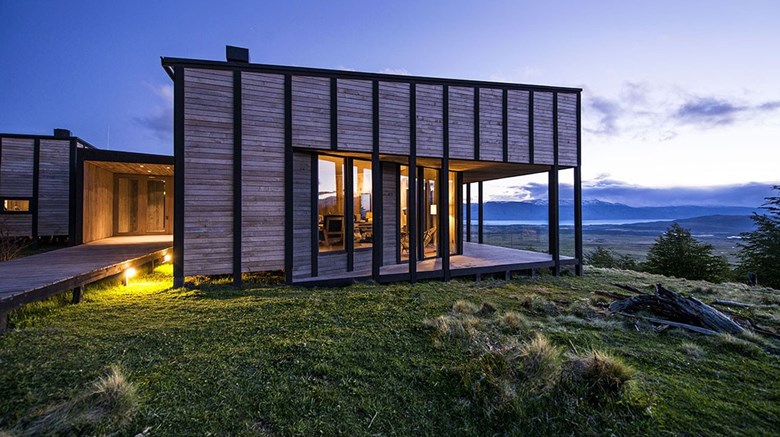
In and around Torres del Paine there are two properties that come into the “Glamping” category and these are the ECO Camp and Patagonia Camp, and both are described below.

Glamping Places

Torres Del Paine Refugios

Torres Del Paine Refugios

A refugio is a hostel. Rooms are dormitories shared with other guests and beds are bunk beds. Guests can book a bed only and bring their own sleeping bag, or book a “cama armada”, which means a bed with bedding. A “cama armada” is available in all the refugios or simple beds + kit, which means a camp/like bed also with bedding. The full board meal plan is also offered at all refugios meaning: hot dinner, breakfast and a lunch box to go or lunch at the refugio if you stay in.

Torres del Paine W Trek Refugios, Domes and Cabins

Torres Del Paine All Activities

Torres del Paine Activities

Here we describe about the four principal activities that many people partake in when visiting Torres del Paine National Park.

ALL the activities below are subject to local weather conditions. However, if there is a cancellation due to weather, we will refund the cost of the activity we have booked.

What we do NOT do, is offer any of these activities as a “stand-alone” reservation. We will only book these services as part of the wider itinerary that we are arranging for you.

Torres del Paine

Within Torres del Paine there are activities such as ice hiking and ice trekking on Glacier Grey, kayak near Glacier Grey, zodiac out of the Park to Puerto Natales and horse riding.

Other Nearby Activities

Punta Arenas

From Punta Arenas there are options to go and see Magallanes Penguins as well as King Penguins. In addition, there are two different ways to go and see whales at the nearby marine park.

El Calafate

If you are going to stay at El Calafate you must visit the vast Perito Moreno Glacier, either as just a viewing visit, or a trek on top, or an ice climb down one of the crevasse ice walls. In addition, there is a 4 x 4 large bus trip into the hills overlooking the city for a history lesson in geology as well as incredible panoramic views over the city and to El Chalten on a clear day.

Puerto Natales

From Puerto Natales there is now a trip up into the Dorethea hills in a large 4 x 4 vehicle to get a panoramic view over Patagonia and to Torres del Paine in the distance. And, one of the best activities that also serves as a useful transfer is the navigation and then fast-speed zodiac trip up river into Torres del Paine.
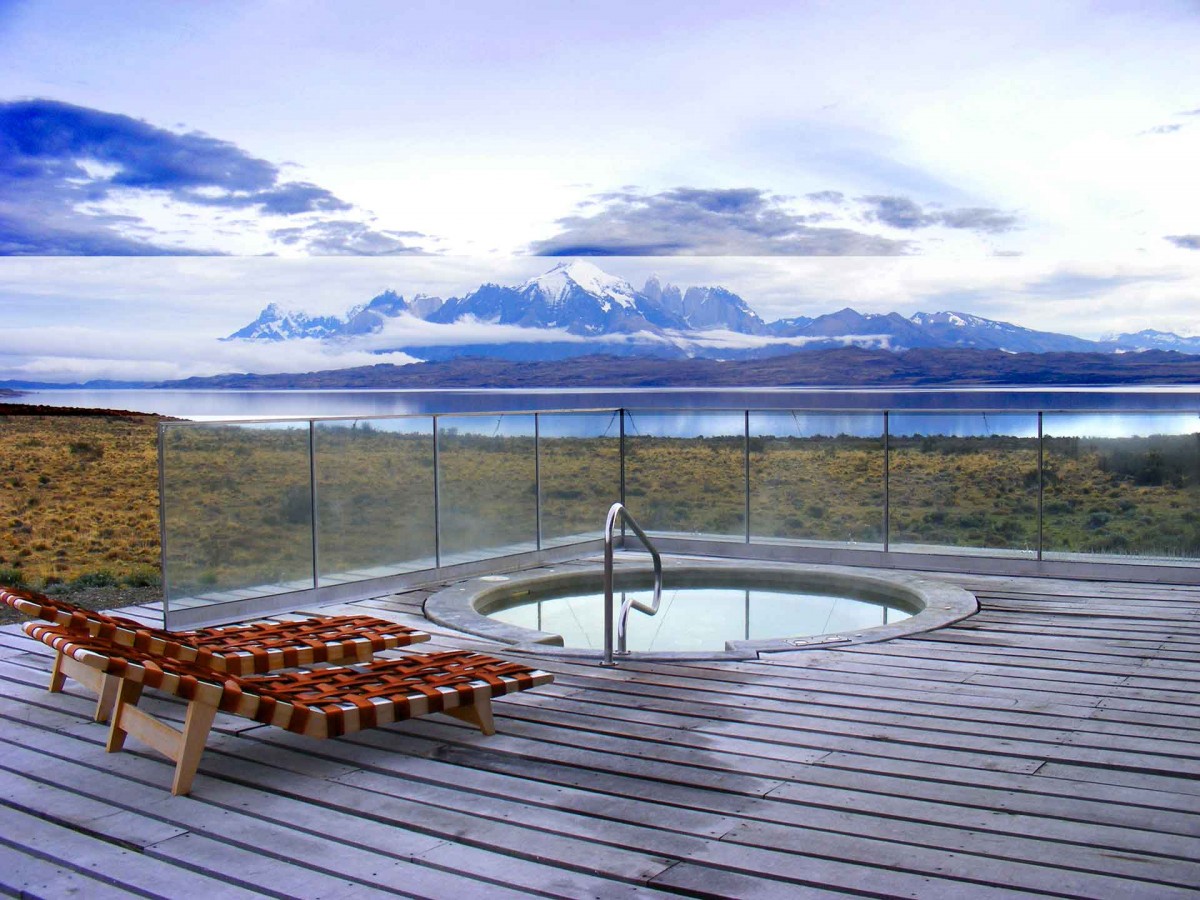
Please see in the sub menu all the options we have that can be included into your travel itinerary.

Torres Del Paine All Itineraries

Patagonia Itineraries Ready to Go

The principal service that we at Experience Chile offers is to create custom itineraries according to your desires and travel budget. We have been doing this very successfully for over thirty years. However, there are a number of “typical” itineraries that many people request and therefore in order to make life a little easier for all concerned we have created a number of “ready-made itineraries” that you can “buy off the shelf”.

Should any of the itineraries shown be to your liking please let us know. You can adapt any of them, again, just let us know. You can add people, too, just let us know.

Please remember that we specialise in the individual market, we are not into the large commercial market, therefore, we cater to your needs.

Offers

Some of our itineraries have interesting offers that range from free flights, extra free hotel nights and or free transfers.

Torres Del Paine Itineraries

W Trek Itineraries

El Calafate Itineraries

El Chalten Itineraries

Puerto Natales Itineraries

Punta Arenas Itineraries

Antarctica Itineraries

Torres Del Paine Hotels

Torres Del Paine Hotels

We offer unrivalled local knowledge regarding hotel accommodation options in and around the Torres del Paine Zone. We make regular inspection trips to verify and evaluate the reality. Let us handle your accommodation requirements in Patagonia.

Hotels Within Official Boundary

There are, in total, four hotels and one up-market camp that are within the official boundary lines of Torres del Paine National Park (TDP) and these are Hotel Las Torres, Explora Salto Chico Lodge, Hotel Lago Grey, Hotel (Hosteria) Pehoe and the ECO Camp.

Hotels West Of Official Boundary

To the west, literally just over the “boundary line” of TDP on the other side of the Rio Serrano are: Hotel Rio Serrano and Hotel Paine, with a few others such as Pampa Lodge, Lago Tyndal and Nash lodge nearby.

Hotels East of Official Boundary

To the east of TDP we have Tierra Patagonia, Awasi Patagonia and Estancia Cerro Guido.

Hotels South of Official Boundary

To the south of TDP we have Patagonia (Yurt) Camp.

Note on Boundary Line

If a hotel is within the boundary line of Torres del Paine or not should have no effect at all on your enjoyment of the park and its surroundings. No matter where you are, during a typical day, you will need to travel an hour or more to get to another place within TDP. Also, the views and scenery are spectacular from most places, although less so from the Hotel Las Torres and ECO Camp, but in these places you gain from being at the trail head up to Torres base.

The quality of accommodation varies. There are the “World Class” top end of hotels such as Explora Salto Chico, Tierra Patagonia, Awasi Patagonia to the unique places such as the Estancia Cerro Guido; good level such as Hotel Lago Grey; commercial level such as Hotel Rio Serrano and Hotel Las Torres, and more rustic level such as Hotel Paine and Hotel Pehoe. Then there is the up-market camping (called “glamping”) level of ECO Camp and Patagonia Camp.

Here below we have a short description of each property and some photos. ExperienceChile.Org works with all these hotels, which, of course, have different room rates. However, we only offer to make reservations in these properties if they are part of your overall itinerary.

Torres Del Paine FAQ

Torres Del Paine FAQ's

Nulla vitae elit libero, a pharetra augue. Nullam quis risus eget urna mollis ornare vel eu leo. Morbi leo risus, porta ac consectetur ac, vestibulum at eros. Lorem ipsum dolor sit amet, consectetur adipiscing elit. Praesent commodo cursus magna, vel scelerisque nisl consectetur et.

Clothes to Pack & Wear

Torres del Paine & Patagonia Clothes to Pack & Wear

Considering how unpredictable the weather can be in Torres del Paine and generally throughout Patagonia, visitors must bring the right clothes and be read for changeable weather situations.

Try to bring LAYERS of “breathable-fabric” clothes. What we mean by this is to have different “layers” of clothing that can be taken off, or put on easily, to adapt to any change in weather and as you heat up and cool down on a trek. For example, you can take off an outer jacket, as well as a polar (fleece) top, or put these on as required, this is what is referred to as “layers”.

Be aware that cotton undershirts are NOT recommended because when you sweat the cotton will not dry quickly. Therefore, you will end up with cold clothing stuck to your body. You will need a synthetic-fibre undervest.

What Clothes to Put on and Where

Underwear for Main Body

An under vest (long sleeved if possible) made, ideally, from synthetic fibres so it dries quickly. If very cold weather (ie early spring, winter months or autumn) then bring thermal underwear made from synthetic fibres. The reason for synthetic fibres is because when you are walking for several hours you will build up a sweat and your under garments will get wet. Consequently, you will get cold when you stop and your wet, cold undergarment will make you colder if made from cotton. Therefore, if you have an under vest made from synthetic material it will dry more quickly.

Over Your Underwear

For your body you need a breathable top such as a fleece, or polar. Most importantly, over your fleece, or polar you need a waterproof, windbreaker jacket.

Your Legs

You will need trekking pants, resistant to rain and wind, but made from a breathable material otherwise you will sweat. Above all, do not use jeans because they are NOT good as they can get wet and not dry.

Over your trekking pants you will need waterproof, shell pants to keep your legs dry in the event of heavy rain.

For your feet, use synthetic socks and waterproof trekking boots with ankle support and a none-slip sole.

Note that if your footwear is new make sure you break them in prior to using them on a trek.

Your Hands

Over your hands you need gloves. For example, close to glaciers it can be very cold.
On your head please consider using a warm hat (not a jockey cap) and a headband to cover your ears, when not using a hat.

Your Eyes

Bring sunglasses. Not only for sunny days, but also when you are close to a glacier there will be a very strong glare.

Your Skin

Don’t forget to bring sun protection cream, and use lots of it.

Extras

For your personal use, bring a backpack for food, water and clothes.
For your safety: a battery-operated torch for when power is out or if you are arriving to a refugio in the dark. Above all, take with you during the trek extra water and snacks. Most importantly, prepare for all weather conditions and dress for the outdoors.

Do NOT - Go off the trail because if you have the slightest incident such as twisting an ankle, you may not be found.

Average Temperatures in TDP during the year

Summer (Dec – Jan – Feb) Max + 23.5°c / Min + 0.8°c.

Torres Del Paine   What To Wear

Torres del Paine Places of Interest

Torres del Paine Iconic Treks, Other Treks and Viewpoints

There are numerous activity excursions to choose from in and around Torres del Paine, perhaps too many to mention. For this reason, what follows are only some of the more typical places of interest and activities. That is to say, that some excursions can be done by touring in a vehicle, but most are done on foot and in some cases on horseback.

Apart from the staggering visual scenery, Torres del Paine is also home to many varieties of bird species including the Condor, and rare types of flora and fauna such as the Puma and Guanaco.

Iconic Treks

Trekking In Parque Nacional Torres Del Paine Chile

Trekking the W Trek

The famous “W-Trek” of Torres del Paine is a much sought-after walking trail that people from all over the world come to experience.

Torres Del Paine Circuit Trek From John Gardner Pass To Ref Grey

Trekking the Full Circuit Trek

You may have heard about the other popular trek in the Torres Del Paine National Park, the full circuit “O” Trek. It is called the “O” because it starts and ends at the same place and forms a circular path around the Park. This is the trek that includes the W Trek, but also the trail that goes into the “back country” behind the Torres del Paine Massif. The O Trek is a longer and generally more demanding trek than the W Trek. This trek will take you off to more remote areas with even fewer traces of human life.

Other Treks Western Sector of Torres del Paine

Other Treks Eastern Sector of Torres del Paine

Other Treks South/East Sector Torres del Paine

Viewpoints (Miradores)

Western Sector of Torres del Paine

Central Sector of Torres del Paine

Eastern Sector of Torres del Paine

South of Torres del Paine

Location of the CONAF Administration Centre (SEDE)

Accessible by Car

This is located in the sector near to Rio Serrano and is the base for CONAF (the park administration people) as well as the Carabineros (the Police). Here there is an excellent exhibition display of the geographical history of TDP. Consequently, this centre is well worth a visit for those who are interested to know how the amazing and spectacular geographic features of the area were created.

Climate & Weather

Torres Del Paine Climate & Weather

The weather throughout Patagonia can be very unpredictable. One moment it may be warm and sunny and then, within half an hour, it can change to being overcast, cold and rainy. Considering how far south from the equator Torres del Paine is located, added to the fact that a short distance west is the Pacific Ocean, the weather can be harsh, even in the summer.

TORRES DEL PAINE Forcast

For this reason, it is imperative that when visiting Torres del Paine, or anywhere in Patagonia, that you pack the right clothes for the changing conditions and be prepared for all types of temperature and situations.

Please see our “Clothes to Wear” section.

Arrivals, Transfers & Transport

Arrivals, Transfers & Transport

Public Bus

Puerto Natales

Puerto Natales

There is a public bus that operates twice a day from Puerto Natales to Torres del Paine (TDP), and back. This will take between 2hrs to 3hrs to get to TDP because it will go to the Laguna Amarga entrance and sometimes stop for a break. However, here at Experience Chile we would suggest that we arrange a private transfer in your Patagonian itinerary in order that you can enjoy a door-to-door service and have more time for trekking and/or sightseeing. Puerto Natales to the Rio Serrano entrance will take 1hr, only by private transfer or rent a car.

El Calafate The Town On The Shore Of Argentino Lake Patagonia Argentina

El Calafate

From El Calafate there is a “semi-private” bus service. For example, a bus service that is public, but operated by a private company as a private service. We use this service often for the transfers between El Calafate and Torres del Paine as well as El Calafate to Puerto Natales. The transfer time either way is around 6hrs, including border-crossing paperwork.

Rent a Car for Self-Drive

Rent A Car

Having your own car will give you total independence. However, it also has its drawbacks (see our advantages and disadvantages of rent car under the Self Drive section). Should you want a rental car we will be delighted to arrange it for you, just let us know.

NOTE: It is NOT possible to pick-up or drop off a car rental in Torres del Paine, this has to be arranged in Puerto Natales, Punta Arenas or El Calafate.

Transfers

Torres Del Paine Private Transfer Van Experience Chile

We include in all of our custom itineraries a private transfer from Puerto Natales airport or bus terminal to your hotel as well as the return.

Other than that, it is always our suggestion that you let us arrange for you a private transfer to go into Torres del Paine for sight-seeing or to the trail heads. We say this because a private transfer saves you time (it is door-to-door), it is more comfortable (no other, perhaps smelly people, noisy people etc) because it is private, and can stop when you want so you can take pictures, get out and admire any spectacular views.

Transport Routes and Times

The Principle Transport Routes in and out of Torres del Paine
  • El Calafate to Torres del Paine (6hrs) – Torres del Paine to El Calafate (6hrs)
  • El Calafate to Torres del Paine (6hrs) – Torres del Paine to Puerto Natales (2hrs car, 3hrs bus)
  • Puerto Natales to Torres del Paine (1hr or 2hrs) – Torres del Paine to Puerto Natales (1hr or 2hrs)
  • Puerto Natales to Torres del Paine (1hr or 2hrs) – Torres del Paine to El Calafate (6hrs)
  • Puerto Natales to el Calafate (6hrs) – El Calafate to Puerto Natales (6hrs)
  • Punta Arenas to Puerto Natales (3hrs) – Puerto Natales to Punta Arenas (3hrs)
Destinations, Distances & Drive Times Between Them
  • Punta Arenas to Laguna Amarga in Torres del Paine (TDP) – 370km (5hrs drive)
  • Punta Arenas to Puerto Natales – 250km (3hrs drive)
  • Puerto Natales to TDP Laguna Amarga – 120km (2hrs to drive)
  • Puerto Natales to TDP Rio Serrano (newest route via Milodon-Cave road) – 80km (1hr to drive)

What are the Principle Entry Points in to Torres del Paine?

There are three entry points to get to Torres del Paine and visitors must pass by one, or even two of them in order to get into the Park.

Punta Arenas
Punta Arenas, Chile

Most commercial flights will land at Punta Arenas, some 3,000km south from Santiago. Note: There are NO commercial flights from Buenos Aires nor El Calafate to Punta Arenas. The direct flight will take just under 4hrs and the one that stops off at Puerto Montt en-route will take around 4hrs.

From the airport you would then either be met by a private transfer service (if you have contracted one with Experience Chile); take the regular bus from Punta Arenas city centre to Puerto Natales and change to another bus to get to Torres del Paine (TDP). However, Experience Chile can also arrange for a regular bus pick-up at the airport, or car rental for you to pick-up. Remember, it takes 3hrs Punta Arenas to Puerto Natales, followed by 2 - 3hrs on the bus to TDP.

Note: that a permit is required to take any car across the border into Argentina, which we will also arrange for you.

El Calafate Perito Moreno From Woods Experience Chile
El Calafate, Argentina

You need to fly to El Calafate, in Argentina, from Buenos Aires or Ushuaia. Here you can stay overnight with an option to go to El Chalten (3hrs away by road) and / or visit Perito Moreno glacier the following day and then the next day come over to TDP.

From El Calafate you can take the regular bus across the border (departs 08:00hrs) to Puerto Natales (arrives 13:00hrs approx) and change to the regular bus that then goes to TDP departing around 14:00hrs, or arrange a private transfer service or a car rental with Experience Chile.

Also, from El Calafate we can organise a direct bus transfer to TDP (Laguna Amarga) departing El Calafate at 06hrs, which takes 6hrs.

NOTE: No fruit, raw meat, raw vegetables, seeds or cheese is allowed over the border in either direction. If you try to do so you WILL be fined. There is a cafeteria at the Chile border where you can buy snacks as well as at the mini-markets on the W-Trek in TDP.

Puerto Natales Dusk By Cesar Gallardo Experience Chile
Puerto Natales, Chile

Navimag operates a commercial ferry ship, which also takes passengers, from Puerto Montt. This ship arrives to Puerto Natales and offers a good-value cruise that passes through the channels and fiords in the area en-route to Puerto Natales (the cruise is available from Puerto Natales too) and Experience Chile can arrange the reservations. From Puerto Natales you either take the regular bus to TDP; or have us arrange a private transfer to meet you or organise a rent a car for pick-up.

Note, however, that the Navimag does NOT stop at any point, so there are no “shore excursions” nor close-ups of glaciers.

Prior to Covid-19 LATAM was operating flights from Santiago to Puerto Natales on some, certain days of the week during the high season.

Torres del Paine

Torres del Paine National Park, Patagonia, Chile

All You Need to Know about Torres del Paine

Welcome to Torres del Paine National Park, located in Patagonia, southern Chile. This Park is quite simply one of the most amazing geographical wonders of the world, even called the “eighth wonder” of the World. It comprises an area of incredible, outstanding, natural beauty in the heart of Patagonia.

Trekking Meca

Above all, it is also a main trekking destination, home to the iconic Torres del Paine W Trek and Circuit trek trails, as well as the stunning Grey Glacier, waterfalls, rivers, and lakes.

Brief Introduction

Here, below, we will try to give you a brief introduction to the key points, however, once you get further into our site you will be able to encounter more profound information on matters such as accommodation, for example, as well as the W Trek. Please see our specialist Torres del Paine web site here: Torres del Paine Patagonia, Experience it Here

Why Visit Torres del Paine National Park?

The question you need to ask is, why not? This picturesque destination attracts visitors from all over the world due to its dramatic and breath-taking views, prolific wildlife and invigorating hiking, and trekking opportunities. However, the experience doesn't stop there, because there is also a wealth of exhilarating activities you can take part in when you visit this vast and mesmerising landscape.

Raw Patagonia

Patagonia is beautifully harsh, offering some of the starkest views of South America. The spectacular scenery is the product of intense winds and tectonic collisions millions of years ago, dotting the land with ice fields, fjords and the jagged tips of the Andes. As a result, it is a place like no other on Earth and just waiting to be explored, and experienced.

Opportunity

Chilean Patagonia provides unique opportunities for adventure. Above all, it is a world unto itself, defined by vast lake districts and breath-taking wildlife, such as the condor and the puma. For these reasons, whether you enjoy trekking, biking or kayaking, Torres Del Paine National Park is a must-see destination.

Plan to Enjoy

Therefore, in order for you to really enjoy your time here let us build an itinerary that will give you a memorable travel experience. Quite simply, we are the leading custom itinerary specialists for this zone, so just send us an email, tell us what you want, and we will do the rest.

We also have our own office located in Puerto Natales, the “door” to Torres del Paine.

About Torres del Paine National Park

The Park covers 227,298 sq hectares and is the jewel in Chile’s tourist crown. Just why it’s worth travelling 4hrs (if arriving to Punta Arenas) from Santiago on a plane and then driving a further 5 hrs by car is only apparent when you stand and stare in amazement at the unbelievable sight of this monumental cluster of mountain peaks that appear to stand all on their own in the middle of an otherwise flat plateau.

Mountains and Peaks

Comprising this central massif are the “Cuernos del Paine” (Horns of Paine), covered in snow at varying altitudes and offering support to giant blue-white blobs of ice otherwise called hanging glaciers, and three other towers – which are the Torres del Paine (Towers of Paine). The sight of the almost vertical rock sides rising to an altitude of close to 3,000m is what causes such an awe-inspiring view.

For outdoor lovers, and those who seek a new experience in life, Torres del Paine is a “must see” before you die.

“The Paine massif is unrivalled….. In its colours and form it is without doubt one of the most fantastic and spectacular sights that human imagination can conceive.” Salesian missionary Padre Agostini.

What are the Towers?

The Torres del Paine Towers comprise the peaks of Torre Monzino (north) (2,600m), Torre Central (2,800m) and Torre D’Agostini (south) (2,850m). To the east of the Towers is the Valle Ascencio, containing the eastern leg of the W Trek up to the Torres.

What are the Cuernos?

The Cuernos del Paine comprise Cuerno Principal (2,600m), Cuerno Este (2,200m) and Cuerno Norte (2,400m). To the west of the Cuernos del Paine is the Valle del Frances – one of the glories of the park – a high altitude valley ringed by a curtain of almost vertical rock.

Natural Wilderness

Surrounding this jaw-dropping spectacle is a natural wilderness of turquoise-coloured lakes, waterfalls, glaciers (especially Grey glacier) and fast-running rivers. The massive Grey Glacier, 7km wide at its widest point and stretching back over 20 km., is still in the process of carving its own valley to the west of the Cuernos del Paine.

Where is the Torres del Paine Welcome Centre?

The Welcome Centre is located in the Eastern sector of Torres del Paine about 1.5km from the entrance to Hotel Las Torres, but close to Refugios Central and Norte and a short distance from ECO Camp.

Only if you are entering the park at the Eastern end will you need to enter the Welcome Centre. Here you need to show that you have confirmed reservations for accommodation on the W trek, if you are staying over. You also need to present, or fill in a visitors form.

There are public WC´s here as well as information.

Activity & Accommodation Options

Trekking Activities

The majority of people coming to Torres del Paine will come to hike the famous “W” trek and the more serious trekkers will hike the complete “circuit”. The “W” is called so because the route forms a pattern like a “W” and the circuit, although encompassing the “W” it also takes in the back area behind the Central Massif and completes a circuit of the Park and hence its name.

Hiking Daily

Each route takes a number of days and involves serious trekking, therefore walkers should be reasonably fit. Other activities include kayak and ice hiking at Grey Glacier; the Navigation Grey, which offers a boat trip to the Glacier Grey face; other trekking trails, fast-speed zodiac from Torres del Paine to Puerto Natales, or reverse; puma watching, horse riding in the east part of the park and visiting the numerous, spectacular sights.

Take in the Panoramic Views of Patagonia

In Torres del Paine National Park you will find some of Patagonia's most sought-after photo opportunities. Almost every view is dramatic and more than impressive, whatever the weather. The Park is home to some of South America's most awe-inspiring mountain formations, natural wildlife and glacial-formed lakes, therefore you will be spoilt for choice when it comes to sight-seeing and photographic shots.

Trekking

What are the Torres del Paine W Trek and Circuit Trek trails?

The W trek is called so because the footpath (or trekking trail) takes the form of a “W” on the map when looked down upon from above. The Circuit Trek is the footpath that includes the W Trek but also goes around the back of the Central Massif, effectively offering a perimeter path from where you can start and end at.

The W Trek Eastern End

The W-Trek is one of Patagonia's most notable trekking routes, which takes you through the heart of Torres Del Paine National Park on a trail route that follows the shape of a "W" when viewed from above.

The Three Towers

During this trek you will be able to gaze up at the three awe-inspiring of Torre d'Agostini (also called Torre Sur), Torre Central and Torre Monzino (also called Torre Norte); the three "needle-like" structures that make up the "towers" of Torres Del Paine. These spectacular, vertically-sided spires will come into view at the end of the trek up through the Ascencio Valley to the Torres base.

The W Trek Western End

However, on at the other end of the "W" on the western side of the Trek, as you approach Refugio Grey, you will be able to marvel at the spectacle of Glacier Grey as it comes down from the Southern Ice field where is meets Grey Lake.

All-Inclusive Itinerary Programs

In order for you to fully enjoy Torres Del Paine, we provide complete W-Trek itineraries either as ready to go, or as fully customized programs (for those who would like a unique and personal itinerary). Contact us today, or fill in the enquiry form below, and we'll get back to you as soon as possible.

The Circuit Trek

Back Country Trail

The Torres del Paine Circuit trek is the "back country" trek. It can only be walked in an "anticlockwise direction". From the Torres del Paine Welcome Centre, located in the eastern sector of the park, which is also the trail head to get up to the Torres base, instead of heading west towards Hotel Las Torres and up to the Torres base, you head east and up to Camping Seron.

Less People

This trail is walked by fewer people than the main W Trek, although the Circuit Trek links up with the W Trek at Refugio Grey. The scenery of the back country part of the trail is more open than the W Trek and takes in the views behind the Torres del Paine as well as the Cuernos del Paine. Nightly stops off's are required at serviced Camping Seron, Refugio Dickson and serviced Camping Los Perros, prior to then linking up at Refugio Grey and following the W Trek West to East.

The final part of the trek before linking up with the W at Refugio Grey offers a magnificent view of the Southern Patagonia Ice Field, especially Grey Glacier.

How can I book accommodation on the W Trek?

There are serviced camp sites, refugios, and in one place: Cuernos, there are also private cabins, all of which you can book through us.

You can also stay in hotels, certainly at the eastern end at the Las Torres trail head; and in the western end at Grey. We can also make a program for you based at Puerto Natales with daily excursions into Torres del Paine to the different trail heads. Alternatively, we can book the luxury lodges and you can do the W Trek, or parts of it, from these hotels.

Accommodation Types in Torres del Paine

The first thing we can say is that we are distinguished partners with all the hotel accommodation options mentioned on this page, further below. We can also say that due to high demand and the nature of this destination, all accommodation must be pre-booked a good time in advance.

Options on the trails include a number of hikers’ hostels called "refugios" (refuge) and / or serviced camp sites. Refugios offer rather basic, shared dormitory-style accommodation along with communal shower rooms.

Luxury Lodges

Hotels

Estancia Hotels

Luxury Camping (Glamping)

Refugio (Hostel)

Serviced Camping

Dome Camping

For those who prefer something more comfortable there are a number of hosterias, which are actually hotels with en-suite bathrooms and restaurants – but the hosterias are not generally located on the hiking trails, bar one: Hosteria Las Torres, which is located at the trail head up to Las Torres base. Hosterias, apart from offering nicer accommodation, are better suited for those who have a rental car and who wish to drive out to stunning beauty spots as well as participate in some of the excursions such as visiting Grey glacier, horse riding, or trekking other than the main trails.

The Best Accommodation in Torres del Paine

The best accommodation is to be found at the Hotel Explora Salto Chico, Tierra Patagonia and Awasi Patagonia, where top-of-the-range all-inclusive packages are offered. In between the refugios and the top-end hotels, or lodges.

Mid-Level Accommodation

There are the mid-way hotels of Hotel Lago Grey, Hotel (Hosteria) Las Torres, Hotel del Paine, Hotel Rio Serrano, Hosteria Pehoe and an authentic estancia called Estancia Cerro Guido. Within the mid-level hotel category, the standard varies from rustic to commercial, therefore, we would strongly recommend that you leave the choice to us so that we can ensure you get the right accommodation for your own requirements. There is nothing worse than expecting a certain level of enjoyment from your hotel, only to be disappointed and have your holiday ruined.

Glamping

We offer two great up-market, luxury-level camping options, commonly referred to today as “Glamping”. These are: ECO Camp and Patagonia Camp.

Torres del Paine Peak Season

The busiest period is the summer season of December, January and February; therefore, the W Trek trail will be more crowded during this time. On the other hand, October, November, March and April are normally the best months to embark on the W-Trek. If your schedule is flexible, we recommend visiting the Park in April because it is quieter and there is less wind.

Reservations should be made, if possible, up to one year in advance in order to secure your spot. However, if you are planning to travel sooner than that please get in touch and we will try to build you a custom travel itinerary to the dates you require.

See our accommodation section for full details on the options, with photos, locations and our suggestions.